Corporate News Analysis: Alstom’s Strategic Advances in the European Mobility Sector
Alstom SA has recently secured a new signalling contract within the European region, a development that underscores the company’s persistent growth in its mobility solutions portfolio. Recorded in the fourth quarter of the 2025/26 fiscal year, the agreement is part of Alstom’s broader strategy to capture high‑value contracts across its core business segments. While the financial details remain undisclosed, the deal reinforces Alstom’s reputation as a preeminent provider of intelligent and sustainable transport infrastructure.
Signalling Contract: A Signal of Continued Momentum
The European signalling contract reflects a broader trend of increasing demand for digitalised rail solutions that enhance safety, capacity, and operational efficiency. Alstom’s offering—integrating real‑time data analytics, predictive maintenance, and modular hardware—positions the firm to capture a larger share of the EU’s rail electrification and modernisation initiatives. The contract’s timing, aligned with the fiscal quarter, signals strong pipeline management and effective customer acquisition practices, both critical for maintaining cash flow stability in a capital‑intensive industry.
High‑Speed Train Certification and International Expansion
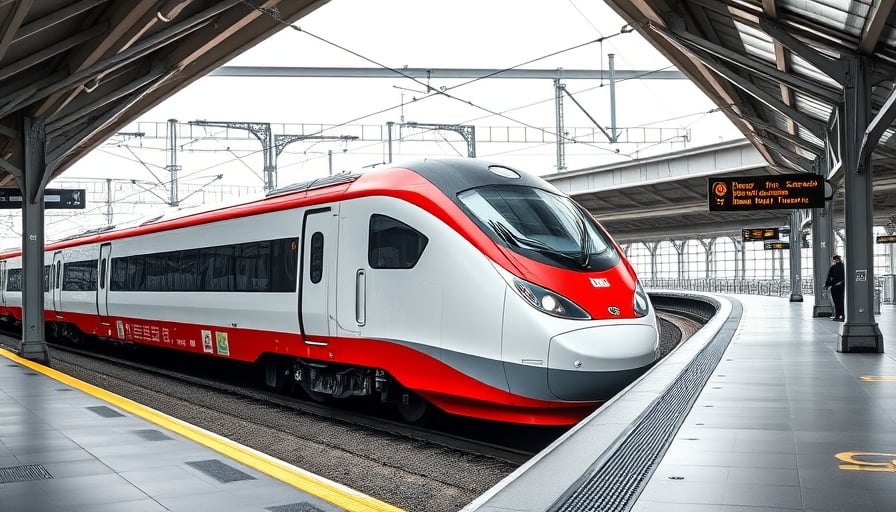
Alstom is also a key partner in the certification process for the Italian Frecciarossa 1000 high‑speed train. The project is in collaboration with Hitachi and will involve test runs in Germany commencing in May. These trials are integral to the regulatory approval pathway for deploying the train on new direct services between Munich and Milan, and Munich and Rome, scheduled to begin in December. The trials will assess performance metrics such as acceleration, braking, and safety systems, ensuring compliance with both German and Italian railway standards.
The initiative dovetails with the ongoing construction of the Brenner Base Tunnel, a critical infrastructure asset that promises to reduce travel times and freight costs across Central Europe. By securing a foothold in this corridor, Alstom not only strengthens its product portfolio but also positions itself to benefit from projected increases in cross‑border rail traffic.
Leadership Transition and Post‑Merger Integration
In July, Alstom appointed Martin Sion as its new Chief Executive Officer. Sion, formerly with the Ariane Group, brings a wealth of experience in propulsion and engineering—domains that parallel the complex system integration required in large rail projects. His appointment follows the company’s acquisition of Bombardier’s rail division, a move that has introduced both opportunities and challenges related to operational alignment, delivery schedules, and cash flow management.
Sion’s background in managing aerospace project delays provides a valuable framework for addressing similar bottlenecks in Alstom’s flagship initiatives, such as the TGV M programme and the RER B suburban rail upgrades. His focus on operational reliability and stakeholder confidence is expected to accelerate post‑merger integration and mitigate the financial pressures that currently beset the company.
Cross‑Industry Implications and Macro‑Economic Context
Alstom’s recent contract win and involvement in high‑speed train testing illustrate a broader shift toward digital and sustainable mobility solutions that transcend traditional rail boundaries. The integration of advanced signalling, electrification, and high‑speed rolling stock aligns with global decarbonisation targets and the push for more resilient supply chains. Additionally, the collaboration with Hitachi showcases the growing importance of cross‑border partnerships in securing competitive advantage within the European Union’s single market.
From an economic perspective, the company’s strategic moves coincide with increased public investment in infrastructure and a heightened focus on regional connectivity. As governments grapple with ageing rail assets and the imperative to reduce carbon emissions, firms like Alstom that can deliver end‑to‑end solutions—spanning procurement, engineering, and operation—are positioned to capture long‑term value.
Conclusion
Alstom’s latest signalling contract, its pivotal role in the certification of the Frecciarossa 1000, and the appointment of Martin Sion as CEO collectively signal a decisive push toward expanding service offerings while navigating the complexities inherent in large‑scale rail projects and post‑merger integration. The company’s strategic initiatives demonstrate an acute awareness of sector dynamics, competitive positioning, and macro‑economic trends—factors that will shape the trajectory of sustainable mobility infrastructure across Europe in the coming years.