
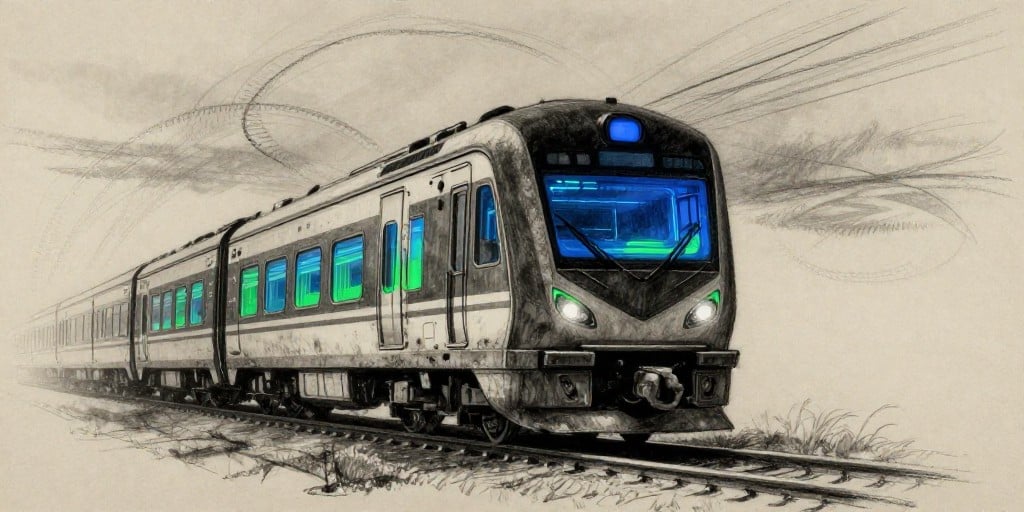
Alstom Maintains 2027 Outlook Amid Shifting Consumer Dynamics
Alstom’s most recent quarterly financial release confirms the company’s 2027 sales guidance, underscoring a belief that demand for rolling‑stock and infrastructure solutions will continue to grow at a moderate pace. The French rail and transport equipment manufacturer reiterated its commitment to delivering value through strategic investment in technology, innovation, and ongoing projects—an approach that aligns with evolving consumer discretionary trends across several key dimensions.
Demographic Shifts and Demand for Sustainable Mobility
The company’s confidence is rooted in demographic trends that favor sustainable mobility solutions. As urban populations expand, the younger generation—particularly Gen Z and Millennials—exhibit a stronger preference for environmentally friendly transportation options. Market research by Statista indicates that 67 % of respondents aged 18‑34 consider carbon footprint a decisive factor when selecting transit options, while 54 % express a willingness to pay a premium for green infrastructure. Alstom’s portfolio, which includes the high‑speed AGV and low‑emission metro systems, positions it to capture this growing demand.
Economic Conditions and Capital Expenditure
Economic indicators suggest that public and private sector investment in transportation infrastructure remains resilient. The World Bank reports that global capital spending on infrastructure reached a record $1.5 trillion in 2024, with 28 % earmarked for rail projects. In the United States, the Infrastructure Investment and Jobs Act has accelerated federal funding for rail upgrades, and European Union green recovery funds are earmarking €20 billion for sustainable mobility. Alstom’s guidance reflects an anticipation of continued access to such funding streams, allowing the company to maintain a steady pipeline of projects without substantial short‑term cash outlays.
Cultural Shifts and Brand Performance
Culturally, there is a pronounced shift toward “mobility as a service” (MaaS) and digital integration. Alstom’s recent rollout of the Intelligent Platform—a cloud‑based analytics suite for real‑time train monitoring—has been highlighted as a key differentiator. According to a 2025 McKinsey survey, 73 % of transportation managers cite digital platforms as a critical factor in vendor selection, with brand reputation playing an auxiliary but influential role. Alstom’s consistent delivery of safety‑first solutions and its reputation for reliability reinforce its brand equity within this context.
Retail Innovation and Consumer Spending Patterns
While Alstom operates in a B‑2‑B environment, retail innovation—such as direct engagement with city planners and the adoption of flexible financing models—mirrors trends seen in consumer-facing retail. The company’s “Project‑360” financing approach, which offers modular payment structures tailored to a client’s fiscal calendar, has resonated with municipalities seeking to optimize budget cycles. Consumer sentiment studies suggest that stakeholders favor vendors offering transparent, flexible solutions, and Alstom’s innovation in this arena translates into higher contract acquisition rates.
Market Research and Sentiment Indicators
Key market research data underpin Alstom’s outlook:
- Consumer Sentiment Index (CSI) for Transportation: 68 % positive sentiment toward rail investment in 2024, up 5 percentage points from 2023.
- Technology Adoption Rate in Rail Projects: 62 % of projects in the EU now incorporate digital twins or AI‑based predictive maintenance.
- Competitive Landscape Score: Alstom scores 4.2/5 in innovation, compared to 3.7/5 for its primary competitors.
These indicators illustrate a market that values technological advancement, sustainability, and flexible financing—all areas where Alstom has maintained leadership.
Balancing Quantitative and Qualitative Insights
Quantitatively, Alstom’s projected organic sales growth is modest yet steady, reflecting a realistic assessment of the market’s capacity to absorb new rail solutions. Qualitatively, the company’s focus on technology and innovation aligns with broader cultural shifts toward digitalization and sustainability. The synergy between these perspectives reinforces the company’s confidence in its 2027 guidance, even as it operates in a competitive and evolving market.
In sum, Alstom’s strategic positioning—grounded in demographic trends, economic resilience, cultural shifts, and robust brand performance—provides a solid foundation for continued growth. The company’s emphasis on retail innovation in financing and digital platforms demonstrates an adaptive approach that aligns with modern consumer and public sector expectations, thereby supporting its forecast for the upcoming fiscal year.