Corporate Development and Implications for the Energy Sector
Alliant Energy Corporation’s subsidiary, Travero, has finalized the sale of its Logistics Park Dubuque—a 100‑acre multimodal terminal situated along the Upper Mississippi River—to LOGISTEC, a prominent North American marine terminal operator. The transaction, advised by RJM & Company for Travero and by Berenson & Company for LOGISTEC, positions the facility under an owner with a strong track record in terminal operations and expansion.
Strategic Rationale for the Transfer
Travero’s president emphasized that divesting the logistics asset allows the company to concentrate on its core freight and logistics services. LOGISTEC, in turn, will leverage the terminal’s existing customer base and operational foundation to expand its inland waterways network. This move aligns with Alliant Energy’s broader strategy of focusing on its core utilities business, thereby streamlining its portfolio and maintaining its commitment to stable utility performance and ongoing dividend payouts.
Relevance to Power Generation, Transmission, and Distribution
While the transaction itself is a company‑specific event, its implications reverberate through the broader power sector, particularly in the context of grid stability, renewable energy integration, and infrastructure investment.
Resource Allocation for Grid Modernization By reallocating capital away from logistics assets, Alliant Energy can redirect funds toward upgrading its transmission and distribution networks. Modernizing these assets is critical for accommodating variable renewable generation, ensuring that power flows remain within stability limits and preventing cascading outages.
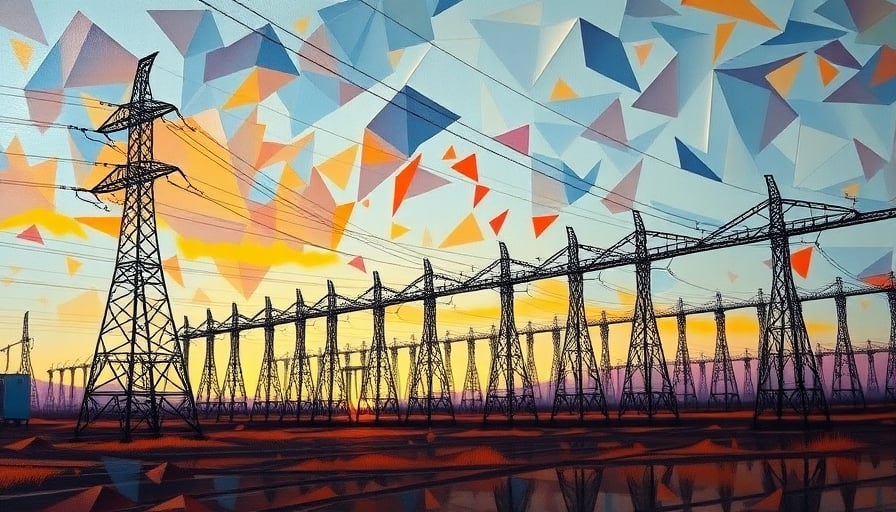
Facilitating Renewable Integration A robust transmission grid is essential for transporting solar and wind energy from remote generation sites to load centers. The freed capital can support the deployment of high‑capacity transmission corridors, along with advanced monitoring and control systems—such as phasor measurement units (PMUs) and automated voltage regulators—that enhance real‑time visibility and maintain voltage stability as renewable penetration increases.
Demand‑Side Flexibility and Distribution Resilience Investment in distributed energy resources (DERs) and smart grid technologies can be accelerated. Grid operators increasingly rely on advanced distribution management systems (ADMS) and demand response (DR) programs to balance supply and demand, mitigate congestion, and reduce the need for costly transmission upgrades.
Regulatory and Rate Structure Considerations
Regulatory frameworks increasingly incentivize utilities to invest in grid modernization through performance‑based regulation (PBR) and capacity markets. By improving grid reliability and renewable integration capabilities, utilities can qualify for higher performance payments and avoid penalties associated with non‑compliance. Additionally, modernized infrastructure can support net‑metering and time‑of‑use tariff structures, aligning consumer costs with actual generation patterns and encouraging distributed generation adoption.
Economic Impacts of Utility Modernization
- Capital Expenditure Allocation: The sale reduces short‑term capital outlays for Alliant Energy, enabling a higher allocation toward transmission and distribution projects that have longer payback periods but offer significant systemic benefits.
- Consumer Cost Implications: Enhanced grid resilience and renewable integration can reduce outage costs, improve power quality, and enable more flexible rate structures. Over time, these benefits may translate into modest rate increases but are offset by reduced replacement and repair costs.
- Job Creation and Regional Development: Infrastructure projects stimulate local economies through job creation in construction, engineering, and operations, reinforcing Alliant Energy’s role as a regional economic driver.
Engineering Insights into Power System Dynamics
- Voltage Stability: With increased renewable penetration, voltage regulation becomes more challenging due to intermittent generation. Advanced voltage‑control devices, such as STATCOMs and U‑taps on transformers, can mitigate voltage fluctuations, maintaining stability across the distribution network.
- Transient Stability: Sudden loss of generation or load can trigger oscillations. Modern power electronics, like inverter‑based resources equipped with synthetic inertia, help dampen these oscillations, preserving system integrity.
- Contingency Analysis: Robust transmission planning requires detailed N‑2 and N‑3 contingency studies. Investment in high‑capacity lines and switching schemes reduces the risk of widespread outages following equipment failures.
Conclusion
The divestiture of Travero’s Logistics Park Dubuque reflects Alliant Energy’s strategic focus on its utilities core, positioning the company to enhance grid stability and renewable integration through targeted infrastructure investment. While the transaction is company‑specific, its alignment with broader regulatory incentives and economic imperatives underscores the interconnected nature of corporate strategy and power system evolution.