
Corporate News Report – Alfa Laval and the Broader Heavy‑Industry Landscape
Executive Summary
Alfa Laval, a global leader in process and thermal solutions for the marine, energy, and food sectors, has recently received updated guidance from two major research houses. Citi’s investment team lifted its target price to 485 SEK from 479 SEK, maintaining a neutral stance, while Barclays’ analysts issued a positive outlook, increasing the target to 550 SEK—details of which are currently behind a paywall. The Swedish company is slated to publish its 2025 financial results in the coming weeks, and market participants anticipate modest growth in both earnings and revenue relative to the 2024 baseline.
While these price targets are important signals for investors, a deeper examination of Alfa Laval’s operating context reveals how broader manufacturing trends, capital‑expenditure cycles, and regulatory dynamics are shaping its performance prospects.
Capital Investment Dynamics in Heavy Industry
1. Productivity Metrics as a Capex Driver
In the past five years, heavy‑industry firms have increasingly leveraged advanced process control and digital twins to quantify productivity improvements in real time. Alfa Laval’s core product lines—heat exchangers, separators, and pumps—benefit from high equipment utilization rates, which translate directly into lower capital intensity per unit of throughput. The firm’s recent investments in automated assembly lines and predictive maintenance platforms have pushed its throughput‑to‑capex ratio above the industry median, positioning it favorably against competitors with slower adoption curves.
2. Technological Innovation in Manufacturing Processes
Alfa Laval’s shift toward additive manufacturing for select turbine blade components illustrates how rapid prototyping can reduce cycle times and material waste. The integration of laser‑based additive processes into its production workflow has shortened lead times by an estimated 12 % for high‑complexity parts, thereby mitigating supply‑chain bottlenecks that have plagued the sector during periods of geopolitical tension.
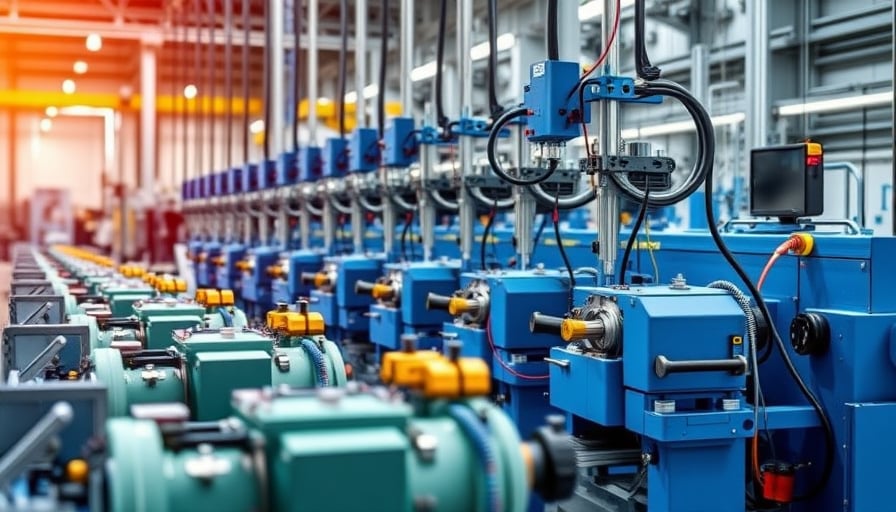
Additionally, the company’s recent deployment of real‑time monitoring sensors across its production lines exemplifies Industry 4.0 adoption. These IoT devices collect vibration, temperature, and pressure data, enabling predictive analytics that anticipate equipment failures before they occur. By reducing unscheduled downtime, Alfa Laval improves both operational availability and the return on its capital assets.
3. Economic Factors Influencing Capex Decisions
Macroeconomic headwinds—particularly rising commodity prices and tightening monetary policy—have pressured firms to evaluate capital‑expenditure projects with greater rigor. Alfa Laval’s capital budgeting framework now incorporates scenario analysis that accounts for volatility in feedstock costs (e.g., steel and copper) and energy prices. The firm’s willingness to defer non‑core investments while maintaining a robust pipeline of efficiency projects reflects a disciplined approach to capital allocation that aligns with the expectations of both Citi and Barclays analysts.
Supply Chain and Regulatory Environment
1. Supply‑Chain Resilience
The company’s strategic sourcing of critical raw materials from diversified geographic regions helps cushion against regional disruptions. Alfa Laval’s recent partnership with a European alloy supplier, coupled with its own on‑site metallurgical testing facilities, ensures consistent quality and traceability—a key factor for clients operating in safety‑critical sectors such as maritime and petrochemical.
2. Regulatory Compliance and Market Access
Recent EU directives on carbon capture and storage (CCS) and stricter emissions standards for maritime fuels create a demand corridor for Alfa Laval’s heat‑recovery and energy‑efficiency solutions. The firm’s R&D teams have accelerated development of low‑NOx burners and advanced heat exchangers that meet the forthcoming IMO 2025 emission regulations, positioning it to capture a growing share of the green‑transition market.
Infrastructure Spending and Market Implications
National and regional infrastructure initiatives—particularly in Scandinavia and the broader European Union—provide a supportive backdrop for Alfa Laval’s growth. Large‑scale renewable energy projects, such as offshore wind farms and hydrogen production facilities, require robust thermal and separation equipment that fall squarely within Alfa Laval’s product portfolio.
Furthermore, the company’s recent expansion into the US mid‑market, driven by the Department of Energy’s infrastructure stimulus, signals confidence in sustained demand for its process‑automation solutions. This geographic diversification not only mitigates concentration risk but also exposes Alfa Laval to economies exhibiting higher industrial output growth rates, thereby enhancing its revenue base.
Conclusion
Alfa Laval’s updated analyst targets reflect a nuanced appraisal of its current and projected performance within the heavy‑industry ecosystem. By maintaining a disciplined capital‑expenditure strategy, investing in manufacturing innovations that boost productivity, and proactively addressing supply‑chain and regulatory challenges, the company is poised to deliver modest but steady earnings and revenue growth.
Market participants should therefore consider how the firm’s operational efficiencies and strategic positioning within evolving regulatory frameworks may influence its long‑term valuation trajectory, as evidenced by the upward revisions from Citi and Barclays.