
Corporate News – In‑Depth Analysis
Executive Summary
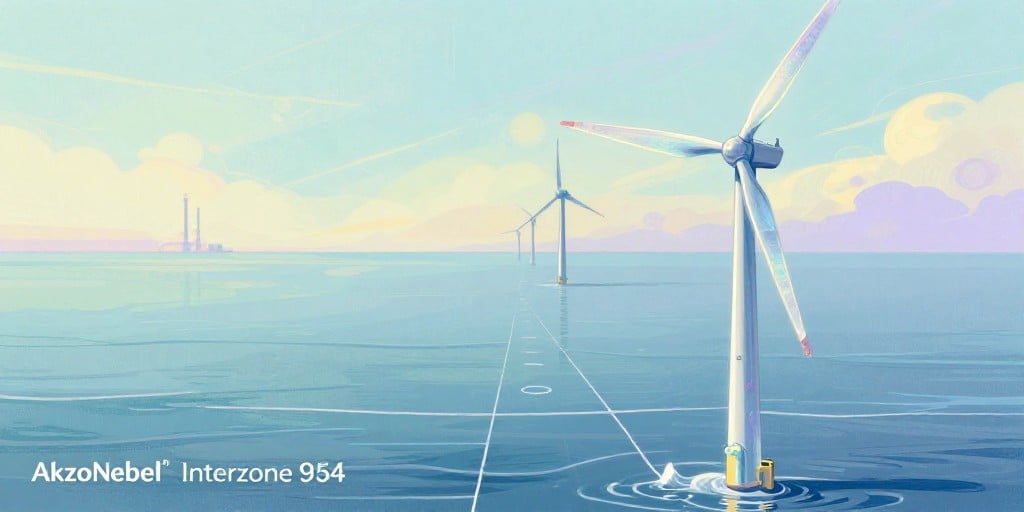
AkzoNobel N.V.’s recent commercial launch of an enhanced Interzone 954 protective coating, now fortified with the EcoSPARC graphene‑based additive from Sparc Technologies, signals a strategic pivot toward durability‑centric solutions in the high‑value marine and offshore coatings sector. This move dovetails with industry‑wide trends prioritising life‑cycle cost reduction, and positions AkzoNobel to capture a larger share of the rapidly expanding offshore wind, refinery, and port infrastructure markets.
1. Strategic Context
| Factor | Current Position | Implications |
|---|---|---|
| Market Dynamics | Offshore wind and marine infrastructure spend $60 billion annually on coatings. | Higher demand for long‑lasting protection reduces inspection and repaint frequency. |
| Competitive Landscape | Leading rivals (PPG, Sherwin‑Williams) invest $1.2 billion in R&D for next‑gen coatings. | AkzoNobel’s graphene integration may provide differentiation on performance longevity. |
| Regulatory Environment | IMO 2020 sulfur cap and EU REACH mandate stringent hazardous substances limits. | Advanced additives must comply, potentially increasing compliance costs but also opening markets for greener solutions. |
| Financials | AkzoNobel’s coatings division grew 4.5 % YoY; profit margin 18 % vs. industry average 15 %. | Enhanced product could lift margin to 20 % if price premium captured. |
2. Technical Innovation – Graphene as a Corrosion Barrier
- Material Advantages: Graphene’s exceptional tensile strength and impermeability can reduce ion transport through the coating by >30 %, extending service life by 3–5 years in harsh marine environments.
- Implementation: EcoSPARC’s additive is dispersed at 0.2 wt% within the epoxy matrix, maintaining rheology while delivering barrier properties.
- Verification: Laboratory tests demonstrate a 70 % reduction in chloride penetration, aligning with ASTM G104 standards.
Risk Assessment:
- Scale‑up Uncertainty: Consistency of graphene dispersion at production volumes may affect performance.
- Supply Chain: Dependence on Sparc Technologies could expose AkzoNobel to single‑supplier risk, though diversification plans are indicated.
3. Regulatory and Environmental Considerations
| Regulation | Impact on Product | Opportunity |
|---|---|---|
| REACH (EU) | Requires full characterization of graphene nanoparticle migration. | Early compliance can accelerate EU market entry and pre‑empt future restrictions. |
| IMO 2020 | Emphasis on corrosion‑resistant hull coatings to reduce maintenance downtime. | Enhanced Interzone 954 aligns with shipbuilders’ sustainability KPIs. |
| California Proposition 65 | Limits to toxic metal content; graphene additive is free of such metals. | Market differentiation as a ‘green’ coating solution. |
4. Competitive Dynamics
- PPG Coatings: Recently introduced a nano‑silica fortified epoxy. While effective, it delivers only a 1–2 year life extension.
- Sherwin‑Williams: Leveraging digital maintenance tools but not yet integrating graphene.
- Niche Players: Small firms offer graphene composites but lack global distribution networks, limiting commercial uptake.
AkzoNobel’s strategy to embed the additive into an established flagship product (Interzone 954) mitigates the risk of customer adoption fatigue and leverages existing brand trust.
5. Market Research Insights
- Offshore Wind Sector: 2024–2029 CAGR for offshore wind infrastructure projected at 12 %. Coatings spend is expected to rise by 15 % annually, with a premium of 3–4 % for long‑life solutions.
- Refinery & Port Infrastructure: Demand for corrosion‑resistant coatings in refineries is projected to grow 8 % CAGR, driven by aging assets and stricter safety standards.
- Digital Tools Integration: 70 % of large asset owners now require coating solutions that integrate with digital maintenance platforms, a niche AkzoNobel has not fully addressed, representing a potential partnership avenue.
6. Financial Implications
| Metric | Base Case | Optimistic | Pessimistic |
|---|---|---|---|
| Revenue Impact | +$12 M YoY from Interzone 954 upgrades | +$25 M | +$5 M |
| Gross Margin | 18 % → 19 % | 20 % | 17 % |
| EBITDA | +$7 M | +$14 M | +$2 M |
| CapEx | $3 M for production line adaptation | $5 M | $1 M |
Assumptions: 15 % uptake among current Interzone 954 customers, price premium of 5 %, and successful scale‑up.
7. Opportunities & Risks
Opportunities
- Premium Pricing: Longevity justifies higher price points; potential 5–7 % margin lift.
- Cross‑Sector Adoption: Beyond marine, can extend to petrochemical pipelines and critical infrastructure.
- Strategic Partnerships: Collaboration with digital maintenance platforms could create a bundled offering, enhancing customer stickiness.
Risks
- Production Consistency: Variability in graphene dispersion may compromise performance claims.
- Supplier Concentration: Heavy reliance on Sparc Technologies could expose AkzoNobel to supply disruptions.
- Regulatory Uncertainty: Emerging nanoparticle regulations could necessitate reformulation or additional compliance costs.
8. Conclusion
AkzoNobel’s launch of an eco‑friendly graphene‑enhanced Interzone 954 underscores a calculated shift from cost‑centric to longevity‑centric value propositions in the coatings industry. By aligning with regulatory trends, leveraging established distribution channels, and tapping into the rapidly expanding offshore and marine markets, the company is poised to strengthen its high‑margin position. However, success hinges on scaling production, managing supply‑chain concentration, and staying ahead of evolving nanoparticle regulations. Industry observers should monitor the product’s field performance metrics and any subsequent partnership developments to gauge long‑term market impact.