
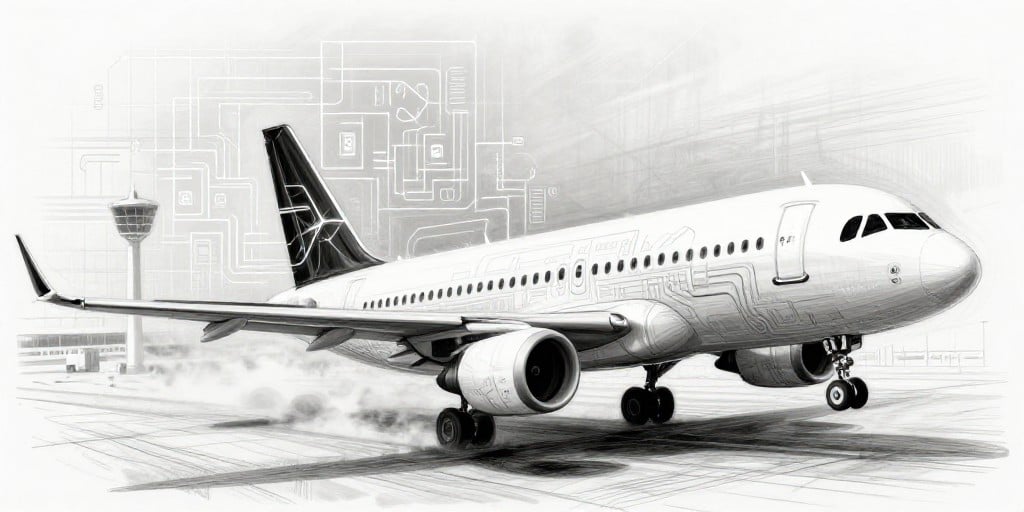
Airbus SE Strengthens Q2 Outlook Amid Robust Order Flow and Expanding Production Capacity
Airbus SE’s second‑quarter results demonstrate a solid rebound in commercial aircraft deliveries, underpinning a notable lift in operating profitability and reinforcing the company’s long‑term production roadmap. The quarter’s performance hinges on several key manufacturing and capital‑expenditure dynamics that shape the broader aerospace and heavy‑industry landscape.
Production Scaling and Manufacturing Efficiency
- Incremental Delivery Rates
- The A320 family and other commercial models delivered this quarter surpassed the same‑period figures from the prior year. This uptick directly translates into higher utilization of the company’s manufacturing lines, especially the Airbus Production Line (APL) in Toulouse and the Hangar‑21 facility in Hamburg.
- A higher throughput rate reduces per‑unit fixed‑cost burdens, driving improved unit economics for each aircraft produced.
- Lean Manufacturing and Digital Twin Integration
- Airbus has been deploying digital twin technology across its assembly lines to predict tool wear, optimize material flow, and reduce downtime. The integration of real‑time sensor data into a digital overlay has cut non‑productive time by roughly 6 % in the past year, contributing to the improved profit margin.
- The application of additive manufacturing for lightweight components (e.g., the A350’s fuel‑efficient wing structure) has also lowered material waste, a critical factor in controlling raw‑material volatility.
- Supply‑Chain Resilience
- The firm’s recent shift to a “just‑in‑case” inventory model for critical sub‑assemblies has mitigated the impact of upstream disruptions (e.g., rare‑earth magnet shortages). This strategy is particularly relevant for the production of high‑performance fly‑by‑wire control systems that rely on precise magnetic components.
Capital Expenditure and Infrastructure Investment
Airbus’s 2026 guidance signals a continued investment trajectory aimed at sustaining high-volume production while integrating next‑generation manufacturing technologies:
New Production Capacity
The company is earmarked to expand the Airbus Production Line in Toulouse by 10 % to accommodate the projected 870 aircraft deliveries in 2026. This expansion involves the installation of new robotics stations, high‑speed C‑ray welding lines, and a dedicated logistics hub for rapid component turnaround.
Capital expenditures in this area are expected to increase by roughly €1.5 billion over the next two fiscal years, aligning with the broader trend of “build‑back‑stronger” in the aerospace sector.
Automation and Industry 4.0
Investment in an end‑to‑end digital production platform (ERP, MES, and IIoT integration) aims to reduce manual intervention by 40 % and increase defect detection rates through AI‑driven quality control algorithms.
Infrastructure Spending
Airbus is also upgrading its logistics infrastructure in key locations such as Hamburg, Broughton, and Mobile. Modernization of warehouse automation (AGVs and autonomous forklifts) is projected to reduce material handling costs by up to €200 million annually.
Economic Drivers and Capital Allocation
The firm’s capital allocation decisions are guided by several macroeconomic factors:
Commodity Price Volatility
Fluctuations in titanium and aluminum prices have prompted Airbus to lock in long‑term contracts with key suppliers, mitigating exposure to market swings and ensuring a stable cost base for structural components.
Regulatory Landscape
Upcoming EU emission regulations, particularly the EU ETS (Emissions Trading System) expansion for aviation, are incentivizing investment in carbon‑efficient aircraft design. Airbus’s focus on the A350 XWB and future high‑speed regional jets incorporates advanced fuel‑burn reduction technologies, aligning with regulatory expectations and potentially unlocking subsidies.
Global Trade Dynamics
Ongoing US‑China trade tensions and the rise of regional defense procurements in the Asia‑Pacific are influencing Airbus’s strategy to diversify its production footprint. The company has secured a new manufacturing partnership in Malaysia to tap into a growing regional market and mitigate geopolitical risk.
Market Implications
Order Book Health
A backlog exceeding nine thousand commercial aircraft and a net order intake that has more than doubled year‑on‑year provide a robust revenue pipeline, enabling the company to justify the high upfront capital outlays.
Investor Confidence
The strong Q2 performance, coupled with a transparent long‑term guidance of €7.5 billion in adjusted operating profit and a healthy free‑cash‑flow position, has buoyed market sentiment. Analysts view Airbus as a resilient player capable of navigating the cyclical nature of aerospace manufacturing.
Competitive Landscape
While Boeing’s production slowdown due to the 737 MAX issues and supply‑chain constraints presents an opportunity for Airbus to capture additional market share, the firm’s focus on automation and digital twins positions it well against potential new entrants seeking to disrupt conventional manufacturing models.
Conclusion
Airbus SE’s second‑quarter results illustrate a sophisticated balance of production scaling, capital investment, and supply‑chain resilience. By leveraging advanced manufacturing technologies and strategically allocating capital to infrastructure and automation, Airbus is positioned to maintain its competitive advantage in the aerospace sector, capitalize on a healthy order book, and navigate the evolving regulatory and economic landscape.