
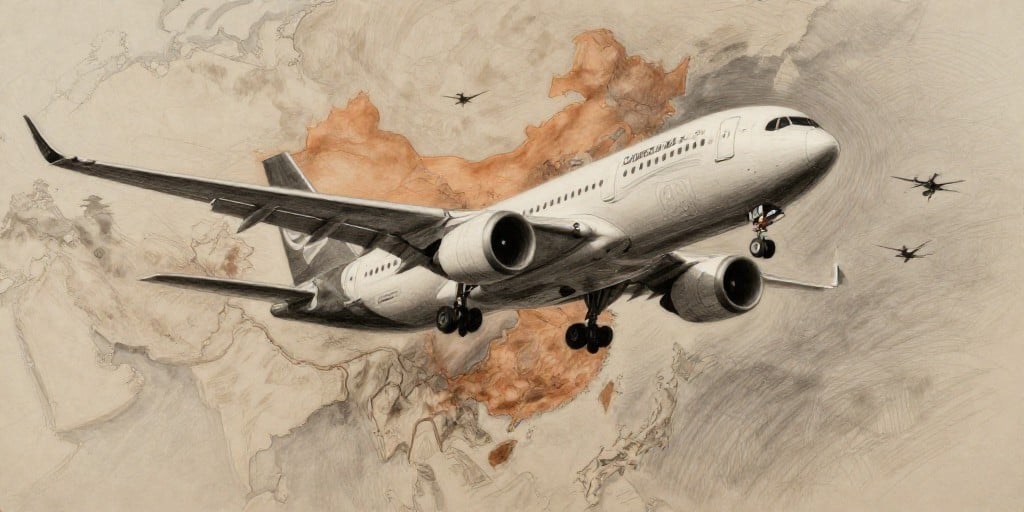
Corporate News – Airbus SE Expands Footprint in China, Japan, and Azerbaijan
1. New Long‑Haul Order from China Eastern Airlines
Airbus SE announced a landmark contract with China Eastern Airlines to supply 25 A330‑neo wide‑body aircraft between 2029 and 2033. Valued at roughly €8 billion at list price, the deal underscores the continued competitiveness of Airbus in the Chinese aviation market, where state‑backed carriers increasingly seek fuel‑efficient, high‑capacity platforms. Although the quoted value reflects standard list pricing, Airbus’s note that large orders typically command substantial discounts suggests that the net transaction may be significantly lower, aligning with industry pricing dynamics for multi‑unit purchases.
The agreement strengthens Airbus’s position against Boeing, particularly as China Eastern expands its long‑haul fleet to support growing passenger and cargo traffic in the Asia‑Pacific region. Analysts note that the A330‑neo’s advanced aerodynamics and fuel‑burn reductions position it as an attractive option for airlines prioritising environmental credentials—a trend that aligns with broader corporate sustainability goals in the aviation sector.
2. Joint Venture with Kawasaki Heavy Industries for the Eurodrone U950
In parallel, Airbus is pursuing a joint venture with Kawasaki Heavy Industries to develop a Japanese variant of the Eurodrone U950 for anti‑submarine warfare (ASW). The Eurodrone, Europe’s largest long‑endurance unmanned aircraft, is already fielded by multiple navies, and its adaptation for Japan’s maritime patrol requirements reflects the country’s strategic shift towards enhanced maritime surveillance amid regional security challenges.
This partnership illustrates Airbus’s diversification strategy beyond commercial airframes into defense and security markets. By leveraging Kawasaki’s domestic manufacturing capabilities, Airbus can tailor the U950’s sensor suite and mission payloads to meet Japan’s specific ASW operational needs, potentially opening further opportunities in the Indo‑Pacific defense arena.
3. Lease Delivery to Azerbaijan Airlines by AerCap
Leasing giant AerCap has commenced deliveries of three Airbus A321neo aircraft to Azerbaijan Airlines under a 2024 lease agreement, with the first aircraft already delivered. The remaining two aircraft will arrive through late 2026. This activity demonstrates sustained demand for Airbus models in the global leasing market, where operators seek efficient, lower‑operational‑cost aircraft to service expanding routes.
From an investment perspective, the leasing of A321neos indicates confidence in Airbus’s product line and the resilience of the narrow‑body market, even as airlines grapple with fluctuating fuel prices and changing passenger preferences.
4. Market Impact and Stock Performance
European equity indices such as the CAC 40 and Euro STOXX 50 posted modest intraday declines during the announcement period, reflecting broader market volatility. Airbus’s share price fell within the Euro STOXX 50, experiencing short‑term pressure despite the positive business developments. Analysts suggest that market participants may have priced in expectations of continued growth while remaining cautious about macroeconomic headwinds, such as tightening monetary policy and supply‑chain constraints.
On an annual basis, European indices have recorded slight gains, indicating a gradual recovery. However, individual stocks like Airbus display heightened volatility, underscoring the importance of monitoring both company‑specific catalysts and macro‑economic conditions.
5. Strategic Outlook
Airbus’s expansion into the Chinese and Japanese markets, coupled with sustained leasing activity in Azerbaijan, positions the company to capitalize on emerging regional demand for efficient, long‑haul aircraft and advanced defense capabilities. The combination of high‑quality product offerings, strategic partnerships, and robust leasing pipelines suggests a resilient growth trajectory.
For investors, the key will be to weigh the company’s expanding footprint against the backdrop of evolving geopolitical dynamics and supply‑chain considerations. Continued monitoring of order books, lease inflows, and defense contracts will provide further insight into Airbus’s long‑term competitive positioning in the global aerospace and defense landscape.