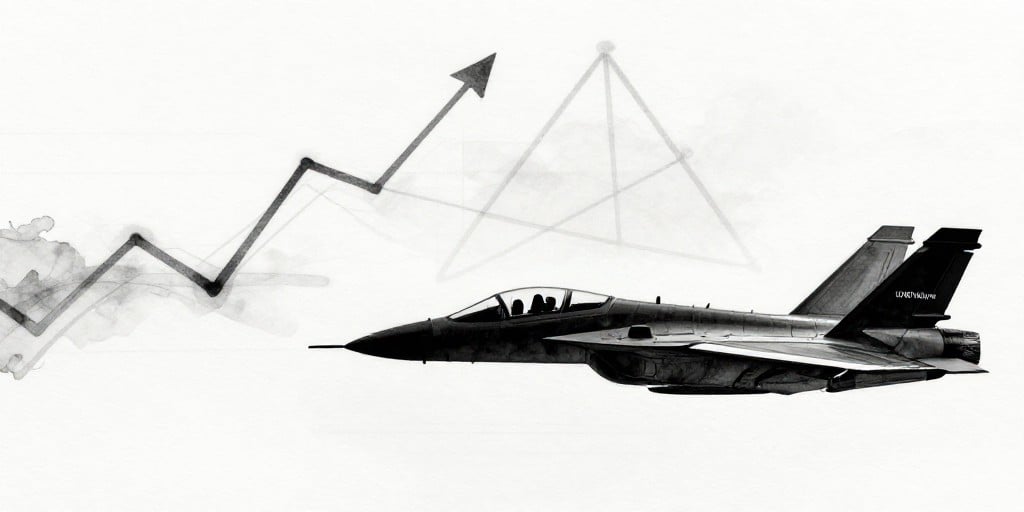
Airbus SE Share‑Buyback Programme and U740‑Valkyrie Progress: Implications for Corporate Capital Allocation
Airbus SE announced in September 2026 that it is executing a share‑buyback programme, disclosed under the EU Market Abuse Regulation. The programme is designed to strengthen employee share‑ownership and equity‑based compensation plans. Daily repurchase volumes have ranged from a few hundred thousand shares to approximately three hundred thousand, with an average purchase price in the high‑hundreds of euros per share. Shareholder approval at the April 2026 annual general meeting capped the programme at ten per cent of issued share capital.
Capital Allocation Strategy
From a manufacturing‑process standpoint, the buyback reflects Airbus’s strategic allocation of capital that prioritises shareholder value creation while preserving liquidity for future industrial investment. The programme’s ceiling ensures that a significant portion of capital remains available to fund the firm’s high‑cost aerospace and defence projects, such as the U740‑Valkyrie unmanned combat aircraft. The allocation model aligns with prevailing industry trends, wherein large manufacturers balance short‑term shareholder returns against long‑term research, development, and production capacity expansion.
U740‑Valkyrie Unmanned Combat Aircraft
In a parallel development, Airbus has reported progress on the U740‑Valkyrie project, a collaboration with Kratos Defense & Security Solutions. A successful first flight at a Northern European test site demonstrated runway‑independent take‑off, maneuverability up to Mach 0.8, and in‑flight mission adjustments. The milestone confirms the joint effort to deliver a combat‑ready uncrewed collaborative combat aircraft by 2029, targeting the operational needs of German and other European armed forces.
Engineering Highlights
- Runway‑Independent Take‑off: The U740 utilizes a blended‑wing‑body configuration that generates lift across a broader aerodynamic envelope, reducing required runway length and enabling operations from austere airfields. This design improves mission flexibility and reduces logistical constraints.
- High‑Speed Maneuverability: At Mach 0.8, the aircraft demonstrates a lift‑to‑drag ratio that permits sustained cruise and rapid repositioning, a key requirement for joint‑force integration.
- Mission‑Adjustable Payloads: Modular mission bays allow rapid reconfiguration of sensors and weapons systems, supporting both surveillance and strike missions. This modularity reduces maintenance cycles and enhances operational availability.
Productivity Metrics and Technological Innovation
The U740 programme exemplifies the integration of advanced manufacturing techniques—additive manufacturing, digital twin simulation, and automated inspection—into heavy‑industry production. These technologies reduce cycle times, lower defect rates, and enable rapid prototyping. Consequently, productivity metrics such as units per labor hour and defect‑free yield have improved relative to legacy platforms.
Capital Expenditure Trends
Capital expenditures (CapEx) in aerospace and defence are driven by:
- Regulatory Requirements: New safety, environmental, and cybersecurity standards necessitate continual equipment upgrades and compliance‑focused investments.
- Strategic Defence Budgets: European defence budgets are expanding, particularly in response to regional security concerns, creating demand for next‑generation platforms.
- Supply‑Chain Resilience: Post‑pandemic disruptions have accelerated investment in supply‑chain diversification and localized production facilities.
Airbus’s current CapEx trajectory—estimated at €18 billion for FY 2026—reflects a focus on high‑value, technology‑intensive projects. The share‑buyback programme, by returning excess cash to shareholders, supports a lean balance sheet that can be re‑allocated toward R&D and advanced manufacturing infrastructure.
Economic Drivers of Capital Expenditure Decisions
- Interest‑Rate Environment: Low borrowing costs incentivize firms to undertake large, long‑term investments. Airbus has capitalised on this environment by financing both the U740 programme and its manufacturing base expansion.
- Currency Fluctuations: The euro’s relative strength against the dollar influences the cost of imported components. Airbus mitigates this risk through forward‑contract hedging and strategic sourcing agreements.
- Commodity Prices: Fluctuating prices for titanium, composite materials, and rare‑earth magnets directly impact CapEx budgets. Airbus’ procurement strategy includes long‑term contracts and in‑house production capabilities to dampen exposure.
Supply‑Chain and Regulatory Impacts
Airbus’s supply chain is increasingly modular, with key components sourced from a diversified network across Europe and beyond. This architecture reduces lead times and mitigates the risk of single‑source bottlenecks. Regulatory changes—particularly those governing dual‑use technology export controls and cybersecurity—necessitate tighter oversight and increased compliance costs, which are factored into CapEx forecasts.
Infrastructure spending, such as the expansion of manufacturing facilities in Toulouse and Hamburg, is essential to accommodate the U740 programme’s production volumes. These investments also create a local economic stimulus, supporting skilled‑worker employment and fostering an ecosystem of suppliers and service providers.
Market Implications
The share‑buyback programme signals confidence in Airbus’s financial health and enhances its earnings per share (EPS) profile. Analysts project that the forthcoming quarterly results—expected on 28 October—will show an EPS higher than the previous year and a modest rise in revenue. This positive outlook reinforces investor confidence and may lower the cost of capital for future projects.
In the broader aerospace and defence sector, the successful demonstration of the U740’s capabilities is likely to spur competitive activity, prompting rivals to accelerate their own unmanned platforms. The projected operational readiness in 2029 positions Airbus as a key supplier to European armed forces, potentially driving a surge in orders and reinforcing its market leadership.
This article provides an in‑depth analysis of Airbus SE’s recent financial and technological initiatives, focusing on manufacturing efficiencies, capital investment rationales, and the regulatory and economic forces shaping the industry’s future.