
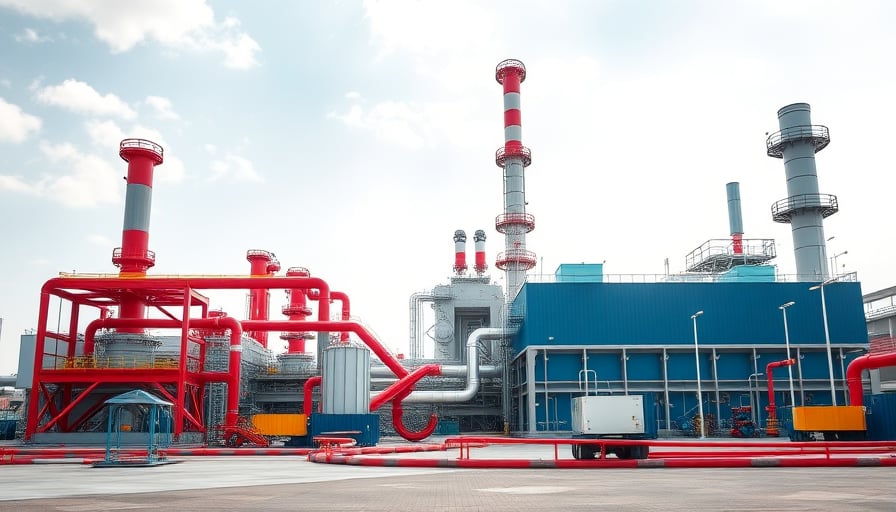
Air Liquide SA Expands Presence in South Korea with Acquisition of DIG Airgas
Air Liquide SA (AL) completed the acquisition of DIG Airgas, a prominent industrial‑gas provider in South Korea, on 12 January 2026. The transaction was announced earlier by Macquarie Asset Management on behalf of its Asia Infrastructure Fund and was finalized after regulatory approvals were obtained.
Transaction Overview
- Seller: DIG Airgas, a key player in South Korea’s industrial‑gas sector.
- Buyer: Air Liquide SA, a global leader in gases, technologies, and services.
- Deal Value: The transaction price and terms have not been publicly disclosed.
- Closing Date: Mid‑January 2026.
- Strategic Rationale: The acquisition strengthens Air Liquide’s footprint in the Korean market and enhances its ability to supply industrial, healthcare, and technical‑medical gases across Asia.
Market Context
South Korea’s industrial‑gas market is projected to grow at a compound annual growth rate (CAGR) of roughly 3–4 % through 2030, driven by expansion in semiconductor manufacturing, green hydrogen production, and medical technology. Air Liquide’s acquisition of DIG Airgas positions the company to capture a larger share of this growth by leveraging its global expertise and local distribution network.
Strategic Implications
Geographic Expansion The acquisition cements Air Liquide’s presence in East Asia, a region that accounts for a significant portion of its revenue. By integrating DIG Airgas’s established customer base, Air Liquide can deepen penetration in South Korea and use the platform to access neighboring markets such as Japan, China, and Vietnam.
Product Portfolio Diversification DIG Airgas offers a range of gases tailored to industrial processes, healthcare applications, and emerging technologies such as battery manufacturing. Air Liquide can now cross‑sell its advanced solutions, including high‑purity gases and digital service offerings, to a broader clientele.
Operational Synergies The deal is expected to generate cost efficiencies through consolidated procurement, shared logistics infrastructure, and combined research and development initiatives. Air Liquide’s scale can also enhance bargaining power with suppliers and improve inventory management.
Innovation and Sustainability South Korea’s commitment to the hydrogen economy aligns with Air Liquide’s strategy to promote low‑carbon gas solutions. The company can leverage DIG Airgas’s local expertise to accelerate the deployment of green hydrogen technologies and participate in government‑backed clean‑energy projects.
Competitive Landscape
- Key Competitors: Linde AG, Praxair (now part of Linde), and local firms such as GS Caltex and Hyundai Engineering & Construction’s gas subsidiaries.
- Market Share: Air Liquide currently holds approximately 15 % of the South Korean industrial‑gas market. The acquisition is anticipated to lift this figure to near 20 %, strengthening its position against Linde and Praxair.
- Differentiation: Air Liquide’s focus on digitalization, sustainability, and tailored service packages gives it a competitive edge over firms that rely primarily on commodity gas supply.
Broader Economic Trends
- Semiconductor Boom: South Korea’s semiconductor industry, dominated by companies like Samsung Electronics and SK Hynix, requires ultra‑clean gases for fabrication. The growing demand for advanced gas solutions ties directly into Air Liquide’s core business.
- Green Hydrogen Policy: The Korean government’s 2030 hydrogen strategy, targeting 500 MW of green hydrogen production, creates new demand for hydrogen and related infrastructure. Air Liquide is well‑positioned to supply both production gases and purification technologies.
- Medical‑Tech Expansion: A rising emphasis on medical‑device manufacturing and telemedicine in Korea amplifies the need for high‑purity oxygen, medical gases, and associated equipment.
Conclusion
Air Liquide’s acquisition of DIG Airgas represents a calculated move to bolster its regional presence, diversify its product offerings, and tap into high‑growth sectors such as semiconductors and green hydrogen. While financial details remain undisclosed, the strategic benefits—market expansion, operational synergies, and alignment with national economic priorities—suggest that the deal will enhance Air Liquide’s competitive positioning in the Asian industrial‑gas landscape.