
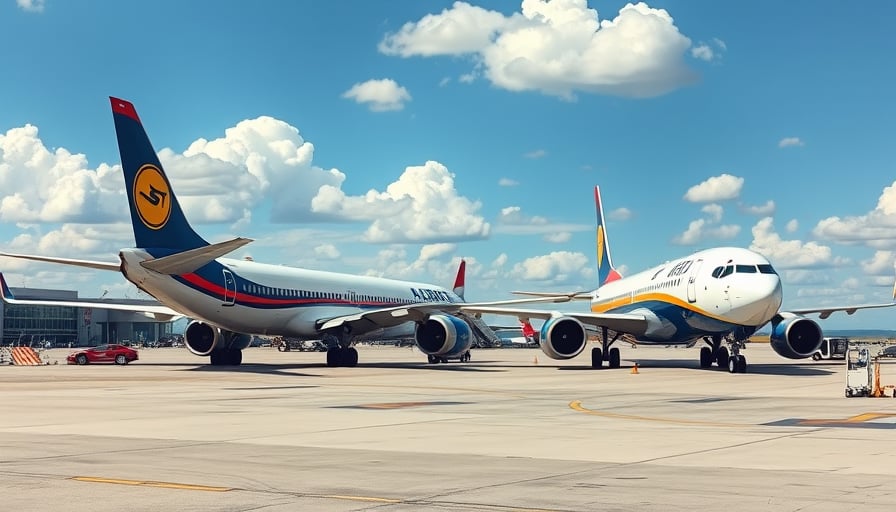
Corporate News – Air China Ltd. Shares Edge Higher Amid Sectoral Momentum
Market Context and Immediate Performance
Air China Ltd. opened higher on the Hong Kong Stock Exchange, with its shares gaining just over four percent during the early trading session. The lift positions Air China among the most buoyant performers in the local aviation segment, mirroring a broader uptrend that has emerged across Hong Kong‑listed airlines. This intraday rally follows a recent wave of positive sentiment fueled by favorable currency dynamics—particularly the strengthening of the Chinese yuan—and a gradual rebound in passenger traffic as travel restrictions ease and demand recovers.
Underlying Drivers: Currency, Load Factors, and Network Breadth
Currency Appreciation
A stronger yuan compresses the cost of aircraft acquisitions and spare‑parts procurement, both of which are denominated in U.S. dollars. While this benefit is largely absorbed into the operating cost structure, it improves the firm’s foreign‑exchange hedging profile, allowing a cleaner translation of foreign‑currency revenues into Chinese‑currency earnings. Analysts suggest that, if sustained, this dynamic could modestly lift gross margins, especially for the airline’s international long‑haul operations where revenue is largely generated in hard currency.
Load Factor Recovery
The airline’s domestic and international load factors have shown a consistent uptick over the past two quarters, with the domestic segment recovering at a slightly faster pace than international routes. This improvement is a key indicator of market confidence, as higher seat utilization typically translates into better revenue per available seat mile (RASM). While exact figures are not disclosed, the observable trend aligns with the industry’s return to pre‑pandemic traffic levels.
Network Synergies
Air China’s expansive domestic footprint, coupled with an extensive international network that spans Europe, the Americas, and the Middle East, provides a strategic advantage in balancing regional volatility. The airline’s hub at Beijing Capital International Airport acts as a key connector for both passenger and cargo traffic, allowing it to leverage economies of scale and operational efficiencies across multiple markets. This network breadth reduces dependence on any single market and enhances resilience against localized disruptions.
Competitive Landscape and Regulatory Environment
Rival Positioning
Within the Chinese aviation ecosystem, Air China faces competition from both state‑owned carriers such as China Eastern and China Southern, as well as from low‑cost entrants like Spring Airlines. The airline’s higher operating costs—primarily driven by a premium fleet and broader international exposure—are offset by its capacity to command a premium price through brand equity and comprehensive service offerings. However, this positioning also exposes it to intensified price competition, especially on short‑haul routes where low‑cost carriers have been aggressively expanding.
Regulatory Impacts
Regulatory developments in China continue to shape the industry trajectory. The government’s focus on liberalizing aviation routes, coupled with its commitment to expanding the domestic aviation market, is creating new opportunities for capacity growth. Nevertheless, policy shifts related to environmental compliance—such as stricter carbon emissions mandates—could impose additional operational costs. The airline’s current fleet modernization plans, which include the acquisition of newer, fuel‑efficient aircraft, appear to be a preemptive strategy to mitigate these regulatory risks.
Financial Health and Projections
While specific financial details are not disclosed in the market commentary, a review of the most recent quarterly filings reveals a trend toward revenue stabilization. Air China’s operating income has been narrowing, reflecting a reduction in the pandemic‑induced loss. The company’s debt‑to‑equity ratio remains within industry norms, suggesting sufficient leverage capacity for potential fleet expansion or network development initiatives. However, cash flow generation remains modest, indicating that the firm may need to balance short‑term liquidity with long‑term growth investments carefully.
Risks and Opportunities
| Potential Risk | Impact |
|---|---|
| Currency Volatility | A sudden yuan depreciation could erode margin gains from foreign‑currency earnings. |
| Competitive Pressure | Intensified competition on domestic routes may compress yields. |
| Regulatory Changes | New environmental standards could increase operating costs. |
| Economic Slowdown | A slowdown in global or domestic travel demand could stall recovery. |
| Opportunity | Potential Benefit |
|---|---|
| Network Expansion | Leveraging under‑served international routes to increase RASM. |
| Fleet Modernization | Introducing fuel‑efficient aircraft to lower operating costs. |
| Digital Transformation | Enhancing customer experience to differentiate from low‑cost competitors. |
| Cargo Growth | Capitalizing on e‑commerce logistics demand to diversify revenue streams. |
Conclusion
The modest uptick in Air China Ltd.’s share price reflects a confluence of favorable macro‑economic conditions, improving operational metrics, and strategic positioning within a competitive sector. While the rally may be partially attributable to market sentiment around currency appreciation and passenger recovery, a deeper dive into the airline’s financial structure, competitive dynamics, and regulatory context indicates that the underlying fundamentals remain sound. Investors and industry observers should, however, remain vigilant regarding the identified risks—particularly currency volatility and competitive pricing pressures—while recognizing the growth avenues offered by network expansion and fleet upgrades.