
Corporate News Report: AI‑Enabled Surrogate Modeling in Tire Engineering
Overview of the Initiative
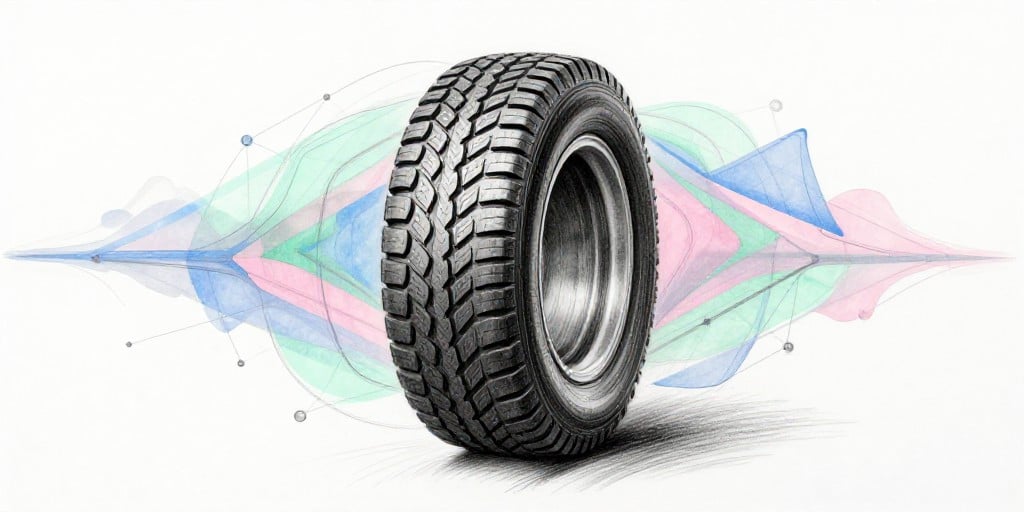
CAE Inc., a leading provider of simulation and design solutions, has entered into a joint venture with Sumitomo Rubber Industries, Ltd. (DUNLOP) and Fujitsu Limited to create an artificial‑intelligence (AI) surrogate model for tire structural analysis. The collaborative effort leverages a graph‑neural‑network (GNN) algorithm to predict the deformation behavior of tires in contact with road surfaces. In a recent proof‑of‑concept (POC) test, the AI model reduced finite‑element analysis (FEA) runtime from close to one hour to only a few minutes while maintaining a mesh of approximately 600,000 elements. Accuracy metrics indicate that the surrogate predictions of contact shapes and pressure distributions closely match those produced by conventional FEA.
The partnership’s roadmap calls for:
| Milestone | Target Date |
|---|---|
| Validation on Fujitsu‑Monaka processor | End of 2026 |
| Deployment of a design‑support tool | April 2027 |
The envisioned tool will allow tire designers to conduct complex analyses without specialized FEA expertise, thereby shortening development cycles and reducing associated costs.
Technological Implications
Graph‑Neural‑Network Architecture The GNN framework is particularly suited to modeling the complex interdependencies within a tire’s mesh. By encoding the mesh topology as a graph, the algorithm can capture local interactions that traditional machine‑learning models struggle to represent. This approach aligns with the broader shift toward physics‑informed AI, where domain knowledge is embedded directly into the learning process.
Hardware Acceleration Validation on the Fujitsu‑Monaka processor—a specialized AI accelerator—underscores the importance of co‑design between software and silicon. The processor’s architecture, optimized for sparse tensor operations typical of GNNs, is expected to deliver higher inference speeds and lower energy consumption than general‑purpose GPUs.
Surrogate Modeling in Computational Mechanics Surrogate models have long been used to replace costly numerical simulations in engineering design. The integration of AI accelerates this replacement by learning directly from high‑fidelity FEA data, thereby achieving near‑real‑time performance.
Industry Context
Automotive and Rubber Manufacturing
The tire industry is undergoing a transformation driven by digitalization and sustainability pressures. Traditional FEA workflows are time‑consuming and require significant computational resources. By reducing analysis time from hours to minutes, the AI surrogate model directly addresses a major bottleneck in the product development lifecycle.
AI in Computer‑Aided Engineering (CAE)
Across sectors—from aerospace to consumer electronics—companies are adopting AI to streamline CAE tasks. This trend is supported by two key factors:
- Data Availability: Large volumes of simulation data are now routinely archived, providing rich training sets for ML models.
- Computational Infrastructure: Cloud and edge computing platforms, combined with purpose‑built accelerators, lower the barrier to deploying AI in industrial settings.
Sustainability Considerations
Shortened development cycles translate to fewer iterations and less material waste. Moreover, energy‑efficient inference on specialized processors reduces the carbon footprint associated with simulation workloads. These factors resonate with corporate sustainability goals and regulatory pressures targeting reduced lifecycle emissions.
Competitive Positioning
- Sumitomo Rubber (DUNLOP) is positioning itself as an early adopter of data‑driven design, differentiating its product portfolio through advanced simulation capabilities.
- Fujitsu Limited is reinforcing its role in providing AI‑ready hardware to industrial clients, expanding beyond its traditional data‑center focus.
- CAE Inc. leverages its simulation expertise to bridge the gap between AI research and commercial application, potentially expanding its market share in the automotive CAE segment.
Economic Factors and Market Drivers
Cost of Computational Resources Traditional FEA requires high‑performance computing (HPC) clusters, which entail substantial capital and operational expenditures. AI surrogate models shift the cost profile toward software licensing and specialized silicon, offering more predictable budgeting.
Time‑to‑Market Pressure Rapid prototyping and iterative design are critical in a highly competitive tire market. Accelerated analysis reduces the time required to validate design changes, providing a strategic advantage.
Regulatory and Safety Standards Enhanced simulation accuracy supports compliance with evolving safety and performance standards, potentially reducing certification timelines and associated costs.
Talent Shortages in CAE By simplifying the analysis process, the tool can be used by designers with limited CAE training, mitigating the impact of workforce skill gaps.
Broader Economic Trends
The partnership exemplifies the convergence of AI, advanced silicon, and domain‑specific engineering—a trend that is reshaping multiple industrial sectors. Similar collaborations are emerging in:
- Aerospace: AI surrogate models for composite material analysis.
- Semiconductor: Machine‑learning‑driven layout optimization.
- Energy: AI‑assisted design of wind turbine blades.
These initiatives collectively push the envelope of what is achievable in engineering design, heralding a shift toward data‑centric product development that transcends traditional industry boundaries.
Outlook
If the AI surrogate model achieves the projected performance on the Fujitsu‑Monaka processor, it will likely become a benchmark for CAE automation across multiple sectors. The subsequent deployment of a user‑friendly design‑support tool could catalyze broader adoption of AI‑assisted engineering, accelerating the transition toward more sustainable and cost‑efficient product development pipelines.