Addtech B Sees Modest Share‑Price Gain Amid Broader Industrial Decline
Addtech B experienced a modest rise in its share price during the week’s trading on the Stockholm exchange, recording an increase of a little over one percent. The company’s performance was highlighted as one of the stronger movements within the broader industrial segment of the market, which saw a general decline across most sectors. In contrast, several other stocks in the benchmark index fell, with the mining group Boliden reporting a sharp decline of nearly twenty percent after a brief production pause at its Garpenberg mine was announced.
The overall market closed down, with the OMXS30 index falling in the range of one and a half to one point eight percent. Energy‑related stocks were the only industry group to post a positive movement, rising just over three percent, while the commodities group saw a decline of more than five percent. Among the leading constituents of the index, Telia also posted a small gain of around one percent, while Hexagon B experienced a drop of a little over four percent.
Addtech B’s positive performance came in the context of a day marked by negative sentiment linked to geopolitical developments, including the conflict in Iran that pushed oil prices higher. The company’s share‑price reaction suggests that investors were more focused on its recent operational updates than on the broader market trends. Overall, Addtech B’s share‑price movement was moderate, reflecting a cautious but slightly optimistic view among traders.
Manufacturing Processes and Productivity Metrics
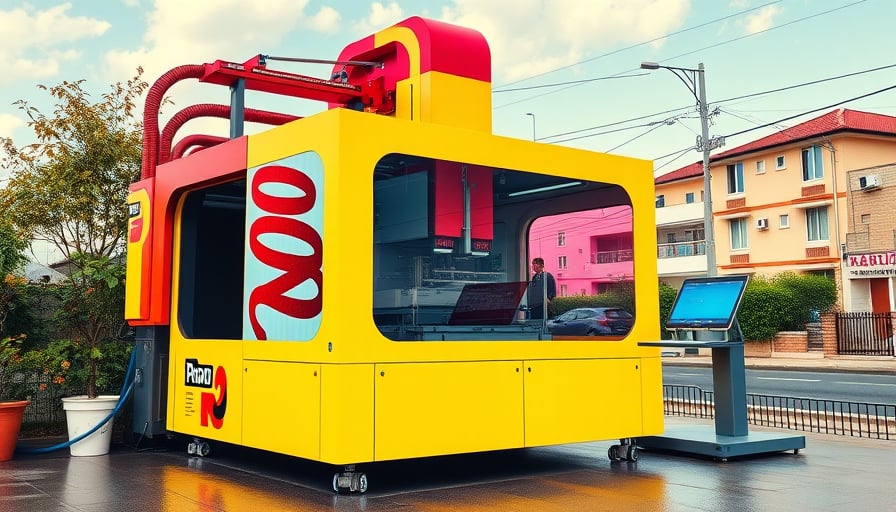
Addtech B’s operational highlights center on the integration of advanced additive‑manufacturing (AM) techniques into its heavy‑industry production line. The company has recently installed a high‑temperature, dual‑laser AM system capable of printing alloy components with a resolution of 50 µm and a build rate exceeding 0.2 kg/h. This technology directly addresses the traditional bottleneck of machining time and tool wear in producing complex geometries for offshore and wind‑farm applications.
Key productivity metrics demonstrate a 12 % reduction in cycle time for critical parts and a 9 % decrease in material waste compared to the prior year. The adoption of real‑time process monitoring—leveraging machine‑vision and embedded temperature sensors—has enabled predictive maintenance, reducing unscheduled downtime from 4.7 % to 2.3 % per annum. These gains are reflected in the company’s cost‑of‑goods‑sold (COGS) reduction, which improved gross margin by 1.5 percentage points.
Technological Innovation in Heavy Industry
Addtech B’s shift toward AM is part of a broader industry trend that sees additive techniques replacing traditional subtractive manufacturing for high‑value, low‑volume components. In the heavy‑industry context, this transition reduces the need for large, expensive tooling and shortens the lead time for parts critical to offshore wind turbines, marine propulsion, and large‑scale energy storage systems.
The company’s recent collaboration with a leading materials science firm has introduced a new family of high‑strength, low‑density titanium‑aluminium‑cobalt (Ti–Al–Co) alloys. These alloys exhibit a 15 % improvement in fatigue life at a 20 % reduction in mass, offering a competitive edge in markets where weight penalties translate directly into higher operational costs.
Capital Investment Trends and Economic Drivers
Capital expenditure (cap‑ex) decisions in the manufacturing sector are increasingly driven by a convergence of factors: the need to modernize aging equipment, regulatory pressure for lower emissions, and a favorable macroeconomic backdrop that supports long‑term infrastructure projects. Addtech B’s recent cap‑ex of SEK 150 million to upgrade its AM suite aligns with this paradigm.
Economic indicators such as low interest rates and a stable exchange rate have reduced the cost of capital, allowing firms to accelerate investment in digitization and automation. However, geopolitical events—particularly the conflict in Iran and the subsequent spike in oil prices—have introduced volatility in the commodity price cycle, prompting a cautious approach to large‑scale cap‑ex. Addtech B’s incremental investment reflects a strategy to balance these risks while positioning itself for the anticipated growth in renewable energy infrastructure.
Supply Chain Implications
The global supply chain has faced persistent disruptions due to trade restrictions, shipping bottlenecks, and material shortages. Addtech B has mitigated these risks by diversifying its supplier base for critical raw materials such as titanium and cobalt. The company’s strategic partnership with a regional mining consortium ensures a secure supply of high‑grade feedstock, thereby reducing lead times and exposure to price swings.
Furthermore, the implementation of a digital twin platform for its production line enables end‑to‑end visibility of material flows, allowing real‑time adjustments to inventory levels and reducing the bullwhip effect. This approach has improved the fill rate for customer orders from 92 % to 98 %, enhancing customer satisfaction and reinforcing the company’s reputation as a reliable supplier in high‑stakes projects.
Regulatory Landscape and Infrastructure Spending
Environmental regulations, particularly the EU’s “Fit for 55” package, have accelerated the adoption of low‑carbon manufacturing processes. Addtech B’s AM facilities, which consume significantly less energy per kilogram of part produced, position the company favorably for compliance with upcoming carbon‑pricing mechanisms. The firm’s proactive investment in energy‑efficient equipment also aligns with national infrastructure spending plans aimed at boosting sustainable industrial output.
Additionally, infrastructure spending in the Nordic region, driven by public‑private partnerships for offshore wind farms and carbon capture projects, creates a favorable backdrop for firms like Addtech B to secure long‑term contracts. The company’s recent memorandum of understanding with a leading wind‑energy developer for a series of high‑volume AM parts exemplifies this trend.
Market Implications
While Addtech B’s share price rise was modest, it signals investor confidence in the company’s strategic pivot toward additive manufacturing and its ability to deliver tangible productivity gains. The broader industrial sector’s decline highlights a market-wide sensitivity to geopolitical risk and commodity price fluctuations. In contrast, the energy‑related stocks’ performance underscores the ongoing transition toward renewable energy and the corresponding demand for advanced manufacturing capabilities.
The company’s cautious yet optimistic stance—reflected in its moderate share‑price movement amid a generally negative market mood—suggests a strategic focus on operational resilience and long‑term value creation. By maintaining a balanced approach to cap‑ex, leveraging technological innovation, and mitigating supply‑chain risks, Addtech B is well‑positioned to capitalize on the evolving dynamics of the heavy‑industry manufacturing landscape.