
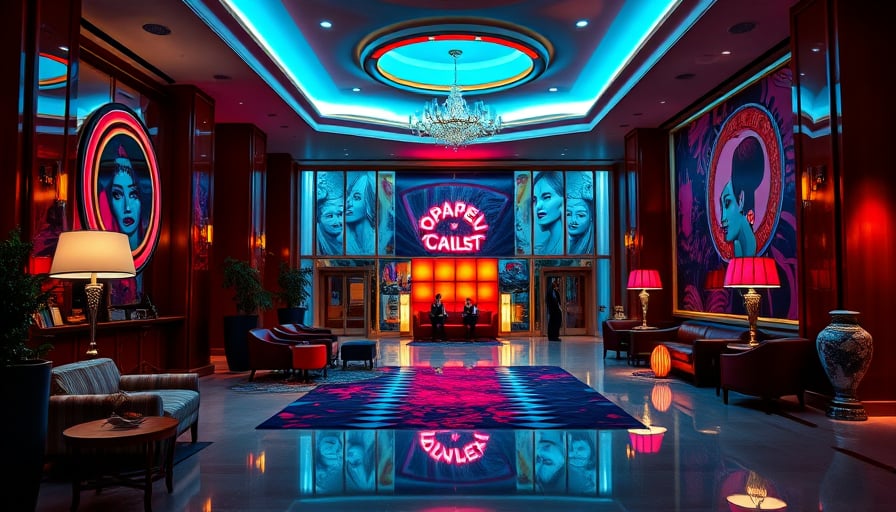
Accor’s Loyalty Push Signals a Shift Toward Experiential‑Centric Growth
Accor SA’s latest suite of points‑based promotions—quadruple points on newly renovated properties, double points for guests in Asia‑Pacific, Middle East and Africa, and a triple‑points offer for corporate travellers using a designated provider—illustrates a broader strategy that intertwines digital engagement with the evolving expectations of today’s consumers.
Digital‑Physical Synergy in an Age of Hybrid Travel
The hospitality sector is increasingly negotiating the boundary between the physical hotel experience and the digital touchpoints that now shape the entire journey. Accor’s quadruple‑points initiative, tied to recently refurbished assets, is a classic example of how an investment in tangible, aesthetic upgrades can be amplified through a digital loyalty program. Guests who book via the Accor mobile app or website receive an accelerated accrual rate, encouraging repeat stays while reinforcing the brand’s online ecosystem.
Meanwhile, the regional double‑points push targets a geographically diverse cohort whose spending patterns are shifting toward experiential travel. The Asia‑Pacific market, in particular, is experiencing a surge in millennial and Gen Z travellers who prioritize immersive cultural experiences and are more likely to book through mobile platforms. By offering a time‑bound incentive, Accor nudges these travelers to act quickly, thereby creating a burst of traffic that feeds into its data‑driven marketing engines.
Generational Spending and Corporate Travel as Drivers of Portfolio Expansion
Accor’s triple‑points scheme for corporate travelers, linked to a specific travel provider, reflects an awareness that the corporate segment remains a reliable source of high‑yield stays. Corporate travelers, especially in the Americas, often exhibit higher per‑night spend and longer stays—behaviours that support the hotel’s revenue per available room (RevPAR). By aligning loyalty rewards with a corporate travel partner, Accor positions itself to capture a segment that is increasingly comfortable booking through digital portals and appreciates instant, tangible benefits.
The company’s goal of reaching 600 hotels by 2027 underlines an asset‑light approach that relies on franchising and management agreements. This model reduces capital intensity, allowing Accor to reallocate capital toward digital platform enhancement and targeted marketing campaigns. As the hospitality landscape becomes more fragmented, an agile, digitally‑centric portfolio can respond faster to changing consumer preferences.
Cultural Movements and Consumer Expectations
Contemporary travelers are increasingly drawn to authenticity, sustainability, and community engagement—all elements that resonate with Accor’s refurbished properties. By coupling physical renovations with loyalty incentives, the brand signals its commitment to delivering contemporary, culturally relevant experiences. Moreover, the temporal nature of the promotions—early‑December to mid‑2026, month‑end deadlines—creates a sense of urgency that aligns with the binge‑culture mentality fostered by social media sharing. Guests who post about their quadruple‑points stay are more likely to generate organic, peer‑to‑peer endorsement, effectively extending the campaign’s reach beyond paid advertising.
Market Outlook and Implications for Investors
Accor’s share price, while exhibiting moderate volatility, reflects a valuation that positions the company as a significant player within the consumer discretionary sector. The rollout of these loyalty initiatives is likely to strengthen earnings growth by boosting occupancy rates and average daily rates, particularly in markets where consumer confidence is recovering. Investors can expect a gradual shift in Accor’s revenue mix, with a higher proportion of income derived from digital channels and corporate bookings.
In a broader context, Accor’s strategy underscores a market trend: hospitality operators that successfully blend physical refurbishment with digital loyalty structures can capture higher margins while mitigating capital risk. The company’s forward‑looking focus on the Americas, combined with an asset‑light model, offers a template for other brands navigating the post‑pandemic landscape, where flexibility, experiential depth, and seamless digital integration are paramount.