
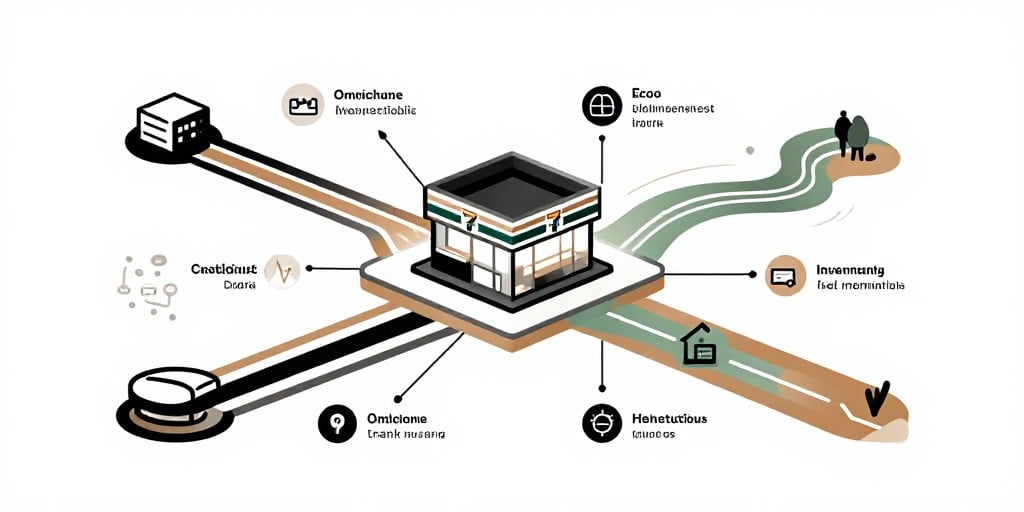
Corporate News: Strategic Leadership Transition at 7‑Eleven Inc.
Seven & i Holdings Co. announced in late July that former Keurig Dr Pepper executive Mauricio Leyva will assume the role of Chief Executive Officer of its North American convenience‑store business, 7‑Eleven Inc., effective August 1 2026. The appointment comes as the retailer accelerates a comprehensive transformation program focused on customer experience, store network expansion, and operational efficiency.
Strategic Context
Leyva’s tenure at Keurig Dr Pepper (2020‑2024) was marked by a high‑profile post‑merger integration that strengthened the company’s operating foundation and solidified its position as a leading soft‑drink brand in the United States. His broader experience spans global beverage and retail giants—Lala Mexico, AB InBev, SABMiller, and Grupo Modelo—where he contributed to the development of extensive convenience‑store chains. This portfolio of skills positions him to lead 7‑Eleven through an era of omnichannel innovation and supply‑chain resilience.
Consumer‑Goods Trends and Retail Innovation
The convenience‑store sector is experiencing a shift from purely transactional outlets to integrated lifestyle hubs. Key trends include:
| Trend | Market Indicator | Implication for 7‑Eleven |
|---|---|---|
| Omnichannel convergence | Online sales of convenience goods increased 15% YoY in 2025 | Need for seamless digital‑physical touchpoints |
| Health‑conscious product mix | Health‑drink category grew 12% in 2024 | Opportunity to diversify premium beverage portfolio |
| Experience‑driven shopping | 70% of shoppers cite store ambience as a purchase driver | Investment in store redesign and in‑store technology |
| Data‑enabled inventory | AI‑based demand forecasting accuracy rose 18% in 2024 | Reduction in stock‑outs and waste |
Leyva’s background in beverage branding and supply‑chain integration equips 7‑Eleven to capitalize on these dynamics. By embedding advanced analytics into inventory management and leveraging real‑time customer data, the retailer can reduce operational costs while elevating the in‑store experience.
Cross‑Sector Patterns
Synthesis of market data across food‑service, beverage, and retail segments reveals several cross‑sector patterns:
- Vertical integration – Companies that control end‑to‑end supply chains, from sourcing to shelf, report higher margins and faster response to demand shifts.
- Digital payment ecosystems – Adoption of mobile wallets and loyalty‑linked payment apps has boosted repeat visits across convenience and grocery stores.
- Sustainability as a differentiator – Brands with transparent sourcing and recyclable packaging enjoy a 9% lift in consumer preference among millennials and Gen Z.
7‑Eleven’s planned expansion, guided by Leyva, will integrate these patterns. The company’s centennial celebrations provide a symbolic backdrop for launching a “Future‑Ready 7‑Eleven” initiative that includes:
- Store‑wide sensor networks to monitor product temperature and shelf presence.
- AI‑driven replenishment that aligns inventory with localized consumer behavior.
- Digital loyalty platform tied to a proprietary mobile app for personalized offers and contactless checkout.
Supply‑Chain Innovations
Recent disruptions (e.g., semiconductor shortages and port congestion) underscored the fragility of global logistics. 7‑Eleven’s new CEO is expected to:
- Diversify distribution centers to reduce lead times by 12% within two years.
- Adopt blockchain for traceability across high‑margin beverage categories.
- Partner with regional manufacturers to shorten the supply chain for ready‑to‑eat items.
These measures align with broader industry moves toward “just‑in‑time” but resilient inventory systems, thereby buffering against future shocks while keeping operational costs in check.
Short‑Term Market Movements and Long‑Term Transformation
In the near term, the market will likely react positively to Leyva’s appointment, reflected in a modest uptick in 7‑Eleven’s stock price following the announcement. However, the real value proposition lies in the long‑term transformation:
- Customer Experience: By integrating digital platforms with physical stores, 7‑Eleven can shift from a transactional to an experiential model, boosting average ticket size.
- Operational Efficiency: Lean supply‑chain practices and data‑driven inventory will reduce waste and increase profitability.
- Brand Positioning: Positioning 7‑Eleven as a “smart convenience” brand will differentiate it from traditional competitors and align with evolving consumer expectations.
These initiatives will collectively drive sustainable, profitable growth, ensuring that 7‑Eleven continues to thrive in a rapidly changing retail landscape.
This article synthesizes publicly available data and industry analysis to provide a forward‑looking perspective on 7‑Eleven Inc.’s leadership transition and its implications for the convenience‑store sector.