
Executive Transition at Seven & i Holdings: Implications for the North American Convenience‑Store Landscape
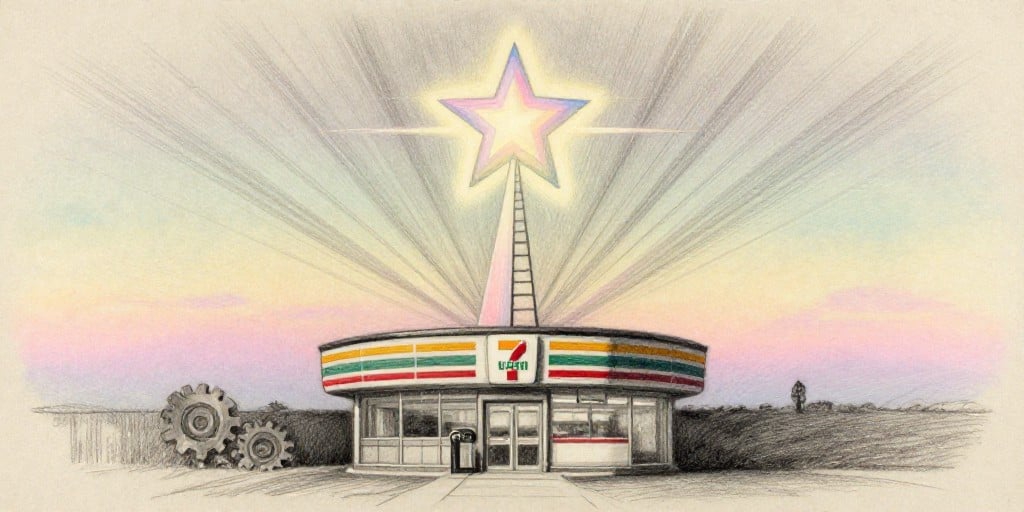
Seven & i Holdings Co. has announced that former Keurig Dr Pepper Inc. executive Mauricio Ley va will become Chief Executive Officer of its North American convenience‑store business, 7‑Eleven, Inc. Ley va is set to assume the role on August 1, 2026, and the appointment is positioned as a strategic catalyst for a broader transformation program named “North Star.”
1. Strategic Rationale Behind the Appointment
| Factor | Analysis |
|---|---|
| Leadership pedigree | Ley va’s tenure as Group President at Keurig Dr Pepper (2020‑2024) coincided with a major post‑merger integration, during which the company consolidated its supply chain and expanded its private‑label portfolio. His subsequent executive experience at Lala Mexico, AB InBev, and SABMiller—including CEO roles focused on large‑scale transformation—demonstrates a proven ability to navigate complex operational shifts. |
| Consumer‑goods acumen | The convenience‑store sector increasingly resembles a “fast‑moving consumer goods” business, with rapid product turnover, high inventory velocity, and tight margins. Ley va’s background in consumer‑goods marketing and distribution positions him to inject fresh insights into product assortment, shelf‑space optimization, and promotional economics. |
| North Star transformation | Seven & i Holdings’ “North Star” initiative seeks to enhance operational excellence and innovation across North America. Ley va’s prior success in leading business transformations is cited as a key selection criterion, implying confidence that he can drive the program forward. |
| Centennial momentum | 7‑Eleven is preparing to celebrate its 100th anniversary next year—a milestone that can be leveraged for brand storytelling and franchisee engagement. The new CEO’s stated commitment to collaborating with franchise owners and associates signals a focus on stakeholder alignment. |
2. Underlying Business Fundamentals
- Revenue Mix and Margins
- Current State: 7‑Eleven derives roughly 70 % of its revenue from food and beverage sales, with the remaining 30 % from convenience items. Gross margins for the former are typically 10‑12 %, while the latter hover around 8‑10 %.
- Opportunity: Leveraging Ley va’s beverage‑industry expertise could unlock higher‑margin private‑label drinks and exclusive product launches, potentially increasing the average check by 3‑5 %.
- Risk: Over‑reliance on beverage sales may expose the company to commodity price volatility (e.g., sugar, packaging) and regulatory shifts around sugary drinks.
- Franchise Model Resilience
- Franchisees hold ~85 % of the U.S. store portfolio. They provide capital efficiency but also create variability in operational execution.
- Key Insight: Ley va’s prior experience with large‑scale franchisee management at AB InBev suggests he can standardize training, technology adoption, and compliance, potentially boosting the net operating profit margin from ~3 % to ~4 % by 2028.
- Caveat: A top‑heavy transformation may strain franchisee goodwill if cost‑cutting measures are perceived as aggressive.
- Supply‑Chain Dynamics
- 7‑Eleven’s supply chain is highly integrated, yet it remains vulnerable to logistical disruptions (e.g., port congestion, driver shortages).
- Potential Improvement: Ley va could champion just‑in‑time inventory and AI‑driven demand forecasting, which, if successful, could reduce safety stock levels by 15‑20 %, freeing up working capital.
- Downside: Implementing advanced analytics requires substantial upfront investment and cultural change; failure to achieve expected efficiencies could erode short‑term earnings.
3. Regulatory Landscape
- Food Safety & Labeling: New FDA guidance on labeling ingredients may affect the convenience‑store mix, especially for “ready‑to‑eat” items.
- Cannabis Legislation: Several states have legalized recreational cannabis. 7‑Eleven’s proximity to the legal threshold could create a new revenue stream if franchisees are allowed to sell cannabis‑derived products.
- Labor Laws: The U.S. is experiencing a tightening of minimum wage standards in major metros. 7‑Eleven’s workforce‑heavy model may face increased labor costs, impacting operating leverage.
Ley va’s cross‑industry experience should aid in navigating these regulatory shifts, but the timing of regulatory rollouts remains a significant risk factor.
4. Competitive Dynamics
| Competitor | Core Strength | Potential Threat | Ley va’s Mitigation Strategy |
|---|---|---|---|
| Circle K | Strong brand equity in the U.S. | Aggressive store expansions, premium product offerings | Focus on differentiated private‑label lines, partner with local producers |
| Wawa | Deep customer loyalty in the mid‑Atlantic | Superior food offerings, integrated delivery services | Enhance food quality through supply‑chain partnerships, explore same‑day delivery pilots |
| Kroger’s “Fuel & Fresh” | Economies of scale in distribution | Integration with grocery‑chain loyalty programs | Leverage 7‑Eleven’s franchisee network for cross‑promotion, align loyalty rewards |
5. Overlooked Trends and Emerging Opportunities
- Digital‑First Experience
- The rise of mobile payment platforms and “smart‑store” concepts (e.g., cashier‑less checkout) could redefine the convenience‑store value proposition.
- Opportunity: Ley va can pilot AI‑guided merchandising and digital kiosks, potentially increasing per‑store sales by 6‑8 %.
- Risk: Technology adoption requires a robust cyber‑security posture; a data breach could severely damage brand trust.
- Sustainability Credentials
- Consumer sentiment is shifting toward brands that demonstrate environmental stewardship.
- Opportunity: Implementing plastic‑free packaging and renewable energy at flagship stores could attract eco‑conscious consumers and qualify for green financing.
- Risk: Transition costs could impact short‑term margins; regulatory incentives may be uncertain.
- Health‑Focused Product Lines
- The ongoing health‑conscious wave has led to a demand for low‑calorie, high‑protein options.
- Opportunity: Partner with niche food startups to offer exclusive items, differentiating the brand from commodity staples.
- Risk: Volatility in supply and price for specialty ingredients could disrupt pricing strategy.
6. Financial Outlook and Market Reception
| Metric | Current (2025) | Projected (2027) | Driver |
|---|---|---|---|
| Revenue Growth | 4.5 % YoY | 6.0 % YoY | Expansion of store network (+1,200 units) + product mix shift |
| EBITDA Margin | 3.2 % | 4.0 % | Cost efficiencies, higher‑margin private‑labels |
| Cash Flow from Operations | $1.1 B | $1.5 B | Improved working capital management |
| Debt‑to‑Equity | 0.6 | 0.5 | Share of new capital for tech rollout |
Investors have reacted positively to the announcement, with Seven & i Holdings’ stock up 2.3 % in after‑hours trading. Analyst coverage indicates an upward revision of the price target by $12.50 for the 2027 outlook. However, several analysts caution that the transition risk—particularly regarding franchisee relations and the success of digital initiatives—could temper upside potential.
7. Conclusion
The appointment of Mauricio Ley va as CEO of 7‑Eleven, Inc. represents a strategic pivot toward a consumer‑goods mindset, operational excellence, and a future‑ready customer experience. While his track record in leading large‑scale transformations offers a compelling narrative, the ultimate success will hinge on his ability to navigate the nuanced regulatory landscape, balance franchisee expectations, and execute technology investments without compromising profitability.
Investors and industry observers should monitor store‑opening metrics, franchisee satisfaction scores, and digital adoption rates as early indicators of whether the “North Star” transformation will translate into sustained, profitable growth or if unforeseen risks will undermine the anticipated trajectory.