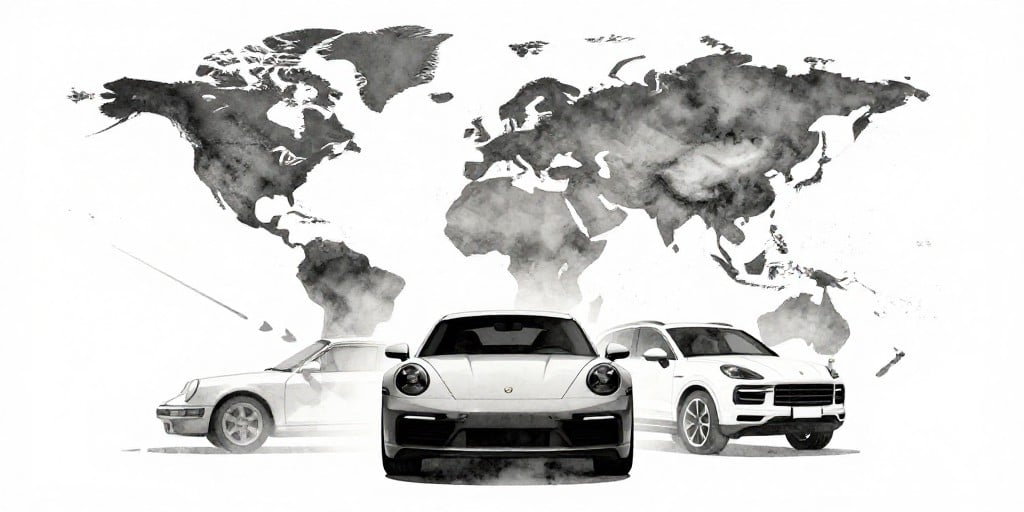
Overview of 2026 Vehicle Deliveries
Dr. Ing. h.c. F. Porsche AG disclosed that its vehicle deliveries for the first nine months of 2026 were approximately one‑sixth lower than in the corresponding period of 2025. The decline was most pronounced in China, where sales fell by roughly one‑third, but similar trends were observed in North America, Europe (excluding Germany), and overseas and emerging‑market regions. In contrast, the 911 model remained the most sought‑after product, with deliveries increasing by a margin comparable to the previous year. The Cayenne line sustained its position as the best‑selling segment, its performance only marginally below last year’s figures, partly buoyed by the launch of a fully electric variant. The Macan experienced a significant reduction in output, particularly after the discontinuation of its combustion‑engine version.
Key Takeaways
- Overall Delivery Decline: ~16 % drop in 9‑month deliveries.
- Regional Variations:
- China: ~33 % decline.
- North America, Europe (ex‑Germany), overseas/emerging markets: noticeable, but less steep.
- Model Performance:
- 911: Positive growth.
- Cayenne: Stable, slight dip.
- Macan: Substantial drop post‑discontinuation of ICE variant.
- Strategic Focus: Value‑oriented sales, long‑term brand development, balanced supply–demand equilibrium, high‑performance derivatives, expanded individualisation.
Analytical Context
1. Global Automotive Landscape
The first quarter of 2026 continued to see a gradual shift from traditional internal‑combustion engines (ICE) to electrified powertrains, driven by tightening emission regulations and changing consumer preferences. While many manufacturers accelerated electrification, Porsche’s incremental approach—introducing an all‑electric Cayenne and phasing out the Macan ICE—reflects a strategic balance between innovation and brand heritage.
2. Market Dynamics in Key Regions
| Region | Delivery Trend | Underlying Factors |
|---|---|---|
| China | -33 % | Trade tensions, increased local competition, tariff adjustments, consumer shift to domestic brands. |
| North America | Decline | Currency fluctuations, supply‑chain constraints, heightened competition from domestic EV manufacturers. |
| Europe (ex‑Germany) | Decline | Stricter emission standards, higher taxation on ICE vehicles, growing demand for hybrid/electric models. |
| Overseas/EM | Decline | Economic slowdown in emerging markets, inflationary pressures, supply‑chain delays. |
3. Product‑Line Analysis
911
- Strengths: Iconic status, high performance, strong brand loyalty.
- Drivers: Limited edition releases, continued emphasis on premium pricing and exclusivity.
- Risk: Potential market saturation and increasing competition from niche performance EVs.
Cayenne
- Strengths: Strong sales heritage, diversified powertrain lineup.
- Drivers: Introduction of a fully electric variant, expanding individualisation options.
- Risk: Transition to EV may alienate traditional SUV customers; requires significant investment in charging infrastructure partnerships.
Macan
- Strengths: Compact luxury SUV segment, previously strong demand.
- Drivers: Discontinuation of ICE version and lack of immediate EV successor.
- Risk: Market perception of reduced brand flexibility; potential loss of market share to competitors offering EV alternatives.
4. Strategic Implications
| Strategic Focus | Impact | Competitive Position |
|---|---|---|
| Value‑oriented sales | Sustains premium pricing, enhances brand perception | Differentiates from volume‑oriented mass‑market competitors |
| Long‑term brand development | Builds equity, resilience to short‑term volatility | Aligns with luxury and performance positioning |
| Balanced supply‑demand | Reduces excess inventory, mitigates pricing pressure | Enables agility in response to market shifts |
| High‑performance derivatives | Drives demand among enthusiasts | Positions Porsche as the premium performance benchmark |
| Expanded individualisation | Meets consumer demand for uniqueness | Enhances customer loyalty and average selling price |
5. Cross‑Sector Connections
- Energy Transition: The shift to electrified models mirrors broader trends in the energy sector, particularly the increasing importance of renewable sources to power electric vehicles.
- Technology & Connectivity: Porsche’s focus on individualisation dovetails with advances in digital manufacturing, 3D printing, and AI‑driven design, reflecting the convergence of automotive and tech industries.
- Supply Chain Resilience: The observed delivery declines underscore the fragility of global supply chains, a challenge also faced by semiconductor, aerospace, and logistics sectors.
6. Economic Drivers
- Currency Volatility: Fluctuations in the euro, yen, and yuan impacted profitability and demand in export markets.
- Regulatory Environment: Stricter CO₂ emissions limits and EV incentives reshaped consumer purchasing behavior, particularly in Europe and China.
- Macro‑economic Conditions: Inflation, interest rates, and consumer confidence levels influenced discretionary spending on high‑priced luxury vehicles.
Conclusion
Porsche’s 2026 delivery figures illustrate a complex interplay between market contraction in key regions and resilience in flagship product lines. The company’s strategic emphasis on value‑oriented sales, long‑term brand development, and a balanced supply‑demand framework has maintained demand for its premium and luxury segments despite broader industry challenges. Continued focus on high‑performance derivatives, electrification of key models, and expanded individualisation will likely support Porsche’s competitive positioning amid evolving economic and technological landscapes.