Corporate News – Power Sector Dynamics in Denmark
The recent trading activity of Ørsted A/S on the Copenhagen Stock Exchange, while modest in its impact on the C25 index, offers a useful lens through which to examine broader technical and regulatory challenges facing the Danish power system. Ørsted’s performance, characterized by a slight decline in share price and a low short‑interest profile, reflects underlying market forces that extend beyond company‑specific news. In this analysis we explore how such price movements relate to grid stability, renewable energy integration, and the capital investment required to modernize the national power infrastructure.
1. Grid Stability in a Renewables‑Heavy Context
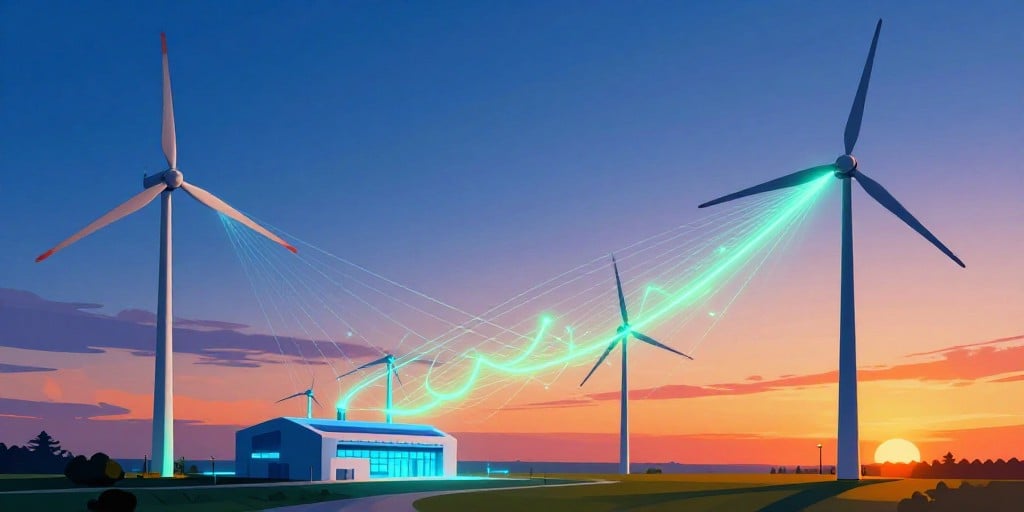
Denmark’s energy policy has aggressively expanded offshore wind capacity, positioning Ørsted as one of the world’s largest developers of floating and fixed‑blade turbines. The rapid addition of intermittent resources, however, increases the complexity of maintaining frequency and voltage control on a conventional transmission network.
Key Technical Challenges
- Frequency Regulation: Conventional power plants provide inertia that dampens frequency swings. Wind farms, particularly those with power electronic inverters, have negligible inertia. Grid operators are therefore deploying synthetic inertia solutions and fast‑frequency response (FFR) services to emulate mechanical inertia.
- Voltage Control: Variable reactive power output from wind turbines can lead to voltage excursions, especially during high wind periods. Advanced power‑flow control and the deployment of static synchronous compensators (STATCOMs) are critical for voltage regulation.
- Protection Coordination: The proliferation of distributed energy resources (DERs) alters fault current levels, necessitating revised protection settings to avoid misclearing or inadvertent isolation of critical grid segments.
These technical demands underscore why Ørsted’s operational performance is tightly interwoven with the overall health of the Danish transmission network. Even minor price fluctuations in the company’s shares may signal shifts in investor confidence about its ability to deliver reliable power amidst these challenges.
2. Renewable Energy Integration Challenges
The Danish grid has achieved an average renewable penetration of over 40 % in recent years, yet this level of integration imposes significant operational constraints.
- Curtailment Risk: During peak wind periods, surplus generation may exceed transmission capacity or market demand, forcing curtailment and resulting in lost revenue for wind developers.
- Balancing Service Costs: The market price of balancing services in Denmark can fluctuate dramatically. Ørsted’s participation in balancing markets directly influences its revenue streams and, by extension, its valuation in the stock market.
- Forecasting Accuracy: Accurate wind forecasting is essential to schedule generation and mitigate imbalance penalties. Technological advancements in meteorological modelling and data analytics are therefore a high priority for grid operators and renewable developers alike.
The modest decline in Ørsted’s share price could be interpreted as a market reaction to heightened uncertainty surrounding these integration issues, particularly when coupled with sector‑wide softness.
3. Infrastructure Investment Requirements
To accommodate continued growth in wind and other renewables, Denmark must expand both transmission corridors and substations. Ørsted’s capital allocation reflects a dual focus: building offshore wind farms and investing in grid interconnectors that facilitate cross‑border electricity flows.
Capital Expenditure Highlights
- Transmission Upgrades: Reinforcement of the 400 kV backbone and the construction of new 230 kV lines to relieve congestion near wind‑intensive regions.
- Substation Modernization: Upgrading protective relays, adding dynamic voltage regulators, and integrating advanced SCADA systems to enhance situational awareness.
- Interconnector Projects: Expanding inter‑Nordic and North Sea interconnectors to diversify supply sources and increase market integration.
These infrastructure projects are typically financed through a mix of equity, debt, and regulated tariffs. The low short‑interest profile of Ørsted indicates that investors largely perceive the company’s long‑term asset base as a stable foundation for future earnings, even as capital expenditures remain substantial.
4. Regulatory Frameworks and Rate Structures
Denmark operates under a liberalized electricity market regulated by the Danish Energy Authority and the Danish Energy Association. Key regulatory elements impacting Ørsted include:
- Tariff Regulation: Transmission and distribution tariffs are set by the regulator to reflect cost‑of‑service principles. The rate structure must balance the need to recover infrastructure investments while keeping consumer prices competitive.
- Renewable Feed‑in Tariffs (RFTs): While phased out for new projects, existing RFT contracts create long‑term price certainty for renewable developers.
- Balancing Service Pricing: Market‑based pricing mechanisms for balancing services incentivize grid‑protection services, but volatility can affect revenue streams for developers like Ørsted.
A shift toward more flexible and dynamic tariff models, such as time‑of‑use pricing or demand response incentives, could further influence investor perception of utility risk and opportunity.
5. Economic Impacts on Utility Modernization
The investment in grid stability, renewable integration, and infrastructure upgrades carries significant economic implications for both utilities and consumers.
- Capital Costs vs. Consumer Rates: Utilities must recover high upfront costs, which can translate into increased transmission tariffs for end users. However, improved reliability and lower outage costs can offset some of these impacts.
- Employment and Economic Growth: Large infrastructure projects create jobs and stimulate local economies, providing a broader social benefit that can mitigate public opposition to tariff increases.
- Energy Security and Export Potential: By enhancing interconnectivity, Denmark positions itself as a net exporter of green electricity, potentially generating foreign exchange earnings that benefit the national economy.
For Ørsted, these macroeconomic dynamics reinforce the perception that its share price movements are more influenced by fundamental market conditions—such as the overall health of the renewable sector and regulatory policies—than by speculative trading activities, as evidenced by the low short‑interest data.
6. Engineering Insights into Power System Dynamics
From a technical standpoint, the interaction between generation, transmission, and distribution layers can be modeled using dynamic simulation tools that capture:
- Frequency Response Models: Differential equations representing the swing equation of synchronous generators and the inverter dynamics of wind turbines.
- Voltage Stability Analysis: Continuation power flow and eigenvalue analyses to assess the system’s ability to maintain acceptable voltage levels under varying load conditions.
- Protection Coordination Algorithms: Time‑overcurrent relay settings and impedance‑based protection schemes to ensure selective isolation during faults.
By applying these engineering frameworks, utilities can predict how changes in renewable penetration or infrastructure upgrades will influence system reliability metrics such as Loss of Load Probability (LOLP) and Voltage Stability Margin (VSM). The outcomes of these analyses feed directly into regulatory tariff setting and investment planning, creating a feedback loop that ultimately shapes market valuations of firms like Ørsted.
7. Conclusion
Ørsted’s recent modest decline in share price and its low short‑interest profile are emblematic of a broader market environment where fundamental dynamics—particularly those related to grid stability, renewable integration, and infrastructure investment—drive investor sentiment. The Danish power system’s evolution towards a highly renewable, highly interconnected network demands continuous technical innovation and substantial capital outlays. Regulatory frameworks and rate structures must adapt to balance these demands with consumer affordability. As Ørsted and its peers navigate these complexities, their financial performance will increasingly reflect the success of engineering solutions that secure grid reliability while enabling the energy transition.