
Ørsted’s Share Price Recovery Amidst Market Volatility: Implications for Power System Modernization
Ørsted’s shares, which had dipped to their lowest level since the end of March, displayed a modest recovery during Monday’s trading session. The early gains in the company’s stock mirror a broader market trend in which several Danish blue‑chip stocks experienced moderate upside. In contrast, other listed firms such as Pandora and Rockwool recorded declines, partly driven by movements in commodity prices that affect their cost structures.
Market Context and Investor Sentiment
The Danish elite index (C25) opened slightly lower but subsequently gravitated toward a neutral stance, underscoring the limited influence of company‑specific news on the overall market. Analysts noted that geopolitical developments—particularly progress in negotiations between the United States and Iran—have helped keep oil prices subdued, which in turn has a dampening effect on energy‑related equities like Ørsted. Nevertheless, the company’s share price moved upward, suggesting a degree of investor confidence in its long‑term prospects.
Sector‑specific commentary highlighted that Ørsted’s recent price dip was attributed to falling energy prices, which can erode profitability for renewable energy producers. The company’s performance in the latest week, however, indicates that investors are not overly bearish. This trend aligns with a broader market environment that remains cautious yet open to potential upside should geopolitical tensions ease or further reductions in interest rates materialise.
Power Generation, Transmission, and Distribution in the Context of Ørsted’s Outlook
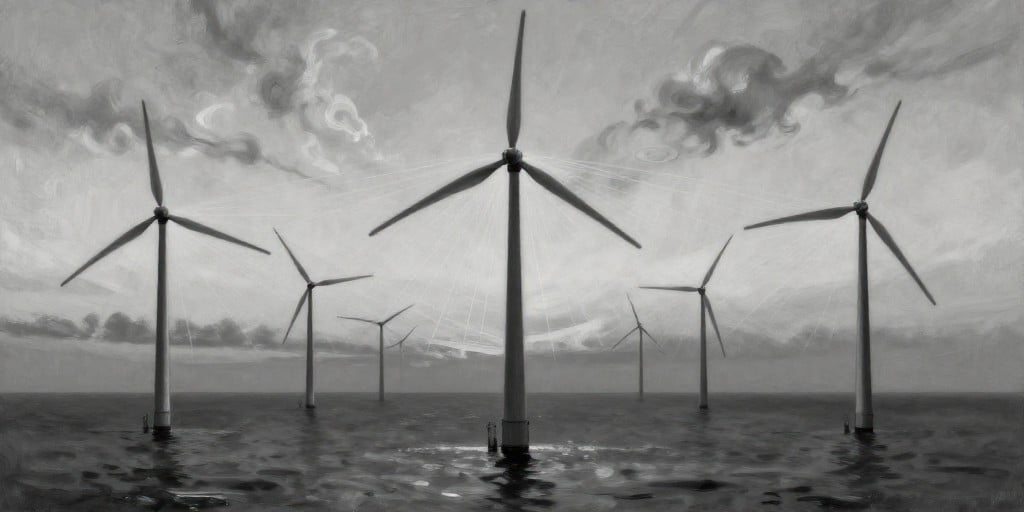
Ørsted, as a leading offshore wind developer and operator, is deeply entwined with the technical and regulatory frameworks that govern power system stability, renewable energy integration, and infrastructure investment. The following sections provide an engineering‑centric analysis of these dynamics and their implications for Ørsted and the wider energy transition.
Grid Stability and the Integration of Variable Renewable Energy
Inertia Reduction The substitution of synchronous generators with inverter‑based resources (IBRs) in offshore wind farms reduces system inertia. Inertia is essential for maintaining frequency stability following disturbances. Ørsted’s large offshore wind portfolio necessitates the deployment of synthetic inertia services, where turbine controllers inject fast frequency response to emulate the mechanical inertia of traditional plants.
Voltage Regulation Offshore wind turbines can provide voltage support through reactive power injection. Ørsted’s turbines are often equipped with static synchronous compensators (STATCOMs) and static synchronous compensators with voltage control (STATCOM‑VC), enabling dynamic voltage regulation at the point of interconnection. This capability is critical in congested interconnector corridors such as the Denmark–Germany link.
Transient Stability The rapid ramping of offshore wind output during wind speed changes can trigger transient stability challenges. Ørsted’s grid codes now require transient stability studies for each project, ensuring that the combined offshore generation and storage systems can withstand sudden faults without violating system voltage or frequency limits.
Renewable Energy Integration Challenges
Curtailment Risks When wind speeds exceed optimal operating ranges or when transmission constraints limit export capacity, curtailment may occur. Ørsted mitigates this risk by co‑locating energy storage (e.g., lithium‑ion or compressed air) and smart load‑shifting solutions to absorb surplus generation.
Capacity Factor Optimisation Ørsted leverages dynamic power curve optimisation and predictive maintenance to maximise capacity factors. High‑frequency wind forecasting, coupled with advanced state‑of‑the‑art (SOTA) machine learning models, enables the turbine operators to adjust blade pitch and generator speed in real time, maintaining optimal power output.
Grid Code Compliance Denmark’s 2025 grid code mandates the provision of voltage support up to ±10 % and frequency response up to 0.5 Hz within 4 s for all new offshore wind projects. Ørsted’s engineering teams are designing control systems that meet or exceed these requirements, thereby ensuring seamless integration into the Nordic grid.
Infrastructure Investment Requirements
Subsea Cable and Interconnectors Expanding offshore wind capacity necessitates investment in high‑voltage direct current (HVDC) subsea cables and interconnector links. Ørsted’s latest projects involve 400 kV HVDC links extending to continental Europe, requiring robust thermal and mechanical design to withstand deep‑sea pressures and corrosion.
Onshore Substation Upgrades The increased inflow from offshore wind farms places additional loads on onshore substations. Ørsted collaborates with transmission operators to upgrade substation transformers and switchgear, ensuring adequate power rating and fault level handling.
Grid Modernisation Ørsted’s commitment to digital twins and real‑time monitoring of wind farms enables predictive grid upgrades. By modelling power flows and load profiles, the company can recommend targeted infrastructure investments that optimise system resilience and reduce curtailment.
Regulatory Frameworks, Rate Structures, and Economic Impacts
Regulatory Landscape
Nordic Power Market Regulation (NPMR) The NPMR encourages the integration of renewable resources by mandating low‑carbon procurement and setting grid access fees that are transparent and competitive. Ørsted’s participation in the NPMR market has led to preferential tariff allocations for offshore wind.
European Union Clean Energy Directive The directive requires member states to achieve a 32 % renewable energy share in total energy consumption by 2030. Denmark’s national targets, aligned with this directive, provide a supportive regulatory environment for Ørsted’s expansion plans.
Rate Structures and Consumer Costs
Feed‑in Tariffs vs. Power Purchase Agreements While Denmark historically relied on feed‑in tariffs, the shift toward power purchase agreements (PPAs) with utilities reflects a market‑driven approach. Ørsted’s PPAs typically include long‑term price stabilization clauses that mitigate the impact of volatile spot markets on consumer electricity bills.
Capacity Payments To ensure grid reliability, capacity payments are offered to offshore wind operators. These payments compensate for the capacity factor and availability of the generation assets, stabilising revenue streams and indirectly supporting consumer tariff structures.
Impact on Retail Prices The increased penetration of offshore wind can reduce the reliance on imported fossil fuels, potentially lowering wholesale prices. However, the costs of grid upgrades and infrastructure investment are often passed on to consumers. Ørsted’s proactive engagement with regulators and utilities helps to align infrastructure investment costs with consumer affordability targets.
Economic Implications for Utility Modernisation
Capital Expenditure (CAPEX) and Operating Expenditure (OPEX) Modernising grid infrastructure involves significant CAPEX, particularly for HVDC interconnectors and substation upgrades. OPEX includes maintenance of advanced control systems and energy storage units. Ørsted’s financial modelling incorporates discounted cash flow analyses to evaluate long‑term returns.
Job Creation and Skill Development The deployment of offshore wind and associated grid upgrades stimulates local employment, especially in marine construction, electrical engineering, and software development for control systems. Ørsted’s partnerships with vocational institutes foster a skilled workforce capable of sustaining the energy transition.
Resilience and Risk Management Enhanced grid resilience reduces the risk of blackouts and associated economic losses. Ørsted’s investment in smart grid technologies—such as adaptive protection schemes and fault‑locating, isolating, and restoring (FLIR) systems—mitigates operational risks and safeguards consumer confidence.
Conclusion
Ørsted’s modest share price rebound, set against a backdrop of broader market gains and commodity‑price‑driven declines among peers, reflects investor confidence in the company’s long‑term trajectory. From a technical perspective, Ørsted’s role in advancing offshore wind capacity is pivotal to achieving grid stability, managing renewable integration challenges, and driving the necessary infrastructure investment.
The convergence of robust regulatory frameworks, forward‑looking rate structures, and strategic economic planning positions Ørsted—and the Danish power sector more broadly—to navigate the complex dynamics of the energy transition. As the industry moves toward higher renewable penetration, the engineering insights and infrastructure investments outlined above will remain critical in ensuring a reliable, affordable, and sustainable electricity supply for consumers.