Corporate Analysis of Ørsted’s Offshore Wind Incident and Its Implications for Energy Transition
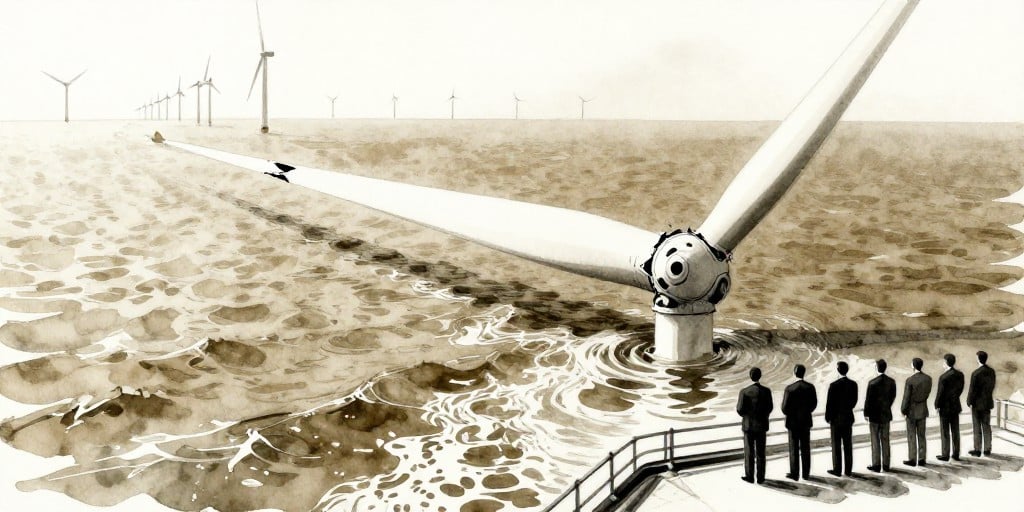
The recent event at Ørsted’s Greater Changua 4 offshore wind facility—where a Siemens Gamesa turbine blade sustained damage—has prompted a sharp decline in the company’s share price and a measurable impact on Denmark’s C25 index. While the immediate operational repercussions are limited, the incident exposes a range of technical and regulatory considerations that are central to the broader transition toward renewable energy dominance in power generation, transmission, and distribution.
1. Technical Impact on Grid Stability
Offshore wind farms contribute a high level of variable, non‑dispatchable power to national grids. A turbine failure, even if isolated, can induce transient power swings that affect frequency regulation and voltage stability. In Greater Changua 4, the loss of a single 3 MW turbine represents a 0.3 % reduction in the site’s total output, a negligible change relative to its 1 GW nominal capacity. However, the dynamic response of the turbine’s pitch‑control system and its interaction with the wind‑farm’s collective control strategy can produce brief disturbances that cascade through the grid if not adequately mitigated.
Modern wind farms employ wide‑area monitoring systems (WAMS) and real‑time protection schemes that detect anomalies within milliseconds. The blade‑damage event triggered an automatic safe‑mode transition, disconnecting the affected unit and re‑balancing power flow across neighboring turbines. This rapid response prevented a potential domino effect on the sub‑station and the downstream transmission network, thereby preserving overall grid integrity.
2. Renewable Energy Integration Challenges
The incident highlights the engineering challenges of integrating high‑capacity offshore wind into existing transmission infrastructure:
- Grid Flexibility: Offshore wind farms typically feed power into high‑voltage direct current (HVDC) links to minimize losses over long distances. A sudden reduction in power can strain the HVDC converter stations, necessitating rapid adjustment of converter operating points to maintain stability.
- Voltage Regulation: Variable generation demands sophisticated voltage‑control mechanisms, such as static synchronous compensators (STATCOMs) and dynamic shunt capacitors, to counteract the reactive power fluctuations induced by wind speed changes.
- Frequency Support: The European grid requires grid‑supporting turbines that provide synthetic inertia and fast frequency response. An abrupt loss of capacity can temporarily widen frequency deviations, compelling automatic generation control (AGC) centers to dispatch conventional power plants or fast‑start gas turbines to rebalance the system.
These technical imperatives underscore the need for robust control architecture and interoperable standards across manufacturers, which Ørsted and its partners must continually refine in response to operational events.
3. Infrastructure Investment Requirements
Ensuring the resilience of offshore wind assets necessitates significant capital outlays:
- Structural Upgrades: Enhanced blade‑design standards (e.g., incorporating fatigue‑resistant composite layers) can reduce the likelihood of mechanical failures. Investment in blade‑health monitoring technologies—such as acoustic emission sensors and fiber‑optic strain gauges—provides early warning of degradation.
- Transmission Expansion: To accommodate growing offshore capacity, new subsea cables and HVDC links must be built. Ørsted’s Greater Changua 4 relies on a 330 kV HVDC interconnector to mainland Denmark; future expansions will demand additional converters and protective relays.
- Grid Modernization: Smart‑grid technologies, including adaptive protection and automated fault‑location algorithms, are essential for rapid isolation of faults and minimizing outage duration.
These upgrades, while costly, are imperative for sustaining a reliable renewable‑heavy grid and for meeting European Union (EU) targets for net‑zero emissions.
4. Regulatory Frameworks and Rate Structures
The incident’s financial ripple effects are also shaped by regulatory mechanisms:
- Capacity Market Participation: In Denmark, wind farms earn revenue through capacity payments that incentivize reliability. Damage to a turbine can trigger penalties or reduced payments if contractual maintenance obligations are breached.
- Tariff Design: The Danish Energy Authority’s grid tariffs are structured to reflect the cost of providing balancing services. Sudden capacity losses increase the demand for ancillary services, potentially inflating short‑term grid charges for consumers.
- Insurance and Liability: Renewable energy projects operate under environmental and operational risk insurance schemes. The cost of premiums may rise following high‑profile incidents, thereby affecting project economics and long‑term rate stability.
A coherent regulatory approach that balances risk allocation between developers and grid operators is essential to maintaining investor confidence while ensuring fair consumer pricing.
5. Economic Implications of Utility Modernization
Utility modernization, driven by the integration of offshore wind, has multifaceted economic impacts:
- Capital Expenditure (CAPEX) Allocation: Investment in offshore infrastructure diverts capital from traditional fossil fuel assets. While CAPEX rises in the short term, the transition yields long‑term savings by reducing fuel costs and mitigating climate‑related liabilities.
- Operational Expenditure (OPEX) Management: Predictive maintenance enabled by digital twins and AI analytics can lower OPEX by anticipating failures before they occur, as illustrated by Ørsted’s swift response to the blade damage.
- Consumer Costs: Short‑term increases in transmission and balancing fees may be passed to consumers. However, over a decade‑long horizon, the decline in renewable fuel prices can offset these increases, leading to net savings on household electricity bills.
- Job Creation and Skills Development: The offshore wind sector creates high‑skill jobs in engineering, maintenance, and data analytics, stimulating local economies and fostering a more resilient energy workforce.
6. Conclusion
Ørsted’s blade‑damage incident at Greater Changua 4 serves as a microcosm of the broader technical, regulatory, and economic challenges confronting the energy transition. While the operational impact on the project’s capacity is minimal, the event underscores the necessity of resilient grid design, proactive maintenance strategies, and adaptive regulatory frameworks. Continued investment in infrastructure, coupled with sophisticated control systems and clear tariff structures, will be pivotal in ensuring that Denmark—and by extension, the EU—can maintain grid stability, accelerate renewable integration, and manage consumer costs as the power sector modernizes.