
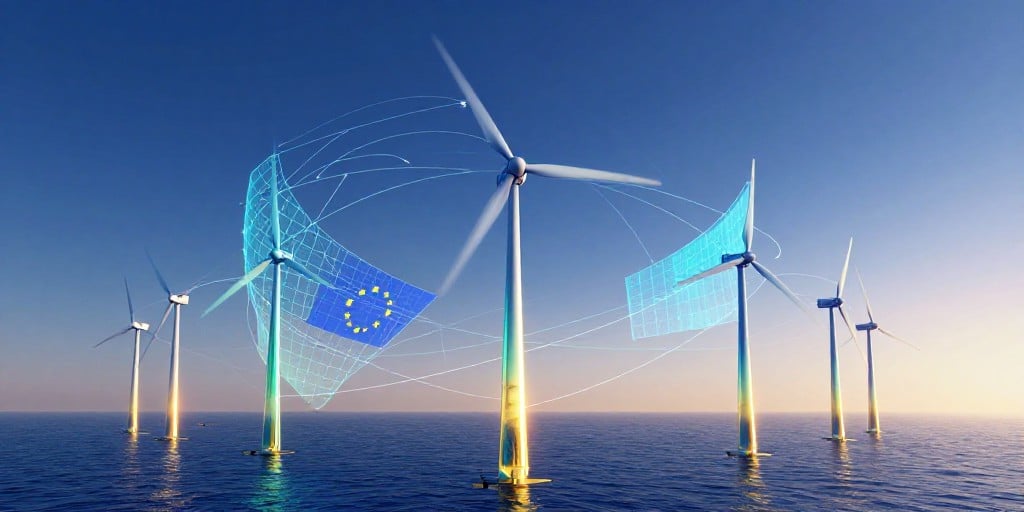
Ørsted’s Market Position Amidst Broader Energy Sector Dynamics
Ørsted, Denmark’s leading offshore wind developer and operator, continues to attract cautious but generally supportive analyst attention. The firm’s presence on short‑position reports—characterized by a modest net short exposure—suggests that market participants regard Ørsted as a stable, long‑term player in the renewable sector. Compared with other Danish utilities surveyed in the same study, Ørsted’s short interest is notably lower, reinforcing its perceived resilience in an increasingly competitive energy landscape.
The recent decline in Apple’s share price—driven by announced price increases for key product lines and the attendant concerns over margin compression amid rising component costs—illustrates how pricing strategies can reverberate across the technology and industrial sectors. Although this event has no direct operational impact on Ørsted, it highlights the interconnectedness of global markets and the importance of robust pricing strategies for utility companies navigating both supply‑side and demand‑side pressures.
Grid Stability and Renewable Energy Integration
Ørsted’s growth strategy is underpinned by significant offshore wind deployments that feed directly into national transmission networks. Integrating intermittent wind generation into the grid imposes several challenges:
| Challenge | Engineering Insight | Implication for Grid Stability |
|---|---|---|
| Voltage Regulation | Variable power output creates voltage swings that must be mitigated through capacitor banks, static VAR compensators (SVCs), and dynamic voltage control. | Improves power quality and reduces risk of cascading outages. |
| Frequency Control | Wind turbines can provide synthetic inertia through power electronics, but the lack of mechanical inertia reduces system frequency resilience. | Necessitates fast‑acting synthetic inertia services and coordinated frequency response. |
| Transmission Congestion | Long‑distance offshore lines can experience capacity limits, especially during peak generation periods. | Requires reinforcement of subsea cables and, where necessary, investment in HVDC back‑feed corridors. |
| Protection Coordination | High‑power electronic interfacing changes fault current signatures, demanding updated protection settings and adaptive relays. | Ensures timely fault isolation and minimizes equipment damage. |
Effective management of these factors demands substantial engineering investment and advanced control strategies, such as model‑predictive control and real‑time state estimation.
Infrastructure Investment Requirements
The transition to a renewable‑heavy grid necessitates multi‑layered capital outlays:
- Transmission Upgrades
- HVDC Back‑feed – Up to 30 GW of offshore generation requires new high‑voltage DC links to deliver power to onshore load centers.
- Grid Reinforcement – Overhead and underground lines, transformer upgrades, and dynamic line rating (DLR) systems must be expanded.
- Substation Modernization
- Digital Substations – Integration of IEC 61850‑based communication and advanced SCADA enables faster fault detection and automated reclosing.
- Energy Storage – Battery Energy Storage Systems (BESS) and pumped‑storage units provide frequency support and reserve capacity.
- Smart Grid Technologies
- Demand Response Platforms – Real‑time price signals and automated load‑shifting reduce peak loads.
- Advanced Metering Infrastructure (AMI) – Enables granular consumption data for both utilities and customers.
According to recent studies, the European Union expects an additional €1.5‑2 trillion investment by 2030 to achieve decarbonisation targets—an estimate that aligns with Ørsted’s projected capital expenditures for offshore wind and grid integration projects.
Regulatory Frameworks and Rate Structures
Regulatory bodies influence both investment incentives and consumer pricing. Key elements include:
| Regulatory Aspect | Current EU/Denmark Position | Impact on Ørsted |
|---|---|---|
| Feed‑in Tariffs (FiTs) | Gradual reduction in FiTs to reflect declining wind costs. | Encourages cost‑efficient projects but reduces guaranteed revenue margins. |
| Capacity Market Participation | Denmark’s capacity market rewards flexibility. | Ørsted can monetize ancillary services, offsetting revenue loss from lower FiTs. |
| Renewable Portfolio Standards (RPS) | Denmark’s RPS mandates 100 % renewable electricity by 2030. | Drives long‑term demand for Ørsted’s wind generation. |
| Tariff Regulation | European Commission’s “Tariff Regulation” mandates transparency and cost‑effectiveness of network tariffs. | Forces utilities to optimize asset utilization and limit unjustified cost pass‑throughs. |
Rate structures typically include:
- Energy Charges – Time‑of‑use tariffs reflecting marginal cost and generation mix.
- Transmission Charges – Allocation of grid investment costs based on load and generation location.
- Ancillary Services Fees – Payments for frequency regulation, voltage support, and spinning reserve.
These structures shape Ørsted’s revenue streams and influence strategic decisions around storage integration and demand‑side management.
Economic Impacts of Utility Modernization
The modernization of power systems carries both macroeconomic and microeconomic consequences:
- Consumer Cost Shifts
- Base Load Costs – Investment in renewable generation is capital‑intensive, but operational costs are lower than fossil fuel plants.
- Peak Demand – Smart grid adoption can reduce peak tariffs through demand response, potentially lowering overall consumer bills.
- Employment Dynamics
- New Jobs – Offshore wind, grid reinforcement, and digital infrastructure generate high‑skill employment.
- Displacement Risks – Traditional coal and gas generation jobs face phase‑out, necessitating reskilling initiatives.
- Market Efficiency
- Reduced Transmission Losses – Advanced grid management cuts losses by up to 2 %.
- Enhanced Reliability – Faster fault detection and restoration minimize downtime, yielding economic benefits in productivity losses avoided.
- Investor Confidence
- Capital Allocation – Transparent regulatory frameworks and predictable rate structures attract long‑term investment.
- Risk Management – Hedging mechanisms for fuel price volatility and renewable intermittency reduce financial exposure.
Conclusion
Ørsted’s modest short‑position profile reflects a market consensus that its renewable generation portfolio, combined with proactive grid integration strategies, positions it favorably for the upcoming decade. However, the firm must continue to invest aggressively in transmission, substations, and digital control systems to address the technical challenges of large‑scale offshore wind integration. Regulatory clarity around tariff structures and ancillary service markets will play a pivotal role in ensuring that Ørsted—and the broader Danish energy sector—can deliver reliable, cost‑effective power while advancing the energy transition.