
Ørsted’s Recent Trading Performance and North American Roadshow: Implications for Grid Modernization and Renewable Integration
Ørsted, the Danish offshore wind pioneer, experienced a modest decline in its share price during the latest trading week, closing slightly lower than its pre‑market opening. Despite the minor dip, the company’s management announced a tightly scheduled roadshow across the United States and Canada, during which it will present its first‑quarter financial results and articulate its strategic outlook. The itinerary, which spans major financial hubs—New York, Boston, Chicago, Toronto, and Washington, D.C.—provides an opportunity for Ørsted to engage with investors and analysts, underscoring its commitment to fortifying its role in the global renewable energy transition.
1. Context: Power Generation, Grid Stability, and Renewable Integration
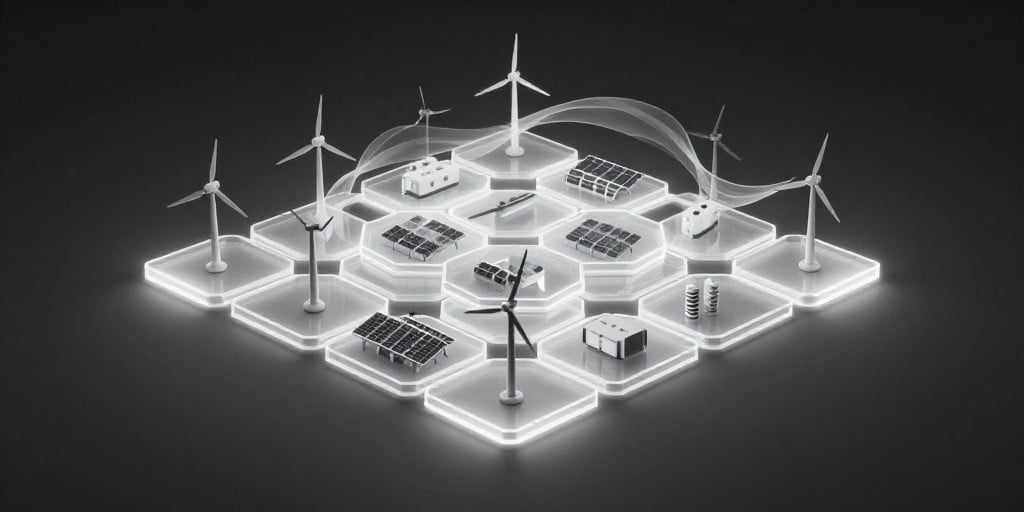
Ørsted’s portfolio of offshore wind farms, coupled with its expanding onshore and utility‑scale solar assets, positions the company at the forefront of distributed generation. The integration of variable renewable resources (VRRs) into the bulk power system raises technical challenges, notably:
- Frequency and Voltage Regulation: Offshore wind turbines, by virtue of their aerodynamic and mechanical design, exhibit less inertia than conventional synchronous generators. The reduced system inertia heightens frequency oscillations during sudden load changes or generation curtailment, necessitating fast‑acting synthetic inertia and advanced control schemes.
- Grid Congestion and Reactive Power Support: The transmission corridors linking wind farms to load centers often operate near their thermal limits. Reactive power support from wind turbines (through power‑electronics interfaces such as STATCOMs or inverter‑based resources) is essential to mitigate voltage sags and maintain stability.
- Curtailment and Curtailment Mitigation: Overgeneration during low load periods can force curtailment, impacting the economics of renewable projects. Curtailment can be reduced through improved forecasting, flexible demand response, and enhanced transmission capacity.
Ørsted’s roadshow will likely highlight how its assets contribute to grid stability through active power control, participation in ancillary service markets, and investment in grid‑enhancing technologies such as battery storage and HVDC links.
2. Technical Overview of Ørsted’s Asset Portfolio
- Offshore Wind Farms: Ørsted operates 20 GW of offshore capacity across the North Sea, Baltic Sea, and Atlantic Ocean. The turbines typically employ variable‑speed pitch control and digital governors, allowing rapid response to grid frequency deviations. The use of advanced SCADA systems enables real‑time monitoring and predictive maintenance, reducing downtime.
- Utility‑Scale Solar: In the United States, Ørsted has acquired and developed approximately 3.5 GW of solar PV across California, Texas, and the Southeast. Solar plants are equipped with DC‑to‑DC converters that maximize power extraction under varying irradiance conditions, enhancing the overall efficiency of the generation mix.
- Storage and Grid Services: Ørsted has invested in battery storage systems that provide fast frequency regulation, spinning reserve, and load shifting. These assets are critical in mitigating the intermittency of wind and solar generation.
3. Infrastructure Investment Requirements
To accommodate the projected growth in VRR capacity, Ørsted and its partners face significant infrastructure investment needs:
- Transmission Upgrades: Expanding HVDC interconnections from offshore sites to onshore substations reduces transmission losses and increases power transfer capability. Ørsted’s HVDC project in the North Sea, projected to deliver 3.6 GW, exemplifies this approach.
- Grid Modernization: Implementation of smart inverters, flexible AC transmission systems (FACTS), and advanced protection schemes enhances the grid’s ability to handle high penetration of renewable resources.
- Energy Storage Integration: Large‑scale battery projects, such as Ørsted’s 1.5 GW battery at the Moffitt Renewable Energy Center, provide rapid response services that complement traditional thermal generators.
Capital expenditures for these projects are expected to rise sharply through the 2030s, with annual costs projected to reach $30–$40 billion globally for transmission upgrades alone.
4. Regulatory Frameworks and Rate Structures
Regulatory policies play a pivotal role in shaping the economics of renewable integration:
- Renewable Portfolio Standards (RPS): Many U.S. states mandate that a certain percentage of electricity be generated from renewable sources. Ørsted benefits from state incentives such as the California Solar Initiative and the Texas Renewable Energy Standard.
- Net Metering and Feed‑In Tariffs: These policies affect the revenue stream for distributed generation, influencing investment decisions. Ørsted’s participation in federal feed‑in tariffs (e.g., the Production Tax Credit) provides a stable return on wind assets.
- Ancillary Services Markets: Market designs that value frequency regulation, spinning reserve, and voltage support enable renewable assets to monetize ancillary services. Ørsted’s inverter‑based resources have earned revenue from the California Independent System Operator’s (CAISO) Ancillary Services Market.
Regulatory uncertainty—particularly related to federal clean energy policy—remains a key risk factor for investment planning.
5. Economic Impacts of Utility Modernization
The transition to a renewable‑heavy grid has several macroeconomic implications:
- Capital Allocation: Investment in renewable generation, storage, and transmission competes with other infrastructure priorities. The cost of capital is influenced by risk perceptions and policy incentives.
- Consumer Costs: While renewable energy prices have fallen dramatically, the cost of grid upgrades may be passed on to consumers through rate adjustments. However, the long‑term reduction in fuel costs and improved reliability can offset these increases.
- Job Creation: Large renewable projects generate significant employment in construction, operation, and maintenance sectors. Ørsted’s global footprint contributes to local job markets in Denmark, the United States, and beyond.
6. Strategic Takeaways for Investors
During the roadshow, Ørsted is expected to:
- Quantify the Impact of Grid Services Revenue: Highlight how ancillary services contribute to the overall revenue mix and hedge against market price volatility.
- Detail the Financial Viability of Upcoming Transmission Projects: Provide cost‑benefit analyses of HVDC links and storage facilities, including expected payback periods.
- Explain Risk Mitigation Strategies: Discuss hedging against policy changes, market risk, and supply chain disruptions.
For investors, understanding Ørsted’s technical approach to grid stability, its integration of renewable resources, and its engagement with regulatory frameworks is essential in assessing the company’s long‑term value proposition in an evolving energy landscape.