Ørsted’s Executive Transition Signals Strategic Influence in European Wind Market
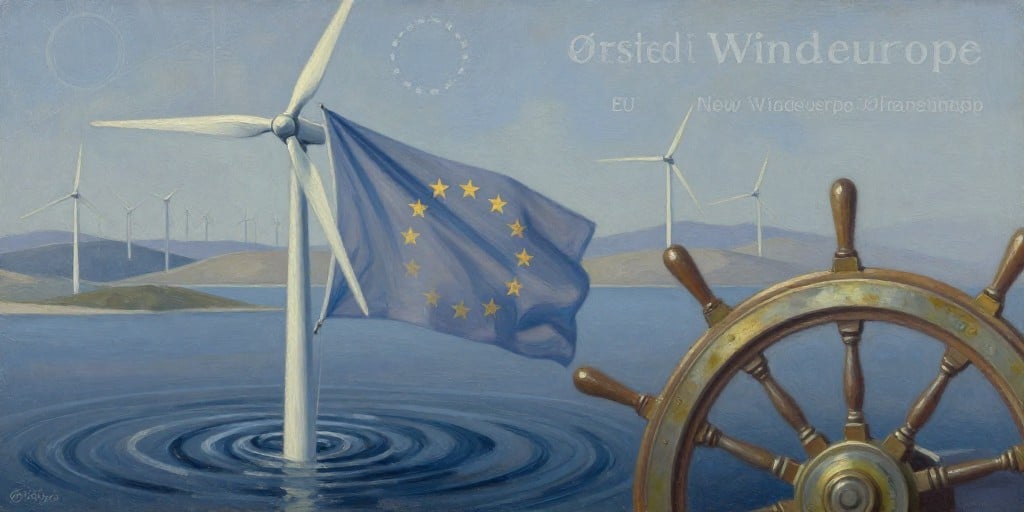
Rasmus Errboe, chief executive officer of Danish offshore wind developer Ørsted, has been appointed chairman of Windeurope, the umbrella organisation that represents the European wind sector. The appointment, which will span 18 months, is expected to enhance Ørsted’s influence over policy, market development and industry standards, and to reinforce the company’s commitment to the continent’s renewable energy agenda.
Strategic Implications for Ørsted and the Wind Industry
Elevated Voice in Policy Formation By occupying the chairmanship of Windeurope, Errboe gains direct access to a network of national regulators, industry partners and research institutions. This positioning allows Ørsted to shape discussions on grid integration, permitting regimes, and technology certification standards that are critical for scaling wind deployment across Europe.
Reinforcing the “Level Playing Field” Narrative Ørsted has previously highlighted the competitive threat posed by Chinese wind‑turbine manufacturers that benefit from state subsidies. As chairman, Errboe can coordinate a unified industry stance with Windeurope’s executive team, led by Tinne Van der Straeten, to lobby the European Union for measures that mitigate unfair competitive advantages. The goal is to ensure that European firms can compete on merit rather than on subsidised cost structures.
Driving Market Momentum Errboe’s statement underlined the importance of a sustainable, reliable, and affordable energy supply for Europe’s competitiveness, employment and innovation. His focus on “driving momentum for wind power” aligns with Windeurope’s mandate to accelerate the deployment of wind energy, particularly in under‑penetrated markets such as the Netherlands, Poland and the Baltic states. Collaborative initiatives are likely to include joint research on turbine efficiency, storage integration, and offshore transmission infrastructure.
Cross‑Sector Dynamics
The wind sector’s growth is interlinked with several other industries:
| Sector | Key Dynamics | Interaction with Wind |
|---|---|---|
| Grid & Transmission | Increasing need for high‑capacity interconnectors to manage variable supply. | Wind projects rely on robust grid connections; Ørsted’s projects often include offshore substations. |
| Battery Storage | Rapid cost reductions and policy incentives for large‑scale storage. | Storage can smooth wind output, making it more attractive to utilities. |
| Automotive & Mobility | Shift to electrification boosts electricity demand. | Higher renewable penetration supports grid stability for EV charging infrastructure. |
| Materials & Supply Chain | Demand for rare earths and steel. | Wind turbines require advanced materials; supply chain resilience is crucial for project timelines. |
By fostering collaboration across these sectors, Windeurope and Ørsted can help create a virtuous cycle: improved grid infrastructure and storage make wind more reliable, which in turn drives further investment in wind generation.
Global Context and Competitor Landscape
Ørsted’s role must also be viewed in the context of other global wind‑power leaders:
- Envision Energy – A Chinese firm that has earned recognition for its digital wind solutions and rapid expansion into European markets. Envision’s presence underscores the increasing competition from state‑backed manufacturers.
- Vestas, GE Renewable Energy, and Siemens Gamesa – Traditional European manufacturers with deep market penetration. These companies are also navigating the same competitive pressure from subsidised Chinese competitors.
- Next‑Gen Technology Startups – Companies developing airborne wind energy and floating turbine platforms are beginning to capture niche markets, adding another layer of complexity to the competitive landscape.
Ørsted’s dual role as a project developer and as a strategic influencer positions it uniquely to navigate this multi‑dimensional environment, balancing the need for innovation with the imperative to maintain fair competition.
Economic and Policy Implications
- Investment Climate – A stable policy environment and a level playing field are essential for long‑term investment in wind farms. Errboe’s leadership could help reduce regulatory uncertainty, attracting both domestic and foreign capital.
- Job Creation – Expansion of wind capacity is expected to generate significant employment in manufacturing, construction, and operations. The emphasis on “employment and innovation” in Errboe’s statement aligns with EU employment targets under the Green Deal.
- Energy Security – Increasing renewable penetration reduces dependency on imported fossil fuels, bolstering energy security across the EU. A coordinated industry response can accelerate the transition to a low‑carbon grid.
Conclusion
Rasmus Errboe’s appointment as chairman of Windeurope represents a strategic alignment of Ørsted’s commercial objectives with its advocacy role. By leveraging the organisation’s influence, Ørsted is poised to shape policy, foster competitive fairness, and accelerate the deployment of wind energy across Europe. In a sector marked by rapid technological change and intense geopolitical competition, such leadership is crucial for ensuring that European wind power remains a reliable, affordable, and sustainable pillar of the continent’s energy future.