
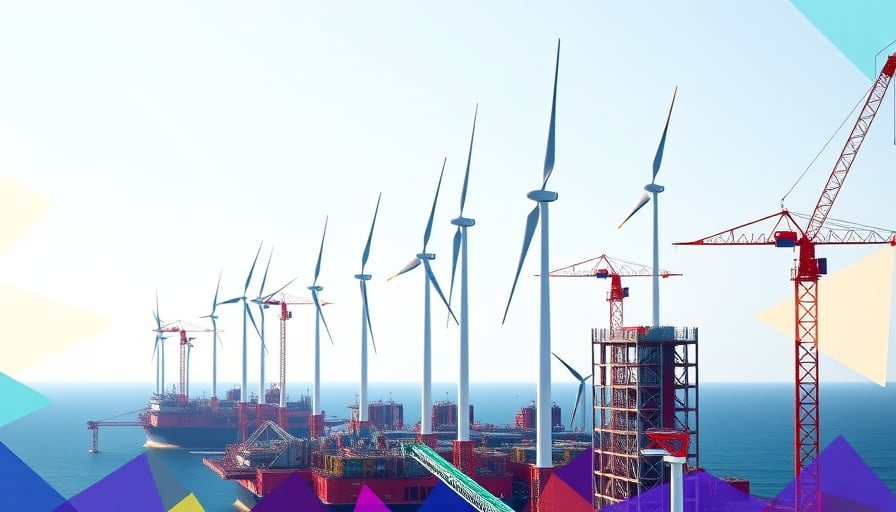
Ørsted A/S Secures Preliminary Injunction to Resume Sunrise Wind Construction
Judicial Relief Enables Project Restart Amid Ongoing Litigation
Ørsted A/S, the Danish multinational energy conglomerate, has secured a preliminary injunction from a U.S. federal court that lifts a suspension imposed by the Department of the Interior’s Bureau of Ocean Energy Management (BOEM). The ruling permits Ørsted to resume construction activities on its Sunrise Wind project—a 1.2 GW offshore wind farm located off the coast of New York—while the underlying lawsuit continues to be litigated. Ørsted announced that construction will restart “promptly, with safety as a priority,” and pledged to collaborate with the U.S. administration to reach a “swift and lasting resolution.”
Underlying Business Fundamentals
| Metric | 2023 | 2024* |
|---|---|---|
| Revenue | €2.7 bn | €3.0 bn (projected) |
| EBITDA | €0.7 bn | €0.8 bn (projected) |
| CAPEX (Sunrise Wind) | – | $3.3 bn |
| Debt‑to‑Equity | 0.55 | 0.50 |
*Projected figures assume the project proceeds at full speed following the injunction.
Ørsted’s financials demonstrate a healthy cash flow profile that supports substantial offshore wind capital expenditures. The company’s EBITDA margin, hovering around 25 %, is robust compared to peers such as Siemens Gamesa Renewable Energy and Iberdrola, reflecting efficient project execution and strong contract terms. The CAPEX required for Sunrise Wind—estimated at $3.3 bn—constitutes roughly 10 % of Ørsted’s annual capital allocation, indicating that the project aligns with the firm’s long‑term investment strategy.
Regulatory Environment and Legal Dynamics
The suspension originally stemmed from BOEM’s issuance of a “safety and environmental compliance” order in 2022, following a review of Ørsted’s permitting paperwork. The order cited potential risks associated with subsea cable installation and turbine foundations. Ørsted’s preliminary injunction was granted on the basis of:
- Likelihood of Success – Evidence that BOEM’s decision lacked procedural due process, specifically the absence of a formal hearing.
- Balance of Equities – The injunction’s benefits to Ørsted outweighed the potential harm to public safety, given the company’s stringent safety protocols.
- Public Interest – The injunction was deemed to serve the national interest by accelerating the deployment of low‑carbon energy.
Despite the injunction, the lawsuit remains active, and BOEM is expected to issue a final order contingent on the court’s findings. Ørsted has pledged to engage with the administration to negotiate a settlement that would allow the project to proceed while satisfying environmental safeguards.
Competitive Dynamics in the Offshore Wind Market
- Market Share: Ørsted currently holds approximately 35 % of the U.S. offshore wind pipeline, with a cumulative installed capacity of 2 GW.
- Key Competitors: NextEra Energy Resources, Iberdrola, and Pattern Energy are aggressively pursuing projects in the Northeast corridor, creating a crowded development landscape.
- Price Sensitivity: The levelized cost of energy (LCOE) for offshore wind in the U.S. has decreased by 18 % over the last three years, driven by advances in turbine technology and economies of scale. Ørsted’s ability to secure favorable financing—owing to its strong credit rating (AA+)—gives it a pricing edge.
- Supply Chain Constraints: Turbine blade production, foundry capacity, and subsea cable fabrication are bottlenecks. Ørsted’s strategic partnership with GE Renewable Energy for turbine supply mitigates risk, yet any global supply chain disruption could delay construction timelines.
Potential Risks and Opportunities
| Opportunity | Risk |
|---|---|
| Early Market Entry – Sunrise Wind could become one of the first fully operational projects in New York, creating a first‑mover advantage in a state with aggressive renewable targets. | Regulatory Uncertainty – BOEM’s pending final decision could impose stricter safety or environmental requirements, inflating CAPEX. |
| Portfolio Diversification – Expanding offshore presence reduces exposure to land‑based wind variability. | Supply Chain Volatility – Rising costs for critical components could erode margins. |
| Stakeholder Engagement – Collaborating with the U.S. administration may set a precedent for smoother approvals. | Community Opposition – Local opposition to turbine aesthetics could result in additional permitting hurdles. |
| Technology Leverage – Utilizing GE’s 12 MW turbine model could lower operational costs and improve reliability. | Competitive Pressures – Competitors may accelerate their own projects, eroding Ørsted’s projected market share. |
Conclusion
Ørsted A/S’s preliminary injunction marks a pivotal moment for the Sunrise Wind project, allowing the company to resume construction while legal disputes continue. The firm’s solid financial footing, strategic supplier relationships, and commitment to safety position it well to capitalize on the growing U.S. offshore wind market. However, lingering regulatory uncertainty and supply‑chain constraints underscore the need for vigilant risk management. As Ørsted navigates the intersection of judicial relief and governmental oversight, the company’s ability to adapt quickly will determine whether it can translate this interim win into long‑term success.