Ørsted A/S Shares Slump Amid Operational Setbacks: Implications for the Energy Transition
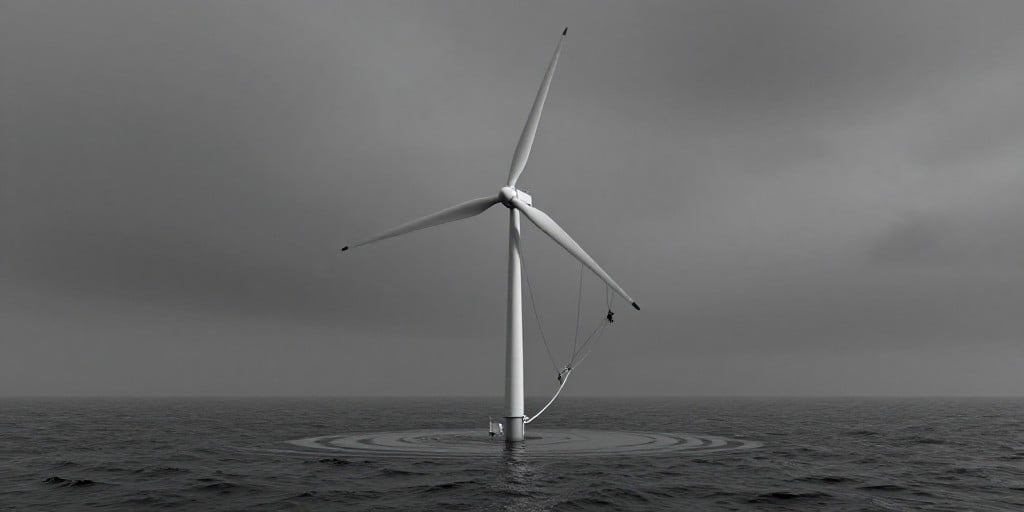
Ørsted A/S, a leading offshore wind developer, experienced a pronounced decline in its share price during the week, closing Monday as the most heavily losing stock in Denmark’s C25 index. The downturn followed a reported component failure at the company’s large Taiwanese offshore wind project, Greater Changhua 4, and has contributed to a broader negative trend over the past quarter. Investment analysts have tempered enthusiasm for the firm: Lars Hytting, strategy officer at Danish asset manager ArthaScope, reduced his holdings and cited the company’s valuation as unattractive under current market conditions. Short‑position data indicate that a segment of institutional investors remains skeptical about Ørsted’s near‑term prospects.
The market reaction underscores the technical, regulatory, and financial challenges that confront utilities as they integrate higher shares of variable renewable energy (VRE) into the power system. The following analysis explores these dynamics, focusing on grid stability, renewable integration challenges, infrastructure investment, regulatory frameworks, and economic impacts on consumers.
1. Grid Stability in the Face of Variable Renewable Energy
| Issue | Technical Considerations | Operational Implications |
|---|---|---|
| Frequency Regulation | VRE output fluctuates on timescales from seconds to hours, creating rapid deviations in system frequency. | Traditional synchronous generators must ramp up or down quickly; inertia is reduced, increasing the risk of frequency excursions. |
| Voltage Stability | Offshore wind farms exhibit high reactive power demands, especially at long transmission corridors. | Voltage control becomes more complex; voltage rise can limit system loading, requiring additional shunt capacitors or dynamic VAR sources. |
| Transient Stability | Sudden loss of a wind farm or generator leads to large swings in rotor angles. | Grid codes now require wind turbines to provide synthetic inertia and short‑circuit power to support system transients. |
Engineering Insight – The decline in Ørsted’s market value reflects, in part, investor concerns about the reliability of its offshore assets and the broader implications for system stability. When a major wind farm experiences a component failure, it can temporarily reduce available inertia and reactive support, potentially affecting the entire grid if contingency reserves are insufficient.
2. Renewable Integration Challenges
- Curtailment Risks
- High penetration of wind can force curtailment, especially during periods of low demand or weak transmission capacity.
- Curtailment represents lost revenue for developers and may erode confidence in the economic viability of new projects.
- Predictability and Forecasting
- Wind power output is weather‑dependent; forecast errors propagate into reserve allocation and day‑ahead market positions.
- Accurate short‑term forecasts are essential to maintain economic dispatch and avoid costly imbalance settlements.
- Grid Flexibility
- Battery storage, demand‑response programs, and flexible generation (gas turbines, hydro) are increasingly required to buffer VRE variability.
- Investment in flexible resources is essential to meet the grid adequacy criteria set by national regulators.
Regulatory Context – Many European regulators have introduced inertia requirements and frequency response standards for wind farms (e.g., the EU’s “Frequency Response” directive). Ørsted’s Greater Changhua 4 must comply with these mandates; a component failure may indicate potential non‑compliance, amplifying investor risk perception.
3. Infrastructure Investment Requirements
| Asset Category | Typical Investment | Cost Drivers |
|---|---|---|
| High‑Voltage Offshore Cables | €1–2 kW per km | Salt corrosion, marine life, dynamic loading |
| Substation Upgrades | €3–5 M per substation | Reinforced transformers, dynamic relays |
| Grid Flexibility Units (BESS, HVDC) | €500–700 kW per MW | Power electronics, thermal management |
| Transmission Line Expansion | €0.5–1 M per km | Right‑of‑way, environmental permitting |
The capital intensity of offshore wind projects, exemplified by Greater Changhua 4, is reflected in the high cost of cables and substations. Shortages of skilled labor and material bottlenecks further inflate timelines and budgets. Ørsted’s recent operational incident may prompt a reassessment of maintenance practices, potentially adding to future investment needs.
4. Regulatory Frameworks and Rate Structures
- Feed‑In Tariffs (FiTs)
- Provide price certainty for renewable generators.
- May be phased out as markets mature; transition to market‑based pricing increases exposure to price volatility.
- Capacity Market Payments
- Secure a minimum income for maintaining generation capacity, including VRE.
- Influence investment decisions by providing a back‑stop during periods of low wholesale prices.
- Grid Charges and Tariff Restructuring
- Distinguish between energy and capacity charges.
- Higher grid charges for large VRE projects can incentivize energy efficiency or distributed generation.
Economic Implications for Consumers – The cost of upgrading grid infrastructure is typically recovered through revenue adequacy mechanisms. If the cost burden shifts disproportionately to consumers, it can erode public support for renewable expansion. Conversely, a well‑structured tariff can encourage efficient use of grid resources and keep consumer bills stable.
5. Economic Impact of Utility Modernization
| Impact | Short‑Term | Long‑Term |
|---|---|---|
| Capital Expenditure (CapEx) | Immediate budget constraints for utilities, leading to deferred upgrades. | Long‑run resilience and lower maintenance costs. |
| Operating Expenditure (OpEx) | Increased due to higher asset turnover and integration costs. | Reduced through improved efficiency and predictive maintenance. |
| Market Price Volatility | Higher imbalance settlement costs for developers. | Stabilization as grid flexibility improves. |
| Consumer Bills | Potential short‑run increases due to capital recovery. | Potential long‑run savings via lower transmission losses and renewable subsidies. |
The decline in Ørsted’s valuation signals a broader industry trend: investors are weighing the risks of rapid renewable deployment against the long‑term benefits of decarbonization. The integration of high‑penetration VRE necessitates substantial upgrades to transmission and distribution systems, which, while costly upfront, ultimately foster a more resilient and sustainable grid.
6. Conclusion
Ørsted’s recent share price collapse reflects a confluence of operational, technical, and market factors. From the standpoint of power system engineering, the company’s challenges highlight the critical importance of maintaining grid stability, ensuring reliable renewable integration, and securing sufficient infrastructure investment. Regulatory frameworks and rate structures play pivotal roles in shaping these outcomes, influencing both the economic viability of renewable projects and consumer costs.
For investors, utilities, and policymakers, the Ørsted case serves as a reminder that the transition to a low‑carbon energy system is as much a technical and economic endeavor as it is a strategic one. Robust engineering solutions, coupled with forward‑looking regulatory policies, will be essential to navigate the evolving landscape and to achieve a stable, affordable, and sustainable electricity supply.