
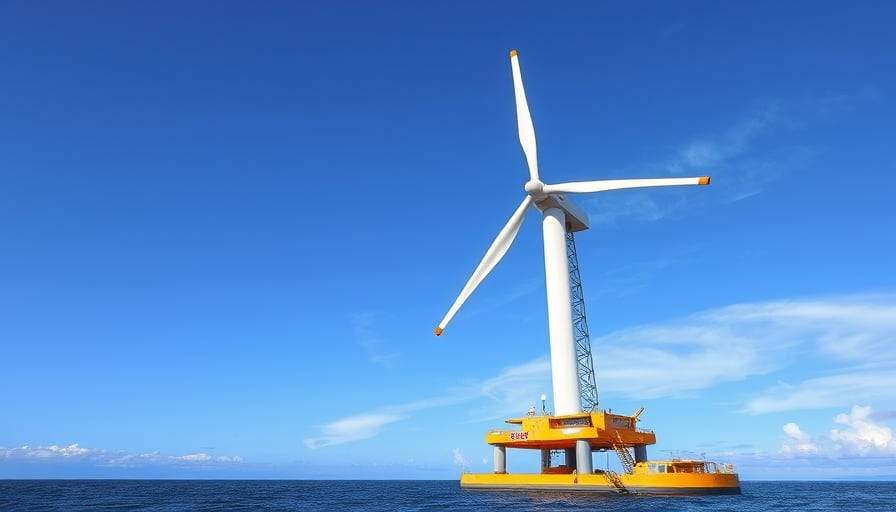
Ørsted Completes Sale of 50 % Stake in Hornsea 3 Offshore Wind Farm
Ørsted has announced the successful conclusion of a transaction that transferred a 50 % equity interest in its Hornsea 3 offshore wind farm to a portfolio of funds managed by Apollo Global Management. The agreement, reached in early November, represents a strategic move that is expected to infuse the Danish renewable‑energy company with a substantial amount of capital.
Transaction Context and Financial Implications
The divestment aligns with Ørsted’s long‑term portfolio strategy, which emphasizes a concentrated focus on offshore wind assets across multiple geographies, including the United Kingdom, Germany, Denmark, the Netherlands, the United States, and Taiwan. By reducing its exposure to a single high‑capability asset, Ørsted aims to optimize its asset mix and strengthen its balance sheet. Market analysts estimate that the cash proceeds from the sale will contribute to debt reduction and enable further investment in new offshore wind projects, thereby supporting the company’s broader ambition to increase renewable capacity in line with global decarbonisation targets.
Market Reaction and Share Performance
Following the announcement, Ørsted’s shares experienced a notable dip during the opening of the final trading day of 2025, a volatility pattern that has been observed in recent periods of market turbulence. The decline reflects investor caution amid broader sector-wide uncertainties, such as fluctuating commodity prices, regulatory changes, and the ongoing transition to renewable energy. Despite short‑term price pressure, the company’s long‑term outlook remains positive, given the continued demand for offshore wind infrastructure in the European and trans‑Atlantic markets.
Strategic Rationale and Competitive Positioning
Ørsted’s decision to cede half of Hornsea 3 to external investors underscores a deliberate shift toward a more diversified risk profile. By partnering with Apollo Global Management, the company leverages the investor’s expertise in renewable‑energy infrastructure and access to capital markets. This partnership also enhances Ørsted’s ability to scale new projects without over‑extending its own capital base.
In the competitive landscape of offshore wind, Ørsted maintains a leading position through its extensive network of sites, strong engineering capabilities, and proven track record of delivering projects on time and within budget. The company’s focus on key markets—particularly the United Kingdom, where offshore wind policy remains supportive, and emerging markets such as Taiwan—provides a balanced exposure to both mature and high‑growth regions.
Broader Economic and Industry Trends
The sale aligns with broader economic trends that emphasize financial prudence amid volatile markets. Renewable‑energy firms are increasingly adopting asset‑liquidity strategies to manage exposure to macroeconomic swings and to position themselves for future policy incentives. Moreover, the partnership with a global investment firm reflects a growing trend of cross‑border capital flows into sustainable infrastructure, driven by the heightened emphasis on environmental, social, and governance (ESG) criteria.
Conclusion
Ørsted’s completion of the 50 % stake sale in Hornsea 3 demonstrates a calculated effort to refine its asset portfolio and bolster financial resilience. By capitalizing on a partnership with Apollo Global Management, the company reinforces its commitment to expanding offshore wind capacity while maintaining flexibility in its investment strategy. As the renewable‑energy sector navigates evolving market dynamics, Ørsted’s approach exemplifies how large utilities can adapt to changing economic conditions while staying true to their core mission of delivering clean energy worldwide.