
Corporate Announcement and Its Implications for the Power Generation and Transmission Sector
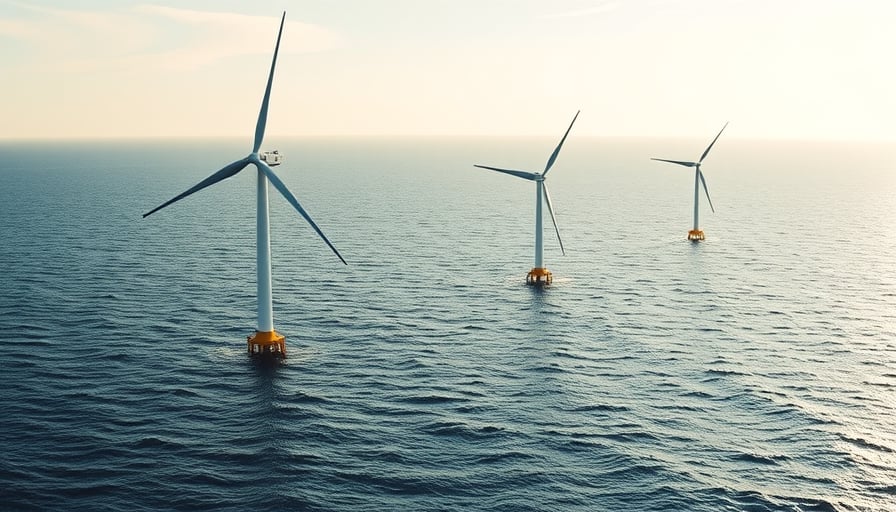
Ørsted has announced the sale of a majority interest in the operational 295 MW segment of its Greater Changhua 2 offshore wind project in Taiwan to the life‑insurance firm Cathay. The transaction is part of Ørsted’s broader liquidity‑enhancement strategy and aims to assuage investor concerns amid heightened market volatility. The deal comes on the heels of a U.S. government‑imposed construction pause affecting several of Ørsted’s larger offshore wind projects, a regulatory development that has injected uncertainty into the company’s growth trajectory.
1. Contextualizing the Transaction within Power Generation and Transmission Dynamics
Asset Monetization and Capital Allocation The divestiture of a mature 295 MW offshore asset frees substantial capital that Ørsted can reallocate toward new project development, grid integration upgrades, or debt reduction. In the capital‑intensive sector of renewable generation, such liquidity injections are critical for maintaining a robust pipeline of assets capable of meeting statutory renewable portfolio standards (RPS) and decarbonization targets.
Grid Stability Considerations Greater Changhua 2 feeds directly into Taiwan’s high‑voltage transmission network. The operational wind farm is integrated through a 500 kV export line that supports the island’s grid reliability metrics—voltage stability, frequency regulation, and contingency capacity. With the sale, Ørsted’s continued operational stewardship ensures that grid interconnection agreements, maintenance schedules, and dynamic security assessments remain intact, mitigating the risk of sudden supply interruptions that could destabilize the regional grid.
Renewable Energy Integration Challenges Offshore wind introduces high‑capacity‑factor generation but also variability that must be balanced by storage, demand‑side management, or complementary resources. Ørsted’s diversified portfolio—including onshore wind, solar, and bioenergy—provides a natural buffer against wind intermittency. By retaining a diversified mix across geographies, Ørsted can leverage cross‑regulatory arbitrage to smooth supply profiles and support the integration of variable renewable energy (VRE) into bulk power systems.
2. Regulatory Frameworks and Their Impact on Utility Modernization
U.S. Regulatory Constraints The recent U.S. pause reflects heightened scrutiny over supply‑chain security, particularly concerning critical materials used in offshore turbine construction. This regulatory clampdown not only delays project timelines but also elevates the risk premium on offshore wind assets, potentially affecting financing terms and capital costs for U.S. utilities.
Taiwanese Grid Codes and RPS Requirements Taiwan’s 2025 RPS mandates a 12% renewable share, climbing to 18% by 2030. Projects like Greater Changhua 2 are essential to meeting these targets. The sale to Cathay, a financially stable entity, may enhance project compliance with local grid code requirements—particularly those governing offshore interconnection standards, emissions curtailment procedures, and grid‑service obligations.
Cross‑border Rate Structures The transaction’s implications extend to rate design, as Cathay’s ownership may influence how generation costs are recovered through regulated tariffs. The cost‑of‑service methodology used by Taiwanese utilities, which accounts for generation costs, transmission and distribution (T&D) expenditures, and allowed returns, will need to reflect any change in asset ownership. A potential shift toward more transparent or cost‑aligned rate structures could emerge, fostering consumer affordability while ensuring financial viability for the grid operator.
3. Economic Impacts of Utility Modernization
Capital Expenditure (CapEx) and Operating Expenditure (OpEx) Dynamics Modernizing the grid—through reinforcement of transmission corridors, deployment of high‑voltage direct current (HVDC) links, and smart grid technologies—requires significant CapEx. Ørsted’s liquidity improvement can enable similar investments elsewhere, promoting a resilient infrastructure capable of handling higher VRE penetration. Operationally, smart grid solutions can reduce OpEx by optimizing maintenance schedules and improving fault detection.
Consumer Cost Implications While the sale of a wind farm can reduce long‑term generation costs (by offloading asset maintenance responsibilities), it may also lead to short‑term tariff adjustments as the new owner negotiates interconnection costs with the grid operator. The net effect on end‑users depends on how effectively the new owner integrates the asset into the existing supply mix and the efficiency of the transmission network.
Job Creation and Economic Stimulus Offshore wind projects generate skilled employment in construction, operations, and maintenance. Ørsted’s continued presence in the region, coupled with Cathay’s investment, can sustain local job markets. Moreover, the development of ancillary services—such as energy storage and flexible load management—stimulates ancillary industries and supports broader economic diversification.
4. Technical Insights into Power System Dynamics
Frequency and Voltage Regulation Offshore wind farms, particularly those connected via point‑to‑point HVDC links, provide ancillary services such as synthetic inertia and fast frequency response. Ørsted’s operational wind assets can be programmed to supply such services, helping stabilize grid frequency during sudden generation drops or load spikes.
Dynamic Security Assessment (DSA) The Greater Changhua 2 project is subject to rigorous DSA protocols. These simulations model transient stability under various contingencies, ensuring that the offshore wind farm does not compromise the grid’s ability to withstand faults. The continuity of such assessments under new ownership preserves grid integrity.
Energy Storage Integration Combining offshore wind with offshore battery storage can smooth the variability inherent in wind generation. Ørsted’s expertise in hybrid renewable projects positions it to leverage such technologies, thereby reducing the need for fossil‑fuel peaking plants and lowering overall system costs.
5. Conclusion
Ørsted’s divestment of a substantial offshore wind asset to Cathay illustrates a strategic maneuver designed to strengthen liquidity and manage investor expectations amidst regulatory uncertainty. From a grid engineering perspective, the transaction preserves essential grid interconnection and stability functions while allowing Ørsted to reallocate resources toward modernization initiatives that enhance renewable integration, reduce systemic risk, and potentially lower consumer costs. Regulatory frameworks and rate structures will play a pivotal role in translating these technical benefits into economic outcomes for utilities, consumers, and the broader energy transition agenda.