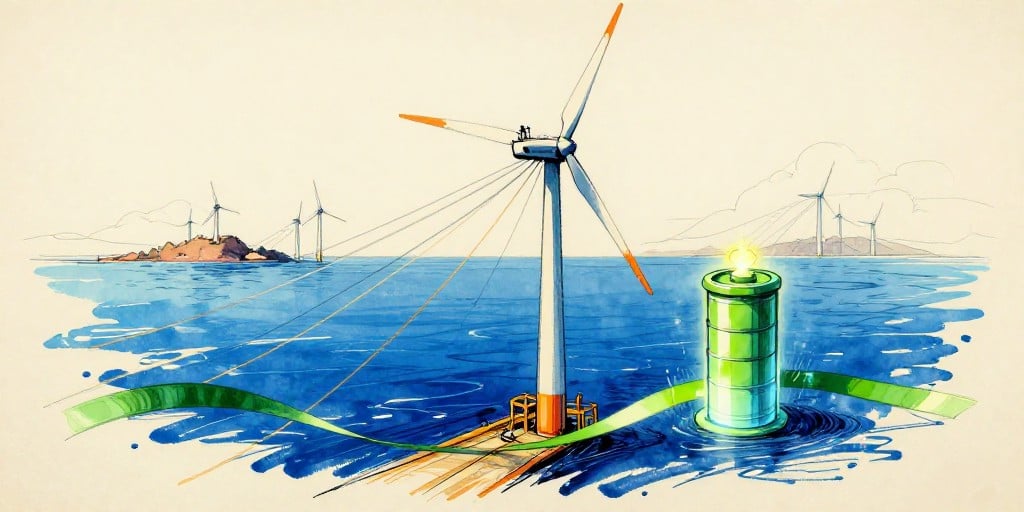
Ørsted’s Tax Ruling Reinforces Stability for Offshore Wind Projects
Ørsted’s shares experienced a modest adjustment on Friday following a decisive outcome in a long‑standing tax dispute involving its two flagship offshore wind assets, the Walney Extension and Hornsea 1. The advisory commission under the EU Arbitration Convention determined that the projects, located in the United Kingdom, should be primarily taxable in that jurisdiction, effectively eliminating the risk of double taxation.
Technical Implications for Grid Operations
While the ruling is primarily fiscal, its ramifications extend to Ørsted’s operational framework. With the UK tax authority now liable for the majority of the tax burden, the company can reallocate capital that would have otherwise been earmarked for tax compliance. This financial flexibility is critical for maintaining and upgrading the high‑capacity transmission links that integrate the offshore turbines into the onshore grid.
The Walney Extension and Hornsea 1 both feed power into the National Grid through 400 kV export lines, which are essential for balancing supply and demand across the United Kingdom. By securing a clearer tax environment, Ørsted can prioritize investment in these transmission assets, ensuring they possess the necessary redundancy and resilience to support the growing penetration of renewable generation.
Grid Stability and Renewable Integration
The decision also supports Ørsted’s broader strategy of enhancing grid stability in the face of increasing renewable energy share. Offshore wind farms, by virtue of their large, geographically dispersed capacity, can act as dynamic stabilizers when paired with advanced power electronics and flexible AC transmission system (FACTS) devices. Ørsted has been deploying voltage‑sourced converters (VSC) at both sites, allowing rapid modulation of reactive power and voltage support across the interconnection.
With a more predictable fiscal regime, Ørsted can accelerate the deployment of these technologies, mitigating the variability challenges inherent in wind generation. This, in turn, reduces the need for costly ancillary services—such as spinning reserve and frequency regulation—from conventional generators, thereby lowering overall system operating costs.
Infrastructure Investment and Economic Impact
From an economic standpoint, the tax ruling eases the capital budgeting process for Ørsted’s infrastructure projects. The company can now forecast its after‑tax return on investment (ROI) with greater confidence, enabling the allocation of funds toward the following critical areas:
- Transmission Upgrades – Enhancing 400 kV lines and substations to accommodate additional megawatt (MW) imports.
- Energy Storage – Integrating battery systems to smooth out wind intermittency and provide time‑shifted power delivery.
- Smart Grid Analytics – Deploying advanced monitoring and predictive algorithms to optimize grid operations in real time.
The economic benefits of these upgrades ripple across the broader energy ecosystem. Improved grid stability reduces the frequency and severity of blackouts, which translates to lower social costs and higher consumer confidence. Moreover, by reducing reliance on peaking plants—often fossil‑fuel‑based—Ørsted’s investments align with broader decarbonisation targets set by the European Union, potentially unlocking additional incentives and subsidies.
Regulatory and Rate‑Structure Considerations
Ørsted’s announcement underscores the importance of robust regulatory frameworks in the energy transition. The European Commission’s regulatory architecture—particularly directives on cross‑border trade and the Single Electricity Market—provides a foundation for consistent tax treatment across member states. However, the nuances of double taxation still pose a significant risk, especially for projects straddling multiple jurisdictions.
The commission’s decision also highlights how rate structures can be influenced by tax policies. By reducing the tax burden in Denmark, Ørsted can afford to lower the feed‑in tariff (FIT) for its offshore wind power, thereby passing savings onto end‑users. This is a strategic move that balances investor returns with consumer affordability, a key consideration as the EU aims to achieve net‑zero emissions by 2050.
Conclusion
Ørsted’s favorable tax ruling not only removes a long‑standing uncertainty for its offshore portfolio but also positions the company to accelerate critical infrastructure upgrades that enhance grid stability and renewable integration. Through precise engineering solutions and a clearer regulatory environment, Ørsted is reinforcing its role as a pivotal player in the European energy transition, while simultaneously managing the economic impacts of utility modernization on both investors and consumers.