
Ørsted’s Strategic Positioning Amidst Grid Modernisation Pressures
Market‑Level Overview
Ørsted’s share price has exhibited a modest decline over recent weeks, trading slightly below its recent highs. Despite this volatility, the company’s valuation remains tightly coupled to its net asset value (NAV), indicating that the market continues to recognise Ørsted’s underlying asset quality. The narrow discount to NAV has narrowed, yet it still persists, reflecting a market‑perceived premium on future cash‑flow stability rather than an over‑valuation.
Capital Structure and Financial Health
Ørsted has maintained a prudent balance between long‑term, fixed‑rate debt and a low refinancing risk profile. The firm’s debt maturity ladder is heavily weighted toward long‑term horizons, limiting exposure to short‑term interest rate fluctuations. Cash‑flow generation has remained robust, underpinning a stable dividend policy and an active share‑buyback programme. Recent corporate disclosures note a modest decline in net short‑position exposure—from just over six percent at the peak last year to roughly four percent today—suggesting a gradual, but still limited, shift in investor sentiment.
Operational Footprint and Asset Portfolio
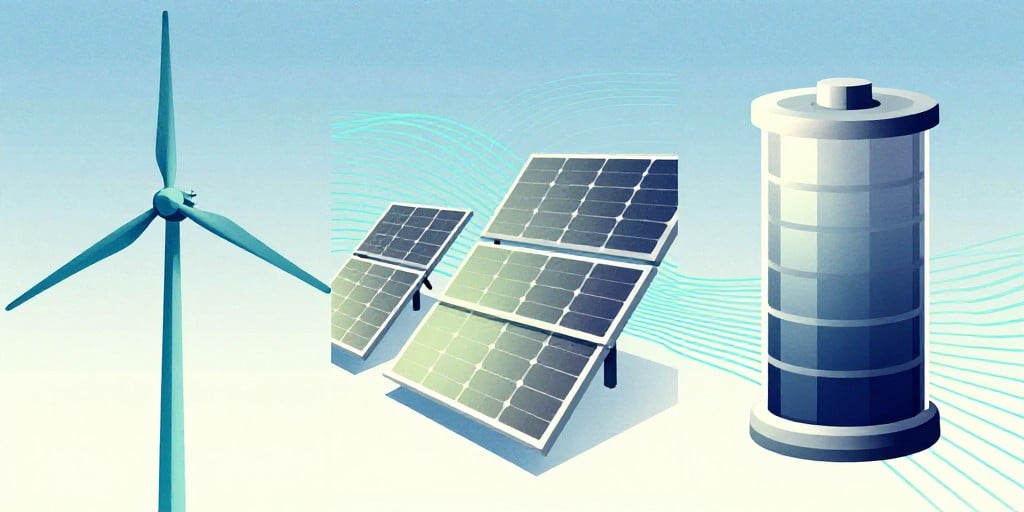
Ørsted’s renewable electricity portfolio spans offshore wind, onshore wind, solar photovoltaics, and battery storage. Offshore assets benefit from favourable power‑price contracts and government subsidies, while onshore wind projects leverage similar mechanisms to secure long‑term revenue certainty. Solar and battery projects are progressing through the development pipeline, with several sites already in the permitting and construction phases.
Technical upgrades across multiple sites have yielded measurable improvements in capacity utilisation, translating into higher capacity factors and reduced forced outage rates. The firm’s focus on asset optimisation—through turbine retrofits, predictive maintenance, and grid‑connection upgrades—supports a steady increase in annualised power output.
Regulatory Landscape and Revenue Certainty
In the United Kingdom and across Europe, regulatory developments have introduced new fixed‑price contracts and revised carbon pricing mechanisms. These reforms aim to enhance revenue certainty for renewable generators by stabilising the price of carbon credits and offering long‑term contractual pricing. Ørsted has engaged proactively with policymakers to secure favourable conditions for its projects, ensuring that its long‑term investment returns are protected against market volatility.
Grid Modernisation and Infrastructure Investment
The integration of high‑penetration renewable generation into existing power grids presents significant challenges: fluctuating supply profiles, voltage fluctuations, and the need for enhanced transmission capacity. Ørsted’s operational strategy includes:
- Grid‑Connection Enhancements: Upgrading offshore interconnection points to increase export capacity and reduce curtailment.
- Dynamic Inverter Controls: Deploying advanced power electronics capable of providing voltage support and reactive power compensation, thereby stabilising local voltage profiles.
- Energy Storage Deployment: Leveraging battery projects to buffer intermittency, smooth output curves, and provide ancillary services such as frequency response and spinning reserves.
These technical interventions require substantial capital outlays. Ørsted’s disciplined capital allocation, coupled with a low‑debt profile, positions it well to finance these infrastructure upgrades without jeopardising shareholder returns.
Economic Implications for Consumers
The deployment of grid‑side upgrades and increased renewable penetration can lead to modest short‑term transmission and distribution (T&D) costs, often borne by end‑users. However, over the medium to long term, the cost of electricity is expected to decline as renewable generation replaces more expensive fossil‑fuel dispatchable capacity. Ørsted’s focus on maintaining a robust balance sheet and securing revenue certainty through fixed‑price contracts serves to mitigate price volatility for consumers, while its investment in grid stability reduces the likelihood of costly emergency dispatches and grid upgrades driven by reliability concerns.
Conclusion
Ørsted’s recent corporate disclosures indicate a company that remains financially solid, operationally efficient, and strategically engaged with regulatory developments. By prioritising grid‑stability initiatives, renewable portfolio optimisation, and disciplined capital allocation, Ørsted is well‑positioned to navigate the evolving landscape of power generation, transmission, and distribution. The firm’s actions not only support the broader energy transition but also contribute to stabilising consumer costs through reliable, low‑carbon electricity supply.