
Corporate News – Power Generation and Grid Modernization
Ørsted’s share price held steady in the most recent trading session, mirroring the performance of a cohort of Danish utilities and industrial firms that are poised to release quarterly results in the coming week. The market has remained largely flat, with the Danish elite index recording only modest intraday fluctuations. While investors are largely patient, awaiting a busy earnings cycle that will include Ørsted, Vestas, Pandora, Zealand Pharma, and Maersk, they are also closely watching U.S. inflation data and potential Federal Reserve policy shifts that could reverberate through global commodity markets and, by extension, the energy sector.
1. Grid Stability and Renewable Integration
Modern power grids must accommodate a high penetration of variable renewable resources (VRRs) such as offshore wind, solar photovoltaics, and distributed storage. The technical challenges include:
| Challenge | Engineering Consideration | Impact |
|---|---|---|
| Frequency Regulation | Automatic generation control (AGC) must be augmented with fast‑acting resources (e.g., battery storage, demand response). | Prevents frequency excursions beyond ±0.2 Hz that could trip generators or damage equipment. |
| Voltage Support | Reactive power compensation through dynamic var support (DVS) and static synchronous compensators (STATCOMs). | Maintains power quality and prevents voltage collapse during high‑load or high‑generation events. |
| Contingency Management | N‑1 and N‑2 reliability standards require robust system planning. | Reduces outage risk when multiple lines or generators are lost. |
| Grid Congestion | High‑capacity transmission corridors are essential to transport offshore wind output to load centers. | Mitigates curtailment and ensures efficient energy flow. |
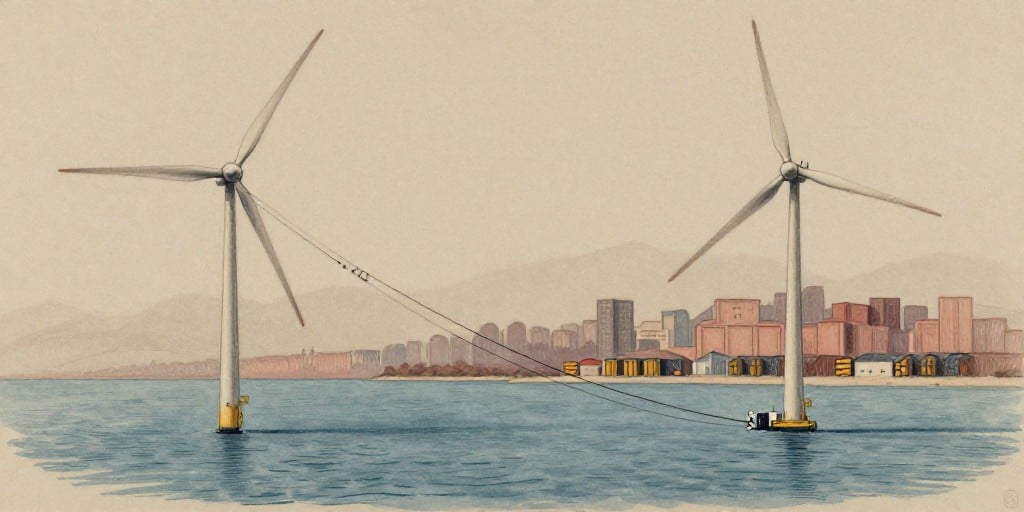
Ørsted’s portfolio of offshore wind farms is a leading example of these dynamics. The company has invested in 110‑MW and 200‑MW platforms that feed directly into Denmark’s high‑voltage (400 kV) transmission network. To integrate these assets, Ørsted has deployed advanced power electronics—such as double‑feed HVDC converters and vector‑controlled wind turbines—that can provide both active and reactive power support. These systems enable the grid to absorb large injections of wind power without compromising stability.
2. Infrastructure Investment Requirements
Achieving a reliable, low‑carbon grid requires significant capital outlays across generation, transmission, and distribution layers. The investment spectrum can be broken down into:
| Asset Type | Capital Expenditure (per MW) | Typical Return | Key Technical Drivers |
|---|---|---|---|
| Offshore Wind Turbine | $3–$5 M | 8–10 % | Turbine efficiency, floating platform costs, mooring technology |
| HVDC Transmission | $10–$12 M | 6–8 % | Converter station design, cable technology, thermal limits |
| Distribution Automation | $100–$200 k/kv | 10–12 % | Advanced metering infrastructure (AMI), fault‑location algorithms |
| Grid‑Scale Storage | $200–$300 k/kWh | 7–9 % | Battery chemistry, thermal management, integration with AGC |
The Danish grid is undergoing a transformation to a “smart grid,” driven by policy mandates such as the EU’s Renewable Energy Directive and the Danish Energy Agreement. Ørsted, together with other utilities, is financing this shift through a combination of equity, debt, and project‑specific bonds. Recent reports indicate a projected 15 % increase in CAPEX over the next five years, with a focus on HVDC links to the UK, Norway, and the Netherlands, and on expanding battery storage capacity to support grid‑scale frequency regulation.
3. Regulatory Frameworks and Rate Structures
In Denmark, the energy sector is regulated by the Danish Energy Agency (DEA) and the Danish Utility Commission. Key policy instruments include:
- Feed‑in Tariffs (FiTs) – Guaranteed prices for renewable electricity, declining gradually to encourage cost competitiveness.
- Grid Access Charges – Structured fees for transmission and distribution use, designed to reflect system costs and encourage efficient grid use.
- Tariff Design – Dual‑rate tariffs (fixed and variable components) incentivize energy efficiency and penalize high‑peak consumption.
Recent reforms have introduced dynamic pricing mechanisms, allowing utilities to adjust rates based on real‑time grid conditions. This shift aims to:
- Align consumer costs with the true cost of supply.
- Encourage demand response participation, reducing the need for costly peaking plants.
- Support the integration of variable renewables by providing price signals that reflect scarcity.
Ørsted’s regulatory compliance strategy involves rigorous participation in the System Operator’s demand‑response programs and engagement with the European Network of Transmission System Operators for Electricity (ENTSO‑e) to coordinate cross‑border capacity planning.
4. Economic Impacts of Utility Modernization
The transition to a modern grid has multifaceted economic effects:
| Impact | Description | Quantitative Insight |
|---|---|---|
| Consumer Costs | Net effect of dynamic pricing, upgraded infrastructure, and renewable subsidies. | Studies suggest a 2–4 % increase in residential bills by 2030, offset by reduced peak‑charge penalties. |
| Job Creation | New engineering, construction, and operations roles. | Danish utilities anticipate creating ~5,000 new jobs in the next decade, concentrated in HVDC, battery management, and data analytics. |
| Energy Security | Diversification of supply and reduced transmission bottlenecks. | Projected decrease in imports by 10 % and a 15 % reduction in outage frequency. |
| Carbon Reduction | Enhanced renewable penetration lowers emissions. | Denmark aims to cut CO₂ emissions by 70 % by 2030; grid upgrades are critical to meet this target. |
From a macroeconomic viewpoint, the modernization drives higher aggregate investment and stimulates sectors such as electronics manufacturing (for power electronics), software (for grid management systems), and construction (for civil works). However, the financial burden may be borne partially by consumers, especially if rate structures are not carefully calibrated to balance cost recovery with affordability.
5. Engineering Insights on Power System Dynamics
A few core concepts illuminate why grid modernization matters:
- Transient Stability: Rapid changes in load or generation can cause large swings in rotor angles. High‑frequency response devices (e.g., synthetic inertia from inverter‑interfaced resources) mitigate these swings.
- Power Flow Limits: The AC power flow equations show that increasing renewable injections can push lines to thermal limits. HVDC links bypass many of these limits by providing controllable active power flow without relying on reactive power support.
- System Damping: Voltage‑dependent loads and dynamic shunt reactors add damping to oscillatory modes, improving resilience to disturbances.
By integrating these technologies, utilities like Ørsted are not merely adding capacity; they are reshaping the fundamental physics of the grid to accommodate an unprecedented share of renewables while preserving reliability and service quality.
6. Conclusion
Ørsted’s stable share price amid a flurry of upcoming earnings reports underscores the broader uncertainty in the energy market. While macro‑economic factors such as U.S. inflation data and Fed policy decisions loom large, the company’s technical roadmap—centered on grid stability, renewable integration, and infrastructure investment—positions it to navigate the transition to a low‑carbon future. Regulators, investors, and consumers alike will need to monitor how the evolving rate structures and modernization efforts translate into tangible outcomes: lower emissions, resilient supply, and sustainable cost structures.