
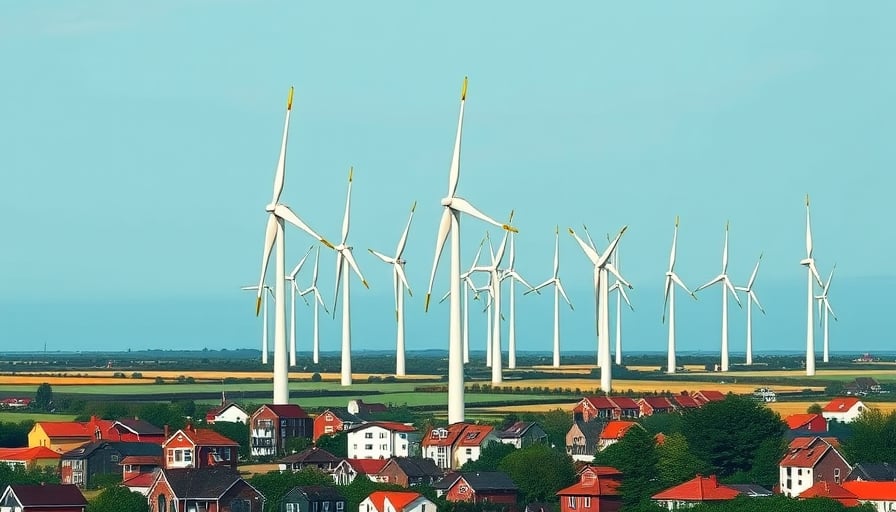
Ørsted A/S Maintains Strong Position Amid Market Movements
Ørsted A/S, Denmark’s leading electric‑utilities firm, remains a focal point for analysts following a recent upward revision of its target price by Deutsche Bank. The investment bank lifted its price objective from 120 Danish kroner to 130 DKK, while keeping a “hold” recommendation. The adjustment coincides with a modest rise in Ørsted’s share price, which closed higher the previous day.
Portfolio Breadth Supports Renewable Energy Transition
Analysts underscore that Ørsted’s diversified portfolio—spanning offshore and onshore wind, bioenergy, and customer‑solutions services—continues to underpin its competitive edge within the renewable‑energy sector. This multi‑segment strategy not only provides a robust revenue base but also facilitates the integration of variable renewable resources into the grid.
Grid Stability and Renewable Integration Challenges
The increasing penetration of intermittent wind and solar generation imposes significant demands on grid stability. Key technical challenges include:
Voltage Regulation: Offshore wind farms can introduce voltage fluctuations at transmission nodes. Advanced static VAR compensators (SVCs) and flexible AC transmission systems (FACTS) are required to maintain voltage within permissible limits.
Frequency Control: Rapid changes in generation output necessitate high‑frequency droop control. Integration of energy storage systems—such as battery energy storage (BES) and pumped‑hydro storage—provides the necessary inertia and frequency support.
Cyber‑Physical Security: The digitization of grid operations increases exposure to cyber‑attacks. Robust secure communication protocols and real‑time monitoring platforms are essential to safeguard grid reliability.
Infrastructure Investment Requirements
To sustain growth and meet regulatory mandates for decarbonization, Ørsted must invest heavily in both transmission and distribution infrastructure:
Upgrading Substations: Modernizing substations with high‑capacity transformers and digital protection relays improves fault detection and reduces outage duration.
Extending High‑Voltage DC (HVDC) Links: Offshore wind farms often require HVDC connections to mainland grids. Ørsted’s expansion of HVDC corridors reduces transmission losses and enhances system flexibility.
Deploying Smart Grid Technologies: Advanced metering infrastructure (AMI) and distribution automation enable real‑time load balancing, facilitating higher renewable penetration without compromising reliability.
Regulatory Frameworks and Rate Structures
In Denmark, the Danish Electricity Market Act governs the licensing and operation of renewable projects. Recent amendments emphasize grid access pricing that is directly linked to the levelized cost of electricity (LCOE). Ørsted’s ability to negotiate favorable grid tariffs is therefore critical to its cost structure.
Moreover, the European Union’s Green Deal sets ambitious targets for carbon neutrality, mandating utilities to increase renewable share. This creates a regulatory incentive for Ørsted to invest in renewables but also imposes regulatory risk if compliance costs outpace revenue gains.
Rate structures in Denmark have traditionally followed a cost‑plus model, yet there is a shift toward value‑based pricing that reflects the broader societal benefit of renewable energy. This transition could lead to higher consumer tariffs if utilities cannot offset increased infrastructure costs through operational efficiencies.
Economic Implications of Utility Modernization
Ørsted’s modernization initiatives translate into tangible economic outcomes:
Capital Expenditure (CapEx): Expansion of offshore wind assets and HVDC links drives CapEx upwards. While this increases short‑term debt, it also positions Ørsted to capture higher market share in the low‑carbon electricity segment.
Operational Expenditure (OpEx): Automation and digitalization reduce OpEx through predictive maintenance and improved asset utilization, offsetting some CapEx impacts.
Consumer Costs: The balance between CapEx and OpEx will influence consumer tariffs. A well‑executed investment strategy can mitigate tariff hikes by improving system efficiency and reducing transmission losses.
Conclusion
Ørsted’s recent market performance, coupled with Deutsche Bank’s revised target price, reflects confidence in the company’s strategic positioning within the evolving renewable energy landscape. Sustained investment in grid infrastructure, coupled with proactive engagement with regulatory frameworks, will be essential to maintain grid stability, navigate renewable integration challenges, and manage the economic implications for both the utility and its consumers.