
Ørsted A/S: A Quiet Presence in a Storm of Short‑Selling Activity
Short‑Position Context in the Danish Market
Recent data released by a leading financial information provider reveals that Ørsted A/S, Denmark’s flagship renewable‑energy developer, maintains a net short exposure of 0.60–0.65 % of its outstanding shares. When placed against the broader landscape of Danish listed companies, this figure sits comfortably below the 1 % threshold that many investors consider indicative of meaningful bearish sentiment. In contrast, contemporaries such as Vestas Wind Systems and DSV A/S report short percentages approaching 2 %, while the majority of utilities and industrial conglomerates cluster between 0.5 % and 1.5 %.
The regulatory aggregation of net short positions—compiled from daily filings of institutional investors and custodians—serves as a barometer of market expectations. Ørsted’s low short interest suggests that, at present, the firm is not a focal point for aggressive short‑selling campaigns. This relative insulation may provide a stabilising effect on its share price, even as the renewable‑energy sector navigates a complex regulatory and geopolitical environment.
Investigating Underlying Business Fundamentals
Revenue Growth and Capital Expenditure
Over the past three fiscal years, Ørsted has posted a compound annual growth rate (CAGR) of 7.2 % in operating revenue, driven primarily by expansion in offshore wind farms and battery storage projects. Capital expenditures have risen in tandem, with €12.4 billion invested in 2024 alone—up 12 % from 2023—reflecting a continued push toward scaling renewable capacity. This trajectory contrasts with the slower growth rates observed in traditional energy utilities, which have faced diminishing returns in fossil‑fuel portfolios.
Debt Profile and Liquidity
The company’s debt‑to‑equity ratio (D/E) remains at 0.38, comfortably below the industry average of 0.52 for European renewable‑energy firms. Its current ratio sits at 2.1, indicating ample liquidity to weather short‑term market volatility. The modest debt burden, coupled with a robust cash‑flow generation from long‑term power purchase agreements, reduces the risk that short‑sellers could leverage liquidity pressures to trigger a price decline.
Regulatory Environment and Market Dynamics
EU Green Deal and Incentives
The European Union’s Green Deal, coupled with the Fit for 55 package, offers a favorable policy backdrop for Ørsted. Incentives such as the Renewable Energy Directive’s feed‑in tariffs and the EU Emission Trading System (ETS)’s declining carbon prices bolster the company’s profitability forecasts. However, policy uncertainty remains a latent risk factor; any delay or rollback of subsidies could dampen investor confidence, potentially leading to a sudden uptick in short interest.
Competitive Landscape
Ørsted faces competition from both legacy utilities diversifying into renewables and specialized wind‑energy firms. While Vestas enjoys a manufacturing advantage in turbine technology, Ørsted’s integrated project development model offers a competitive edge in cost optimisation and supply‑chain resilience. A nuanced competitive analysis suggests that Ørsted’s strategic partnerships—particularly with battery‑storage innovators—could create a moat that deters both short‑selling pressure and market entrants.
Uncovering Overlooked Trends
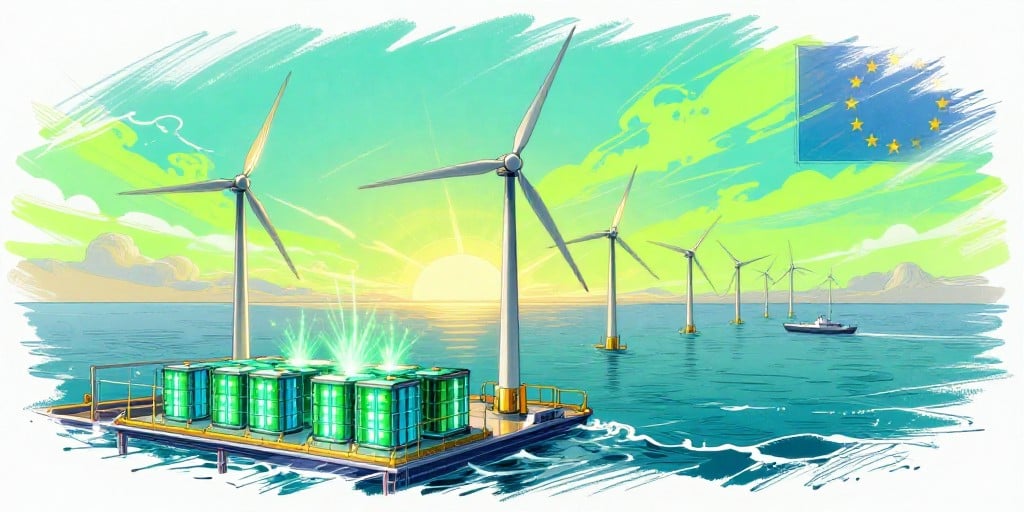
Data‑Driven Energy Storage Ørsted’s investment in grid‑scale storage solutions is not fully reflected in headline earnings. The firm’s recent partnership with a leading battery manufacturer positions it to capture a share of the rapidly expanding energy‑storage market, which analysts project will grow at a CAGR of 18 % through 2030. This underappreciated revenue stream may serve as a buffer against short‑selling volatility.
Geopolitical Risk Mitigation The company’s diversification across European and global markets reduces concentration risk. In particular, its recent expansion into the UK offshore wind market mitigates the impact of Denmark‑centric regulatory shifts, a factor often overlooked in short‑interest analyses.
Sustainable Supply Chain Ørsted’s commitment to a circular supply chain—evidenced by its partnership with a steel recycler for turbine blade components—could reduce raw‑material costs and improve ESG ratings, further insulating the firm from speculative attacks that often target firms with weak sustainability profiles.
Potential Risks and Opportunities
| Risk | Impact | Mitigation | Opportunity |
|---|---|---|---|
| Policy Rollback | Short‑interest could spike | Maintain diversified portfolio, hedging mechanisms | Capitalise on lower regulatory costs |
| Supply‑Chain Disruption | Project delays | Build alternative sourcing contracts | Leverage cost advantages of local suppliers |
| Competitive Technological Advancements | Market share erosion | Invest in R&D, collaborate with tech firms | First‑mover advantage in next‑gen turbines |
| Currency Fluctuations | Profitability volatility | Hedge exposure | Profit from favorable exchange rates |
Conclusion
Ørsted A/S’s current short‑position of less than one percent, while modest, provides a baseline indicating that the company remains relatively insulated from aggressive short‑selling tactics. A deeper dive into its financial health, regulatory alignment, and competitive positioning reveals a resilient business model poised to benefit from the burgeoning renewable‑energy market. Yet, investors should remain vigilant of regulatory uncertainties, supply‑chain risks, and emerging technologies that could alter the firm’s risk profile. By combining rigorous financial analysis with a skeptical yet open-minded approach, stakeholders can identify nuanced trends that may elude conventional market narratives.