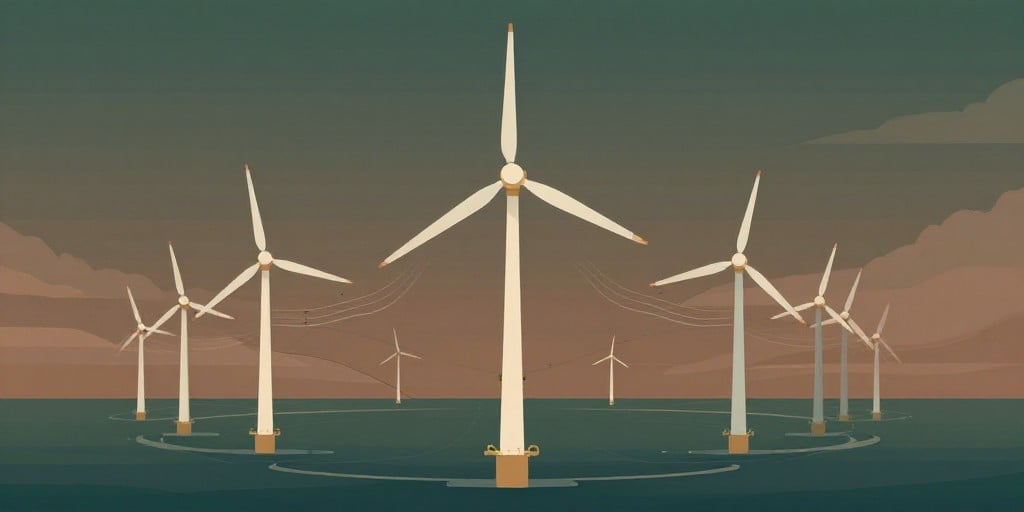
Corporate Update on Ørsted A/S Financial Reporting and Strategic Position
Ørsted A/S, the preeminent developer and operator of offshore wind assets, has outlined its upcoming financial reporting schedule for the 2027 fiscal cycle. The company will release its 2026 annual report on 5 February 2027, followed by interim statements: the first‑quarter report on 5 May, the half‑year report on 12 August, and the nine‑month report on 4 November. The annual general meeting will convene on 7 April, with shareholders permitted to submit agenda items until 23 February. All documents are slated for distribution at 08:00 CET/CEST on the stated dates.
Contextualizing Ørsted’s Position in the Power Generation Landscape
Ørsted’s portfolio remains firmly anchored in offshore wind, yet the firm is expanding across multiple renewable segments—onshore wind, solar PV, energy storage, and biopower—while actively engaging in energy trading. With a workforce of approximately 7,200, the company sustains a broad geographic footprint that now extends beyond Europe to the Asia‑Pacific and North America regions. Its shares are listed on Nasdaq Copenhagen under the ticker Ørsted.
Implications for Grid Stability and Renewable Integration
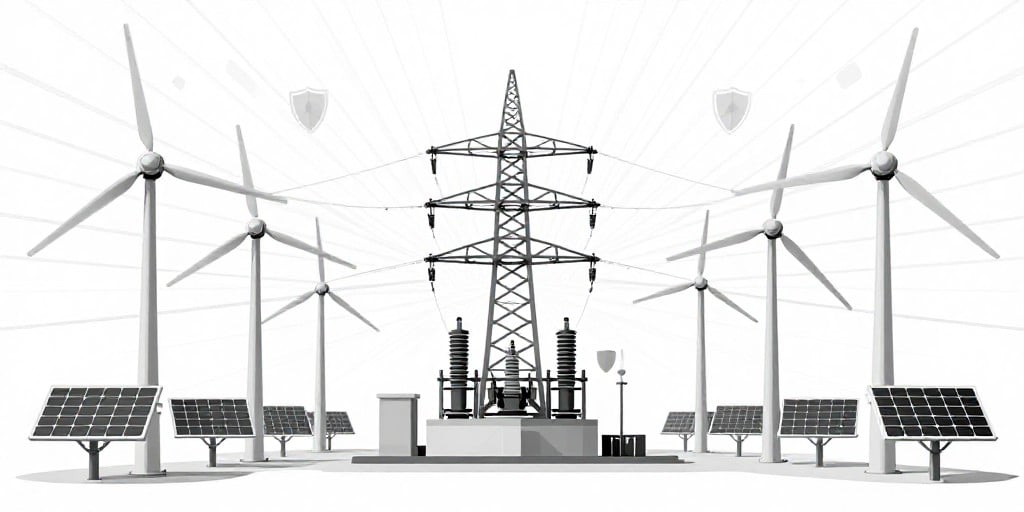
The strategic expansion into diverse renewable streams places Ørsted at the forefront of addressing grid stability challenges that accompany high penetration of intermittent generation. Offshore wind farms, for instance, inject power at high voltages into offshore interconnectors, necessitating sophisticated control of voltage levels, reactive power support, and fault‑ride‑through capabilities to maintain synchronisation with onshore grids. Ørsted’s integration of storage technologies mitigates variability by providing both energy arbitrage and ancillary services—frequency regulation, voltage support, and reserve capacity—thus enhancing grid resilience.
In regions where transmission infrastructure is aging or capacity constrained, Ørsted’s large‑scale projects require coordinated upgrades to HVDC lines and converter stations. These investments are critical to avoid bottlenecks that could otherwise impede the delivery of renewable electricity to end users. The company’s engineering teams routinely model transient stability and perform contingency analyses to ensure that interconnections meet NERC (North American Electric Reliability Corporation) or ENTSO‑E (European Network of Transmission System Operators for Electricity) reliability standards.
Infrastructure Investment Requirements and Economic Impact
Meeting the projected renewable deployment targets will necessitate multi‑billion‑dollar capital expenditures in transmission and substation upgrades, grid modernization (including smart‑metering and demand‑response platforms), and the integration of distributed energy resources. The economic ripple effect extends beyond Ørsted’s balance sheet: utility operators face rising upgrade costs that may be reflected in future rate structures. Regulatory bodies often employ cost‑of‑service and revenue‑cap mechanisms to balance investment recovery with consumer protection.
For example, in the United States, the Federal Energy Regulatory Commission (FERC) allows utilities to recover capital costs through regulated rates, provided those rates are justified by reliability and efficiency gains. In Europe, the European Commission’s Clean Energy Package promotes transparent cost allocation through mechanisms such as the “green premium” and the “renewable energy premium.” These frameworks influence how renewable integration costs are passed to consumers and can accelerate or decelerate the adoption of advanced grid technologies.
Regulatory and Governance Considerations
The announcement from EQS Group underscores Ørsted’s commitment to transparent reporting and robust corporate governance. Compliance with International Financial Reporting Standards (IFRS), alongside sector‑specific regulations such as the EU Renewable Energy Directive, ensures that disclosures provide stakeholders with accurate insights into both financial performance and environmental impact. Furthermore, the regulatory environment increasingly emphasizes the disclosure of decarbonization pathways, grid resilience plans, and the social cost of carbon—all of which factor into investor decision‑making and risk assessment.
Conclusion
Ørsted’s scheduled reporting cycle and its strategic emphasis on a diversified renewable portfolio highlight the company’s role in shaping the future energy landscape. The technical and regulatory complexities inherent in integrating high‑penetration renewables—spanning grid stability, infrastructure investment, and rate‑setting—demonstrate the interconnected nature of corporate strategy and system reliability. As Ørsted continues to expand its footprint, it will remain a key stakeholder in advancing resilient, low‑carbon power systems and in influencing the economic dynamics that ultimately determine consumer costs.